Trail Riders on a Quest for Well-Being
For several years now, the pursuit of well-being through sports and tourism has taken on considerable importance. The desire to feel free and in harmony with the environment around us is one of the key characteristics of this “well-being” promoted by our society. Through interviews with professionals and participants in equestrian tourism, we will demonstrate that equestrian tourism is a vehicle for well-being. Numerous studies highlight the benefits of outdoor sports for individuals. Similarly, equestrian activities—rich in benefits—offer a sense of freedom, a break from daily life, a departure from social norms within the equestrian community, and a return to nature. These benefits are characterized by the relationship the rider has with their horse and the environment they explore. This leads us to ask: How does a return to nature through equestrian tourism enable individuals to develop sensations that promote their physical and mental well-being?

Introduction
According to Corneloup (2011), we can observe that the cultural and sociological form of outdoor sports practices has evolved over time. Moving from traditional to modern cultures, and then from modern to postmodern cultures, this evolution has given rise to the transmodernity movement, which aims to be a clever blend of these different cultures within outdoor sports practices. The transmodernity of recreational outdoor activities is, therefore, a movement that aims to rethink the connections between sports, territories, tourism, and leisure (Corneloup, 2011). According to Perrin-Malterre (2012), sports practices characteristic of transmodernity develop out of a quest for immersion in the depths of nature. The goal is to become one with nature through a hybrid approach—a blend of practice modalities—and to promote eco-friendly travel combined with a rediscovery of the magic in everyday places. To further his point, Corneloup (2011) emphasizes that the development of transmodernity revolves around well-being and a return to nature, which he identifies as the central elements of this movement.
As part of outdoor sports, the equestrian world cannot escape this trend toward transmodernity. Indeed, since the 1990s, recreational horseback riding has become more widely accessible (Aubert et al., 2011), which will benefit the growth of equestrian tourism. The French Equestrian Federation (FFE) describes equestrian tourism as “a highly attractive, environmentally friendly activity that promotes the discovery of our regions’ heritage. Combining pleasure and escape, in harmony with horses and nature, it is popular with all generations.”[1]. This definition aligns with the earlier remarks by Corneloup (2011), who highlights the new approach enabled by the transmodern movement regarding the links between sports, regions, tourism, and leisure. Equestrian tourism thus stems from the emergence of a new type of participant, whom Digard (1995) refers to as “new riders .” According to him, the motivations and expectations of this group differ significantly from those of the typical participants found in the world of traditional equestrianism. The main motivations among Digard’s (1995) “new riders” include: an attraction to the animal (90.3%), a desire for contact with nature (43.6%), the need for relaxation (39.2%), a new way of riding (34.4%), aesthetic satisfaction (10.4%), and social interaction (6.6%). Taken together, these data tend to demonstrate the importance of a connection with nature and the pursuit of well-being as motivators for equestrian tourism participants.
Riders on a Quest for Well-Being
To better understand these “new riders’” pursuit of well-being, we can draw on the definition of health and well-being put forward by the World Health Organization (WHO) as “a state of complete physical, mental, and social well-being, and not merely the absence of disease or infirmity.” Thus, we can see that well-being is characterized by a balance between physical, mental, and social needs.
According to numerous scientific studies, it has been shown that participating in sports contributes to this sense of well-being not only on a physical level (Bauduer et al., 2018), but also on psychological and social levels (Kudelski, 2010). According to Gorichon-Baillet (1928), horseback riding—and, by extension, equestrian tourism—is no exception to this rule. In his view, horseback riding builds strength and flexibility while emphasizing muscle coordination during various movements. Beyond the physical benefits, contact with the horse is said to help maintain the rider’s psychological and emotional well-being. To supplement this, we can draw on the words of Laetitia Mermet, who states that “the horse allows one to rediscover one’s social identity by restoring body image and body schema” (Mermet, 2012, p. 69). She refers to the social aspect of well-being, and more specifically to social integration through the practice of horseback riding. Unlike traditional horseback riding, which is governed by numerous rules, equestrian tourism incorporates unique features that contribute to well-being.
Tourism and Horses: Factors in Well-Being
According to Proulx (2005), tourism is free time unburdened by any obligations, during which the environment and the activities undertaken during the stay are freely chosen by the individual. With the goal of providing a break from daily life and distancing oneself from life’s negative aspects (stress, work, routine, etc.), tourism is seen as a source of well-being because it allows individuals to restore their psychological and physical well-being by clearing their minds. In equestrian tourism, attention is constantly focused on the horse, on oneself, and also on the environment. All negative thoughts are quickly set aside. Participants seek to rediscover themselves, learn to accept themselves as they are, and “reflect on their identity” (Proulx, 2005, p. 7).
Tourism also involves discovering a new place, a new culture, or a new activity. According to Proulx (2005), this discovery is characterized as an encounter with the “elsewhere.” Openness to the unknown proves to be very beneficial for the individual, as it provides a different perspective on life and the world. According to Van Pachterbeke (2011), open-mindedness involves a process of reflection, but also the individual’s ability to question their own assumptions while taking an interest in what they do not know. In equestrian tourism, the encounter between different cultures that may occur contributes to a potential reevaluation of our own equestrian culture. By “equestrian culture,” I mean the different ways of practicing and riding horses depending on the region and country. “Traveling abroad does not merely teach us to distinguish between works of art, customs, or languages belonging to different civilizations. It also serves to reconcile us with our societal values and to reinforce our collective beliefs and convictions” (Amirou, 1995, p. 7).
The relationship with a horse has beneficial effects on the individual: “Every human-animal relationship is unique, since it is an intimate encounter between two beings […] ” (Bouillon, 2018, p. 123). This relationship fosters a bond with the animal, and as you explore the trails together, that bond only grows stronger, creating a sense of adventure with the animal—an adventure you share as a pair.
The Influence of Nature on the Practitioner's Well-Being
Equestrian tourism also highlights the beneficial effects that the environment has on the human body. Studies have assessed the health benefits of various natural spaces. Visual or physical proximity to one of these spaces has beneficial effects on individuals (Serpantié et al., 2012). “Contact with natural areas appears to have a psychological and physiological impact by reducing blood pressure and stress levels” (ibid., p. 12). Several articles , including those by Bourdeau (2019), Bratman et al. ( 2012) , Dab (2020), Fischer (2011), and Hamman (2017) , demonstrate and prove the real impacts of outdoor recreational activities on the human body.
Nature allows us to express our humanity without constraints, to live differently for a limited time. It is a moment of pleasure and release. Corneloup supports the idea that nature is perceived as “a world of freedom, conducive to all kinds of daydreaming and fun” (2013, p. 43). Freedom in equestrian tourism consists of being able to gallop for several minutes without stopping, without barriers. It means feeling free to go wherever you want with your horse, at whatever pace you choose.
The emergence of the transmodern movement is closely linked to the rise of a new generation of practitioners. This generation emphasizes wellness practices and a return to nature. In the equestrian world, this has led to the democratization of equestrian tourism. Indeed, we observe that these “new riders” promote their well-being—psychological, physical, and social—by reconnecting with nature through this activity. All of this brings us to our research question: How does this reconnection with nature, made possible by equestrian tourism, lead individuals to develop sensations that foster their psychological, physical, and social well-being?
Methodology
To address this issue, it became clear that a qualitative study was needed. This method allows for the collection of precise data on the activity and its impact on those who participate in it. The goal of this method is to encourage members of the sample to share their feelings and personal motivations by describing their lived experiences. The chosen method involved conducting semi-structured interviews to create a reassuring environment for the participants and facilitate data collection. Eight interviews were conducted with riders who had extensive experience in equestrian tourism or who were regular participants in this activity. The interviews lasted between 30 minutes and 1 hour—an appropriate duration for obtaining robust data that would enable the derivation of concrete findings. The data collected pertains to the motivations, feelings, and desired “effects” associated with equestrian tourism. To best organize the discussions with the study participants, a pre-prepared interview guide served as the framework for the interviews. Unlike a questionnaire, the interview guide structures the questioning without influencing the interviewee’s responses (Vilatte, 2007). The interviews began with introductions to establish a climate of trust, after which various topics were addressed: the choice to engage in equestrian tourism, motivations, the different feelings that emerged, and the importance of nature for trail riders. My field study was limited to a few equestrian tourism enthusiasts and professionals who agreed to participate in these interviews. Given the circumstances of the first lockdown, which prevented all travel, I turned to social media platforms that bring together communities of equestrian tourism enthusiasts. A total of 8 interviews were conducted; the sample consisted of 2 men and 6 women with experience in equestrian tourism (see table of interviewee profiles, Appendix 1). The interviews were conducted remotely via telephone or videoconference due to restrictions related to the COVID-19 pandemic. All interviews were recorded and transcribed for analysis.
The unique experiences offered by equestrian tourism
Equestrian tourism offers participants unique sensations that cannot be found in other sports. Riding a horse creates sensations that are hard to explain; riders feel the animal’s slightest movements and its muscular mass shifting beneath them. All of this fosters a relationship of trust with the horse. This mode of travel allows you to go faster and cover more kilometers while riding on your horse’s back:
“Riding a horse allows you to go fast enough and slow enough to see things” and “to gain a different perspective”
(Alain)
According to Grégory, equestrian tourism also offers the feeling of being able to put one’s riding skills into practice:
"When you take riding lessons in an indoor arena, I'd say you're learning to write, just as if you were learning letters and words. When you ride outdoors, you're learning to form sentences."
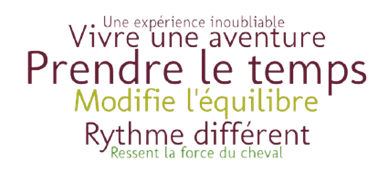
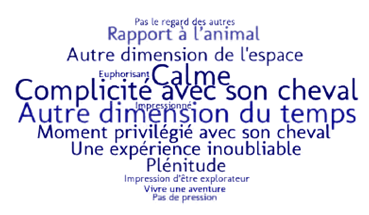
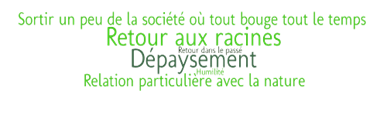
Finally, I created a diagram to outline the feelings and emotions the interviewees experienced while participating in equestrian tourism.
Figure 1:Categories of sensations reported by respondents
Physical sensations:
Psychic sensations:
Moral sensations:
A Discrepancy Between Traditional Horseback Riding and Equestrian Tourism
Unlike equestrian tourism, traditional horseback riding is a practice—a world unto itself—governed by numerous standards. This is what Dominique and Alain highlighted with the following quote:
“Once, when we were in Burgundy on a trail ride, we were boarding our horses at the Cluny stud farm, and so that evening (…) we found ourselves right next to an international show jumping competition and everything. We really felt like we were being stared at, looked down on as if we weren’t from the same world, even though I wanted to tell them, ‘Our horses don’t jump the bars that you jump, but what our horses have just done in a single day—passing 50 meters from the TGV without batting an ear, sometimes going under highways and through tunnels where the horse stays calm—your horses wouldn’t do that.’”
These standards are particularly evident in large equestrian facilities. Smaller facilities manage to attract both competitive riders and equestrian tourists. What’s different in the world of classical equestrianism is that there’s a lot of“show-off” behavior; with many “well-off” people who can afford to buy a €5,000 saddle, €300 sequined riding pants, an €800 riding helmet with Swarovski crystals, a €20,000 horse, and so on. There’s no point in having exorbitantly priced equipment—it has absolutely no impact on the performance of the rider or the horse. The traditional equestrian world is one that’s constantly judging. Trail riding is a sort of escape from the norms of traditional equestrianism.
A New Approach to Nature
The results also highlight the sense of freedom that comes with travel. Traveling on horseback allows you to reach more places—as Alain would say when explaining that horses have a certain “ability to traverse terrain” —and to that we can add what Grégory said:
"It lets you reach places you probably couldn't get to by car—and that would take much longer to reach on foot."
In some interviews, when asked about access to wildlife—Fabienne, for example, explains that it’s easier to approach the animals on horseback. Nature is a source of motivation for equestrian tourists.
Discovering new landscapes is one of the reasons for practicing this activity mentioned by all respondents. The geography of the location matters: forest, sea, mountains, plains… What came up frequently in these interviews were wide-open spaces, followed by mountains/hilly terrain and forests. Beyond these landscapes, what stands out most is the connection to nature—the desire to connect with it and experience the sense of well-being it provides. This sense of well-being translates into a different relationship with time and space for the rider. As Caroline points out, equestrian tourism allows her to
"To step away for a bit from a society where everything is constantly changing."
Discovering other equestrian cultures, a certain open-mindedness
Discovering other equestrian cultures reveals a certain open-mindedness regarding the world of horses. The way horses are treated varies from culture to culture:
“There is respect for the horse, but the concept of respect isn’t quite the same as ours.”
(Gregory)
Emmy, who moved to Finland, explains that the approach to horses there is much gentler, and everything is focused on the horse's well-being:
"They may be a little ahead of the curve when it comes to ethology."
(Emmy)
This also helps us realize that knowledge about horses is part of the culture of certain local communities and has been passed down through generations from a very young age:
“The guy has never been in a riding arena in his life; he doesn’t know the names of the different parts of a saddle, yet he can tell whether a horse is lame or not just by the way he approaches it and touches it.”
(Gregory)
These encounters gave them the opportunity to learn about horseback riding. Alain realized that traveling on horseback made it easier to approach and connect with the local people:
"Arriving in a village on horseback isn't the same as arriving in a big Toyota 4x4."
(Alain)
However, he points out that in some countries they are viewed as:
“Money rolling in because you have a camera and all that. I think the big difference is that you have the money—you’ve got the cash in your pocket for the plane ticket to get there and back—while they don’t even have a plane ticket to come to your place, not even a one-way ticket.”
(Alain)
This has raised awareness of the living conditions of people in certain countries:
“When you go to the Atlas Mountains, it really puts a lot of things into perspective. I have to tip my hat to the people who live there—it’s beautiful, it’s magnificent, but it’s a harsh environment.”
(Alain)
Equestrian tourism is an activity that allows people to discover an equestrian culture, another community, or another breed of horse. It offers the opportunity to learn about their way of life, their riding style, and, more broadly, as Fabienne put it, “their means of survival” (Fabienne). The overall consensus from most of these interviews on the subject is that, for traditional equestrian cultures, equestrian tourism will be the activity that enables discovery:
"You really have to immerse yourself in the culture to truly understand it."
(Christine),
“In some cultures, if you don’t get up close and personal with the horses—in Mongolia, for example—you might meet the Mongolians, but you won’t get a feel for their culture. You’ll meet people, but you won’t learn about their culture.”
(Gregory)
Through equestrian tourism, riders learn about the local way of life, the local way of riding horses, and, more broadly, as Fabienne put it, the “search for authenticity.” This applies particularly to respondents who have traveled abroad. However, for those who hope to do the same one day, this discovery of a culture and its people—and of a particular breed of horse—will tip the scales in favor of one country over another. Meeting other people—whether encountered along the trail or when riders arrive at their lodging, in France or abroad—is a major motivation for going on a trail ride. This is also what inspired Christine to start her nonprofit organization: to meet new people and connect with fellow horse enthusiasts.
For some of those surveyed, the desire for adventure and the athletic aspect of hiking play a role in their search for a destination or a place. Emmy is looking for a challenge in her trek across the Alps. Sylvette prefers to “hit the road” and is driven to discover what lies ever further ahead; with her map in hand, she enjoys testing herself against the elements around her. For Alain , it’s a way to “test himself.” Several other criteria also emerged, though these are specific to each person’s experiences and preferences: refining a particular riding style, curiosity (Gregory), seeking tranquility, being alone with her horse (Sylvette), seeking thrills (Caroline and Emmy), taking one’s time (Christine), and traveling without producing any pollution (Marie Blanche).
Equestrian tourism: a break from the routine
Equestrian tourism is often chosen by horse enthusiasts. One might wonder why this particular activity—and why not opt for riding at a riding center, or traditional, classic horseback riding? Equestrian tourism is a unique experience. In fact, it offers sensations that aren’t found in traditional horseback riding. First of all, the relationship with the horse is different. Going on a trail ride with a horse reveals different behaviors in the animal. “Confronted very regularly with new environments, the horse’s curiosity and exploratory behavior, its surprise at new situations, and its tendency to seek familiarity with them are all pathways for the horse to build a relationship with humans” (Loo and Guilmot, 2003). Every situation encountered and overcome with your horse strengthens your bond with the animal. You must learn to anticipate even the slightest of its reactions and try to remain calm, keeping your emotions in check, because horses are like sponges. This expression is often used in the equestrian world when teaching riding, to help beginners understand that horses sense our emotions. The more stressed you are, the more the horse will sense it and become stressed as well. The horse’s presence forces us to control our emotions and work on ourselves. This is also why horses are used in therapy for people with intellectual disabilities—a practice more commonly known as equine-assisted therapy. Engaging in equestrian tourism is a genuine exercise in self-improvement. You have to know how to stay calm, not panic in certain situations, not get upset, and remain patient. It is this personal growth that provides psychological well-being, because ultimately the rider learns to relax and refocus their mind on the horse and its surroundings (to anticipate any situations where the horse might become frightened).
The second important sensation for someone participating in equestrian tourism is the horse’s movements. Knowing that you’re on an animal weighing about 500 kg can be scary, but feeling it move and sensing all its muscles as it exerts itself builds mutual trust. If the horse decided to throw us off, it could do so with ease; the fact that everything goes smoothly creates a sense of closeness with the animal—a special bond. These sensations cannot be experienced in any other sport, because horseback riding is the only sport where you ride on the back of a living creature. The data collected suggests a rejection of the norms imposed in the traditional equestrian world, in favor of connecting with one’s own sensations, the horse, and nature. To understand this, one must view the traditional equestrian world as a society governed by numerous norms: being the best, having the best horse, having the most beautiful horse, having the best saddle, the best equipment… This translates into a rejection of classical riding, which takes place in enclosed spaces such as the indoor arena or outdoor riding arena—what Sylvette calls the “sandbox.” Equestrian tourism offers a way to escape this social pressure. At the same time, one could still highlight the influence of this social pressure on health and well-being, which may drive riders to engage in equestrian tourism. “The ‘need to return to nature,’ the ‘search for well-being and health,’ and the ‘increase in leisure time’ contribute significantly to the development of these tourism practices, which are characterized by a certain indifference to seasonality and take place year-round.” (Siau, 2007, p. 18). Social pressure related to health may influence them to engage in physical activity in order to stay healthy. In the equestrian world, the discipline characterized by wellness practices is equestrian tourism. It offers physical, mental, and social fulfillment.
We also find the concept of a break, which often comes up among equestrian tourism enthusiasts. This activity offers a way to escape daily life and routine and provides a chance to “get some fresh air.” As Le Clanche (2018) points out, this concept of a break allows for “disconnection” and “a change in lifestyle”; it is time for oneself. For example, if we consider the definition of “itinerancy,” it is described as “quasi-constant mobility over a non-daily period,” explains Leroux S. (2007). There is a very specific relationship to time and space, as Christine points out:
"I am going to experience a different environment and a different sense of time."
(Christine)
It’s a time for oneself, when we can bring out our human values. This time can also be used to test ourselves, push our limits, and try new things. During some interviews, I observed a desire to push oneself and a quest for adventure in equestrian tourism. Through immersion in nature, some people seek to experience an adventure or take on a challenge, which is more a part of sports culture than of pushing one’s limits (Queval, 2001). Those who prefer challenges, like Emmy, who wants to cross the mountain ranges in the Alps:
“As for the challenge, it’s really about being out on a hike—not necessarily alone, but hiking with nothing but my horse and the mountains.”
(Emmy)
There is a desire to surpass oneself that, according to Queval, is characterized “by feats and achievements. Among other things, it provides heroes for a society that is constantly seeking role models” (2001, p. 49). This “me time,” no matter how one spends it, inevitably contributes to psychological well-being by setting aside all the obligations of daily life, leading to “a change, a transformation, an evolution of the self” (Pavie, 2014, p. 74).
Unique experiences that contribute to well-being
Equestrian tourists are drawn to this activity not only for the connection with the horse but also for exploring the landscape—and, above all, for the sense of well-being it provides. The horse is a silent mode of transportation; the only sounds heard are those of nature and its wildlife. The environment is a source of immense value, and engaging in equestrian tourism in a setting one loves fosters a sense of well-being. Nature appears to be a refuge—a place where one feels at ease, far from social tensions and urban pollution, which are amplified by the media (Kalaora, 2001). This supports the idea that closeness to nature is beneficial for individuals, as we discussed in the theoretical framework. Furthermore, the horse has its own advantage: its scent masks ours, allowing us to approach wildlife much more easily, as Fabienne points out:
"You can even get close to the animals."
This practice fosters a different relationship with nature—the feeling of being an explorer, as Alain points out in his interview:
“It feels like we’re explorers. When I say ‘explorers,’ I mean we met gold prospectors, we met geologists, we climbed volcanoes—in some places we had to walk carefully because it was dangerous; you had to put your feet exactly where he put his, because otherwise you could disappear into a mud fountain.”
(Alain)
Corneloup supports the idea that nature is perceived as “a world of freedom, conducive to all kinds of daydreaming and enjoyment” (Corneloup, 2013, p. 43). He explains that nature is the ideal place to express one’s humanity. It is clear that participants cultivate a contemplative relationship with nature, which fosters an ecological awareness—if one did not already exist. The journey unfolds at nature’s own pace; the participant pauses to contemplate and then continues on. During this journey, the dimensions of time and space are experienced differently. Equestrian tourism unquestionably fits the definition of Slow Tourism; indeed, we can add that horseback riding is a mode of travel that allows one to maintain a steady pace without too much effort, and which consequently enables the rider to contemplate the surrounding landscapes. This distinctive feature aligns with “Slow Tourism,” a concept highlighted by Babou and Callot (2013, p. 90): “Engaging in tourism at a slow pace ensures a renewal of the self (both physiological and psychological).” This rejuvenation is defined by the slow pace, which encourages contemplation and admiration of the places and landscapes in which the traveler finds themselves during their journey. By covering long distances, equestrian tourism allows travelers to relax and learn more about the local culture while minimizing their negative impact on flora and fauna, as well as on local residents (Hallem et al., 2020). Well-being stems from the experience itself, interaction with locals, support of local businesses, and connection with nature. It allows people to recharge and take the time to live life to the fullest (Bourdeau, 1994).
Life experiences contribute to an individual’s well-being. By definition, equestrian tourism also involves discovering new cultures, which fosters open-mindedness. This contributes to psychological and mental well-being. Traveling on horseback offers a unique way to engage with local people and their culture. Alain explains, in particular:
"Arriving in a village on horseback isn't the same as arriving in a big Toyota 4x4."
(Alain)
It is the tourist’s unassuming approach that will facilitate contact with local people, and in certain cultures—particularly those with a strong equestrian tradition—as Gregory says:
“If you don’t get up close and personal with horses—in Mongolia, for example—you might meet Mongolians, but you won’t get a feel for their art. You’ll meet people, but you won’t learn about their culture.”
Discovering another culture also means discovering a different approach to horses—what role horses play in that culture. For example, Emmy explains that in Finland, they are ahead of the curve when it comes to ethology and animal welfare, whereas in other countries, horses are a means of survival. This immersion in local cultures has fostered, particularly in Dominique, Alain, Fabienne, and Gregory—who have traveled to countries of varying levels of poverty—a certain humility and sensitivity toward what they have witnessed:
"It puts things into perspective when it comes to the people you meet and the way we ride."
(Gregory)
These observations show us that interacting with the locals helps riders gain a new perspective on how people live in a challenging environment. But it also gives them a new perspective on their knowledge of horses: these people don’t take riding lessons as is commonly done in France; instead, their knowledge has been passed down from generation to generation and gained through lived experience:
“He [the farmer] can tell whether the cow is lame or not just by the way he approaches her and touches her.”
This encounter with other cultures prompts reflection on the equestrian worldview, as well as the opportunity to take a step back and question one’s own assumptions. Learning from others, drawing inspiration from new experiences, and broadening one’s horizons all contribute to well-being. Every travel experience has the potential to change and influence one’s lifestyle (Andereck et al., 2011). We are confronted with new ways of doing things and living; this encounter is a constant source of learning. Interaction with locals is a vehicle for socialization; there are exchanges: “Confrontation with the outside world, the strange, and the foreign allows the individual to experience the structural plurality that lies dormant within each and every one of us. Wandering is, ultimately, an important vehicle for socialization” (Maffesoli, 1997, p. 148). Traveling is seen as a remedy, a time for oneself, to learn from others, and a time to step away from one’s daily routine.
It is within this transmodern movement in recreational practices that a new sports ethic has emerged, one centered on well-being and humanity’s relationship with nature (Andrieux, 2013). According to Corneloup, we can observe the emergence of new styles of equestrian practice “that reflect specific practices based on the chosen and internalized ethics” (2013, p. 46). These, combined with the growing enthusiasm for nature and the sense of well-being it provides, are drawing tourists toward equestrian tourism. This encounter with the wider external world—and the learning that results from it—leads me to discuss bodily ecology. This encounter with the external world helps stimulate and raise awareness of the environment and living things, thereby fostering the development of ecological sensitivity (Jay, 2014). “Bodily ecology finds expression in practitioners who immerse themselves in environments that have altered their understanding of the ecosystem and the ways the body acts in these situations.” ” (Andrieux, 2014, p. 33). This immersion in another culture changes our perspective, prompts us to reflect on our way of life so that we can modify it and contribute to sustainable development. It represents a genuine shift in awareness and an improvement in quality of life.
Conclusion
The transmodern nature of these practices helps bridge the gap between sports and the environment. Today, outdoor sports have become more accessible to everyone; participation is on the rise and is firmly embedded in our daily lives. In addition to physical activity, there are environmental benefits that contribute to participants’ well-being. Equestrian tourism is one of many outdoor activities and therefore reaps these benefits. Furthermore, there are additional benefits stemming from the relationship between the rider and the horse. This activity offers individuals numerous benefits: freedom, open-mindedness, a break from daily life, a respite from social pressures, the chance to take one’s time, contact with nature, and, of course, the bond with the animal. All these benefits contribute to the overall well-being (psychological, physiological, and social) of trail riders.
Bibliography
Amirou, R. (1995). The Tourist Imagination and the Social Aspects of Travel. Paris: Presses universitaires de France.
Andereck, Kl. and Nyaupane, Gp. (2011), “Exploring the Nature of Tourism and Perceptions of Quality of Life Among Residents,” *Journal of Travel Research*, Vol. 50, No. 3, pp. 248–260.
Andrieu, B. (2014), “The Founders of Bodily Ecology: Immersions, Naturisms, and Emergences.” *Sociétés*, no. 125, pp. 23–34. DOI: 10.3917/soc.125.0023.
Aubert, M., Vial, C., & Perrier-Cornet, P. (2011). The Development of Recreational Horseback Riding in Rural Areas: Between Sectoral Influences and Suburbanization. Revue d’Économie Régionale & Urbaine, pp. 549–573.
Babou, I., and Callot, P. (2013). The Future of Tourism in an Era of Oil Scarcity. Revue internationale et stratégique, 2(90), pp. 87–95.
Bauduer, F., Guillet, N., Vanz, E., et al. (2018), “Physical Activity Prescriptions by Primary Care Physicians: The Experience of Biarritz Côte Basque Sport Santé,” *Santé Publique*, No. 30, pp. 313–320.
Bratman, G.N., Hamilton, J.P., et al. (2012), “The Impacts of Nature Experience on Human Cognitive Function and Mental Health,” *Annals of the New York Academy of Sciences*, pp. 36–118.
Bratman, G.-N., Hamilton, J.-P., and Daily, G. (2012). “The impacts of nature experience on human cognitive function and mental health.” *Annals of the New York Academy of Sciences*, vol. 1249, no. 1, pp. 118–136.
Bourdeau-Lepage, Lise (2019), “On Interest in Nature in the City: Living Environment, Health, and Urban Planning,” *Revue d’Économie Régionale & Urbaine*, pp. 893–911. DOI: 10.3917/reru.195.0893.
Corneloup, J. (2011). The Transmodern Form of Recreational Nature Activities. Sustainable Development and Territories, Vol. 2, No. 3.
Corneloup, J. (2013) “Ethics in Flux in Nature-Based Recreational Activities.” *Juristourisme*, Juris Éditions, Dalloz, pp. 43–47.
Dab, William (2020), Chapter 1. The Environment: An Important Determinant of Health, in William Dab (ed.), Health and the Environment. Paris Cedex 14: Presses Universitaires de France, “Que sais-je?” series, pp. 7–25.
Digard, J.-P. (1995). “Horse, My Love.” *Des sports* (25), 49–60.
Fischer, G-N. (2011), “Chapter 1. The Psychosocial Approach to the Environment,” *Social Psychology of the Environment*. Edited by Gustave-Nicolas Fischer. Paris: Dunod, “Psycho Sup,” pp. 17–27.
Gorichon-Baillet. (1928). Practical Horseback Riding. Horseback Riding in Physical Education. France
Hallem, Y., Sahut, J-M., Hikkerova, L. (2020), “Slow Tourism” as a Way to Improve Well-Being, Gestion 2000, (Volume 37), pp. 129–147. DOI: 10.3917/g2000.373.0129.
Hamman, P. (2017), “Introduction: The Relationships Between Rurality, Nature, and the Environment in the Social Sciences: Perspectives and Renewal,” in Philippe Hamman (ed.), *Rurality, Nature, and the Environment: Between Knowledge and Imagination*. Toulouse: Érès, “Urban and Rural Societies – Pocket Series,” pp. 7–58.
Jay L. (2014), “Somatic Practices and Bodily Ecology,” *Sociétés*, (No. 125), pp. 103–115. DOI: 10.3917/soc.125.0103.
Kalaora, B. (2001) “Conquering the Wilderness.” *Ethnologie française*, Vol. 31, pp. 591–597.
Kudelski, Magali (2010), “Is Sports the Neglected Area of Psychiatry?” *L’information psychiatrique*, (Volume 86), pp. 877–882.
Le Clanche, J-F. (2018), “Epistemology of Rupture,” *Pour* (No. 234–235), pp. 29–36. DOI: 10.3917/pour.234.0029.
Loo, B., & Guilmot, P. (2003). Listening to the Horse in Equine-Assisted Therapy. Budapest.
Maffesoli, Michel (1997), “On Nomadism: Initiatory Wanderings,” *Communication*, vol. 19, no. 2 | 2000.
Pavie, X., “The Body as the Subject of Spiritual Exercises,” *Sociétés*, 2014/3 (No. 125), pp. 69–79.
Perrin-Malterre, C. (2012). Changes and Developments in the Professional Practices of Outdoor Sports Tourism Providers. Téoros, Vol. 1, No. 31.
Proulx, L. (2005). Tourism, Health, and Well-Being. Téoros, 3(23), pp. 5–11.
Queval, I. (2001). The Sports Culture of Pushing One’s Limits: Between Health and Performance, the Quest for Well-Being and the Quest for Excellence. Les Cahiers de l’INSEP (No. 31), pp. 49–59.
Siau, Véronique (2007), “Outdoor Sports and Regional Attractiveness,” *Pour* (No. 194), pp. 13–20.
Van Pachterbeke, M. (2011). Meaning and Well-Being: A Study of Open-Mindedness in the Existential, Ideological, and Moral Realms. Doctoral dissertation. UCL—Catholic University of Louvain.
Vilatte, J.-C. (2007). “The Interview as an Assessment Tool.” Laboratoire Culture et communication, pp. 41–42.
Appendix: Profile of the Sample Population
| Last Name, First Name | Experience in the equestrian tourism industry | Interest |
| Gregory Horvath | An occasional equestrian tourist, Gregory, who is originally from Belgium, took a week-long horseback trip through the Atlas Mountains. In addition, he has ridden horses in other countries such as Hungary, France, Spain, and Austria. | Gregory has ridden horses in various countries, so he has been able to discover and experience different equestrian cultures—which is of interest to me for my research—and by comparing these different experiences, I can highlight his motivations for cultural equestrian tourism. |
| Sylvette Galabru-Welling | She holds an ATE (Equestrian Tourism Guide) certification, which she uses both for summer work and personally to deepen her knowledge, and she regularly participates in equestrian tourism in the Jura region. | Sylvette’s personal and professional experience in equestrian tourism will be very interesting. On a personal level, Sylvette goes on horseback rides very regularly, so I’m curious to understand her interest in outdoor horseback riding and what motivates her to go on these rides. Her professional experience as an equestrian tour guide will shed light on the specific characteristics of her clients, the types of people she typically encounters, and their motivations. |
| Caroline Carpent | As an equestrian tourism guide, she organizes horseback riding tours in Franche-Comté and regularly goes on horseback riding trips in her personal time (Lozère, Ardèche, Camargue, etc.) | Caroline’s experience as an equestrian tourism instructor is very interesting, as she teaches both riders who want to compete and those who prefer to ride outdoors. Comparing these two types of riders may help us understand why some prefer riding in the great outdoors rather than in an arena. |
| Marie-Blanche Pugnet | She was a member of the Rhône-Alpes-Auvergne Departmental Equestrian Tourism Committee. She rides regularly—about 8 days a month—and also organizes trail rides for various organizations. | Marie-Blanche’s investment in equestrian tourism shows just how passionate she is about this activity. Her story will help us understand why it’s important to her and what motivates her to set out on these trips… |
| Emmy Vannson | Vocational diploma in horse breeding, BTS in tourism, and ATE (Equestrian Tourism Guide) certification from April through September (works at a veterinary school during the winter months as a rider for the grooms). She typically goes trail riding in Corsica but also in the mountain ranges of Savoie, Haute-Savoie, and the Alps. She has had equestrian experiences abroad in Australia and Finland. | Emmy, just like Sylvette, will be able—through her work as an equestrian tour guide—to describe in detail the characteristics of the clients she takes on tours, as well as their typical motivations for riding in settings other than the great outdoors… But also, drawing on her firsthand experience abroad—where she was able to discover different perspectives on horses—her point of view will be valuable for understanding the choice of destinations and analyzing people’s motivations. |
| Alain Pommier and Dominique Rimbert | Alain: Retired craftsman Dominique: Librarian They have gone on horseback tours in many places: – Wide-open spaces: Iceland, the Canadian Rockies and Quebec, Kenya, Mongolia, New Zealand, Chile (Atacama and Patagonia), Northern Argentina, Siberia (Kamchatka) – Less open spaces: Morocco, Senegal, South Africa, Utah, Brazil, Jordan. – Shorter treks: Lithuania, Spain, France, Norway, and Indonesia | Alain and Dominique have traveled extensively, sharing their experiences and feelings; this will help me understand what motivates them to go horseback riding outdoors for tourism purposes. |
| Christine Foulon | A regular rider in France (both on horseback and in carriage driving), a former TREC rider, and former president of an equestrian association: the Tamario Network, an organization that brings together horse enthusiasts—who are generally horse owners—by organizing various workshops, including a few trail rides. | With her experience in TREC (Competitive Trail Riding) and her regular outdoor riding, Christine will be able to explain why riding outdoors is important and appealing to her. Her experience with the association will help us understand the motivations of both outdoor riding enthusiasts and horse lovers. |
| Fabienne Axelrad | An occasional rider and former eventing competitor, she has gone on horseback tours in France (in the Cotentin region), Mongolia, Kyrgyzstan, and Kazakhstan. | Fabienne, a former eventing rider who later turned to trail riding, will share the reasons that led her to “leave the arena” and ride in the great outdoors. In addition, Fabienne has traveled to other countries, which has allowed her to discover local cultures. Thanks to this, we’ll be able to try to understand what led her to choose these particular destinations. |
[1] https://www.ffe.com/tourisme