The Rise in Popularity of Ultra-Trail Running: Promoting and Highlighting Regions
Ultra-trail is a sport often described as “extreme” that emerged in the 2000s. It combines outdoor sports and travel to create an appealing and unique form of physical activity. “Ultra-trail” events are becoming increasingly common and are shaping a discipline in its own right, with its own specific values and conditions. However, beyond the sporting aspect, these events address a need for appeal in terms of economic benefits, promotion, and regional development. Indeed, organizing these events also appears to benefit local stakeholders, who use them to showcase their heritage and enhance the local image. Thus, under this unique sporting approach that combines endurance and the natural environment, can we envision the development of a competition model geared toward tourism? In this qualitative study, five runners and organizers with diverse backgrounds were interviewed to explore their commitment to this sport and these events.
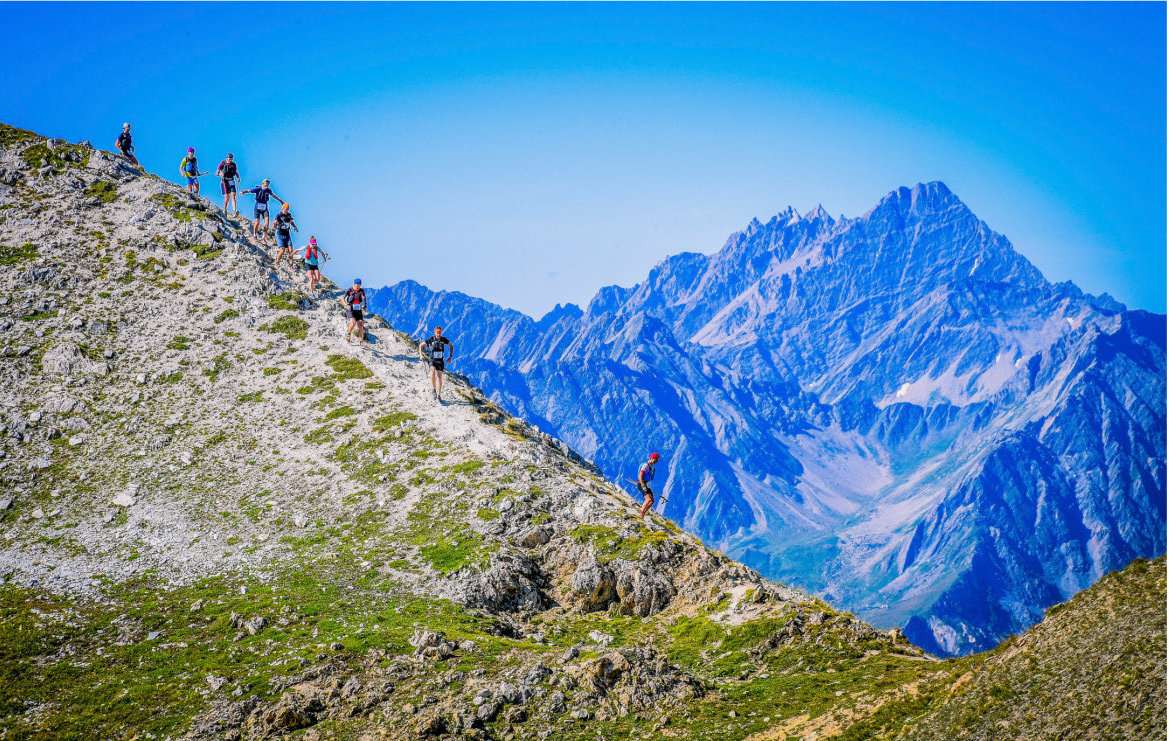
That’s what I keep saying: if things aren’t going well for a moment on the trail, all you have to do is look up, stop, and savor the moment. We’re so lucky to be able to be here, […] I go on vacation because I live in Angers; when I’m in the Alps or the Pyrenees, or when I’ve been lucky enough to go to Réunion, it really feels like a vacation. (Mickaël W.).
Paris, New York, and Berlin are certainly presented as major metropolises with strong tourism potential, but at the same time, the infrastructure of these capitals makes them ideal candidates for hosting international sporting events. Attracting spectators and athletes from around the world, participants, professionals of all kinds (media, security, etc.), spectators, and even visitors gather for the occasion. These events serve as a showcase for the cities designated as “hosts.” Here, a form of sports tourism rooted in the connection between the local area and athletic activities takes hold. These partnerships give rise to the organization of officially recognized competitions, such as the “Marathon” or the Tour de France, where visitors and spectators discover the diversity of the cities and the country. This type of sporting event is designed, in particular, to foster the development of a unique form of tourism based on the participation of the various stakeholders mentioned above. Conversely, these sporting events highlight both the sport in question and the local environmental, historical, and cultural heritage. Indeed, media coverage of certain international competitions turns them into prime tourist destinations and boosts visitor numbers. Through a trickle-down effect, this event-based approach—combining athletic competition with heritage tourism—has a ripple effect on the world of ultra-trail running, allowing runners to explore a region, unique natural environments, and breathtaking landscapes through sport. An ultra-trail race is a race of 80 km or more with a total elevation gain exceeding 2,000 meters. This sport demands extreme endurance and a gradual adaptation of the body to this intense, prolonged, and physically taxing effort. While certainly challenging, this discipline is gaining a global following. This enthusiasm owes much to outdoor gear brands that have successfully capitalized on the “greening” trend in sports[1]. But this boom is also linked to the development of cognitive abilities and high-level performance among athletes, as well as the desire to challenge oneself, push one’s physical and mental limits, and travel with this passion for ultra-trail running to various races organized around the world. Alongside the development of new race circuits around the globe, the number of race participants has been increasing every year, as evidenced by participation in the Ultra-Trail du Mont-Blanc (UTMB World Series), which saw 722 pre-registered runners in 2003 compared to 22,853 in 2022. The growth has been such that the number of participants is now capped at 10,000 runners. The development of outdoor activities linked to tourism has seen a sharp increase since the 2000s (Buron G., Bessy O., 2016), generating various economic benefits for local regions (see Appendix 1). This serves as a vehicle for enhancing the region’s image, revitalizing the area, expanding its reach, and diversifying activities for mountain resorts[2]. The organization of “ultra-trail” competitions is part of this trend, with the best-known event in France to date being the UTMB Mont-Blanc, a 170-km race bringing together 10,000 runners from around the world. These sporting events foster internationalization, enriched by cultural and environmental diversity, with the aim of increasing the region’s appeal and reaching new audiences (spectators, recreational athletes, families, enthusiasts, etc.). This concept of sports tourism is still relatively new but has carved out a place for itself in the global economy, as well as in social customs and culture. The question posed by this study is to explore the link between people’s perceptions of a locality and the event-driven nature of the ultra-trail competitions taking place within its territory. Thus, do the perception of a locality or region and the media coverage of its heritage contribute to the creation of a tourism model based on ultra-trail competitions as events? In other words, do ultra-trail events serve as a showcase for heritage and the region to stimulate tourist visits?
According to the World Tourism Organization (UNWTO, 2000), tourism is a “social, cultural, and economic phenomenon involving the movement of people to countries or places outside their usual environment for personal, professional, or business purposes.” It was in the 1980s that tourism became firmly established in society and in people’s customs (Glyptis, 1982). Numerous studies have helped define the contours of sports tourism, encompassing a region’s cultural dimension, its economic strategies, and its development. Several definitions have since emerged. The first, by Standeven & De Knop in 1999, emphasizes travel associated with participating in a sport on another continent. Gibson’s approach in 2002 focuses on the various forms of participation in sports. Finally, Pigeassou’s definition from 2002 centers on identifying the different actors and objects of sports tourism.
In 2009, Bouchet P. and Bouhaouala M. explored this concept in greater depth through an analysis of pioneering work in the field. For example, according to Redmond (1990–1991), sports tourism includes: spectators at sporting events, active participation in sports, and cultural sports visitors (museums, monuments, facilities, etc.). According to Nogawa et al. (1996), there are also three types of travel motivations: traveling to take part in a sporting event, to attend a sporting spectacle, or to participate in self-organized sports activities. As a result, many stakeholders rely on sports to promote the appeal of their region and outdoor physical activities. Outdoor sports events, such as ultra-trails, will lead to an increase in the region’s population and visitor numbers, as well as highlight its cultural heritage. Local tourist appeal is driven by the social phenomenon of sports. In this sense, competitive sporting events can help transform a locality into a tourist destination. This concept of “transformation into a tourist destination” refers to “the process of creating a tourist destination or transforming an existing location through tourism, resulting in a new state: the tourist destination”[3]. The development of a destination for tourism can also be leveraged through the host region’s tourism image via the “showcase” process. By drawing on participants’ and spectators’ perceptions of the sporting event, it reflects their perception of the event venue. This can encourage them to return there for vacation or to participate in the competition again.
This article will therefore attempt to examine the extent to which ultra-trail running serves as a springboard for developing a region’s tourism sector, as well as for promoting and enhancing its appeal. This study takes a qualitative approach, in which various hypotheses were formulated and then validated or invalidated based on the interviews conducted. An analysis of the results will then provide a better understanding of the perspectives of the various interviewees, leading to insights that explore how a locality can be developed for tourism through the growth of outdoor sports—and, more specifically, ultra-trail running.
Methodology
In order to establish the framework for this research and outline the interview guide, focusing the interviews on the interviewees’ personal journeys and opinions provides the basis for defining and understanding their connection to ultra-trail running and its various forms. Adopting a qualitative approach requires a specific target audience that is able to answer my questions.
The semi-structured interviews conducted provided an opportunity to explore in greater depth the perspectives of the two groups of respondents and to understand the needs arising from the different regions. According to Lincoln (1995), “the semi-structured interview is a data collection technique that contributes to the development of knowledge by promoting qualitative and interpretive approaches.” It was essential to determine the criteria for selecting this sample in order to obtain two different perspectives and to cover the subject of this research as comprehensively as possible.
| Identity – Role | Occupation | Location | |
| 1 | Mathieu D. – Runner Interview duration: 50 min | Professional ultratrail runner – student. | Lyon 69000, Rhône-Alpes. |
| 2 | Mickaël W. – Runner Interview duration: 1 hour | Development Manager, France Sport Emploi. | Angers 49000, Maine-et-Loire. |
| 3 | Pierre-Yves D. – Runner . Interview duration: 40 min | Police officer. | Rochefort 17300, Charente-Maritime. |
| 4 | Nahuel P. – Organizer ; Interview duration: 1 hour 20 minutes | Communications Officer, Head of Organization. | Pamiers 09100, Occitanie. |
| 5 | Kévin B. – Organizer ; Interview duration: 35 min | Co-Director of Templier Events. | Millau 12100, Occitanie. |
(with respondents’ consent)
Three ultra-trail runners were interviewed. They were all male runners: one professional, one amateur, and one who fell somewhere in between. Two people who are members of or directly involved with the organization of an ultra-trail event were also interviewed.
To understand the different perspectives on these events, interviewing organizers and runners about their views helped broaden this discussion as much as possible. I contacted the respondents through my network of acquaintances or by searching for relevant profiles on LinkedIn. These interviews were conducted remotely via videoconference due to health restrictions related to COVID-19 and my inability to travel. Conducting the interviews remotely allowed me to gain perspective on the various situations and best address the central research question of this study. The average interview duration of 50 minutes allowed the interviewees to answer the various questions posed while discussing them and sharing their perspectives on other concepts related to the topic.
Data analysis was conducted using thematic analysis. This approach allows us to understand the meaning of the dialogues and to derive insights that resonate with the research questions by exploring the interview transcripts and observation notes line by line and step by step (Berg, 2003). Extracting the respondents’ answers—to process, classify, and code them—then made it possible to present and analyze the results obtained. The interview guide, formalized through coding, enables the analysis and interpretation of the interviews and the presentation of results from a representative sample of runners and organizers.
Regarding the limitations of this study, further exploration of the audience—their motivations, choices, and reasons for being drawn to the location or event they attended—would provide additional insights to broaden and deepen the study as much as possible.
This analysis leads to an interpretation that addresses the research question and establishes that there is a link between people’s perceptions of a locality and the ultra-trail races held there, and that this link is complex and multifaceted.
Promoting a Community as a Tourist Destination Through Ultra-Trail Events
Promoting Local and Cultural Heritage Through Ultra-Trail Sports Events
Based on these discussions with organizers and runners, promoting local and cultural heritage appears to be one of the major objectives of ultra-trail events. These official races are generally organized with the aim of showcasing the local and regional areas. This raises the question of whether local and regional policies enhance the area’s appeal in terms of tourism and the promotion of outdoor sports within their territory (Bessy, 2008).
The growth of outdoor sports—and thus ultra-trail running—since the 2000s appears to address a community’s need to enhance its image through tourism and sports offerings. The values embodied by the event’s organization should promote the very same values present in the community. This promotion of the region helps attract a strong base of sports tourism, as Nahuel points out: “It draws people from all over the world: we’ve had Japanese runners at the start, people from Brazil, Russia, Israel, South Africa—everywhere.” Generally, runners come with family or friends for the race, but they also very often return for vacations in subsequent years. “There’s a phenomenon that goes hand in hand with this… people combine it with a vacation. So we have runners who come and then stay for a week or two, or who come before the race for a vacation… it’s a tourist attraction” (Nahuel, race organizer).
Organizers consider in advance the various options for accommodating this influx of people during organized races. This practice thus creates a dynamic that benefits both sports and tourism. In particular, “the distinction between time spent solely on travel and time devoted to the activity or sightseeing is another key to a destination’s appeal ” (Lozato-Giotart, Leroux, Balfet, 2012, p. 33). For a positive and successful tourism experience, it is necessary to have solutions for lodging, transportation, and food. Runners and potential companions will thus enjoy a few days in the region and benefit from related services alongside the main event. Mickaël puts it this way: “It’s a round trip to Auvergne; we’re carpooling—there are five of us runners—we booked a hotel room for Saturday night to sleep, and then we’ll really be in round-trip mode (…) and we’ll be supporting local businesses.” This requires a serious strategic analysis of the region by stakeholders and organizers.
The runners surveyed visit tourist sites, spend money at local businesses, and stay at various accommodations in the communities. Environmental and sustainability criteria, such as partnerships with local producers, are also taken into account. Ultra-trail events strive to prioritize a direct route to promote and contribute to local tourism development. This initiative was launched by the intermunicipal communities. “Trail runners can now be considered tourists—sports enthusiasts seeking not only a race to test their physical limits but also a region to explore, whose unique characteristics alone justify their visit. ” (Glen Buron, 2020). As Glen Buron points out, trail runners are a significant asset with strong values and an appreciation for local heritage, and they will boost tourism for the city or town. These visits by athletes will enable the region to implement various strategies necessary for its development.
Communication and Regional Development Strategy
“Every territory, regardless of its geographical or human scale, possesses a ‘touristicity’ or theoretical potential for attractiveness” (Lozato-Giotart, Leroux, Balfet, 2012, p. 31). The author thus seeks to demonstrate that, regardless of the territory, it can be showcased and is worth discovering.
Communication tools—particularly for mountainous regions—remain important, if only because of the competition among different regions such as the Alps, the Pyrenees, and the Massif Central. Taking the Ultra-Trail du Mont-Blanc (UTMB) as an example, the organizers seek to promote a different image of the region—one that highlights its growing appeal for outdoor sports—and thereby attract a new, “non-elitist” audience (Bessy, 2012). It has thus been demonstrated that visitor numbers to the site have increased significantly as a result of various communication and differentiation strategies for the region. Today, the UTMB remains one of the most widely publicized and well-known ultra-trail events in the world and is even recognized as a brand.
According to interviews and the example of the UTMB, organizers of ultra-endurance races place a strong emphasis on communication and development strategies for their events. This communication is directed at ultra-endurance runners, not at people who have never or rarely participated in such races. The target audience remains very specific. The first step in this strategy is to reach out to audiences at other events to raise awareness, and then to build a “large core of volunteers—and that is the key to success (…) 750 volunteers,” according to Nahuel (organizer). It also involves successfully creating “a niche”—an attractive race format that stands out from other ultra-trail events. Today, it’s essential to have high visibility through “networking,” but also to utilize “traditional marketing, Facebook, and Instagram,” adds Nahuel. Furthermore, “by social network, we mean a community of individuals connected to one another through their backgrounds, interests, needs, and similar or shared viewpoints, within the context of interactions that can lead to the exchange of information and ideas, mutual support, and the sharing of experiences—all of which serve as a source of learning. ” (Barabel, Mayol, Meier, 2020/2). At the same time, regarding media outlets, many local and national newspapers are used: “At first, we relied mainly on our own media, because we started out with running magazines called VO2 Magazine and Endurance Magazine, which allowed us to develop and focus our communication efforts. Then came the database, newsletters, and now social media.” (Kévin B.)
To organize his event, Nahuel also used the same media channels, notably “national newspapers, because we already have a local customer base, and that’s not the audience that’s going to fill the Picapica,” and he adds that “we can gain national or even international visibility; we’re getting coverage in Japanese media, Czech media…” All of these communications will thus help attract a certain number of people to the various races, whether they’re participating for fun or as competitors. Everyone chooses their preferred running style, the region, and the landscapes that appeal to them, thereby contributing to the area’s tourism and economic activity.
The economic benefits generated by these events
“Assessing the economic impact of these events on the host regions is one of the necessary conditions for ensuring the long-term viability of this rich and diverse offering, by enabling these regions and financial partners to adjust and refine their eventpolicies”4 ( written by Jarrige B., for organizations that host outdoor sports events). The author demonstrates that it is necessary to analyze all the economic, political, and environmental aspects resulting from a sporting event in order to reap the benefits or avoid the drawbacks associated with them for future editions.
Economic appeal plays a major role in the organization of these races because of the benefits they bring to the region in terms of tourism and sports. Regarding the Festival des Templiers, Kévin explains that it is an “event—in quotes—that drives economic growth for the region, the development of our city, and our community of municipalities. “But also for our region, because it’s the leading sporting event in terms of economic impact in the Occitanie region,” and it generates “millions of euros in economic impact over the weekend of the event.” As France’s premier ultra-trail event, over the past 30 years it has become an integral part of the local culture and heritage of the city of Millau and the Occitanie region. There are also economic benefits stemming from the event’s organization through collaboration with local service providers; this, in turn, leads businesses to pay local taxes, which benefit the region. In this regard, Nahuel echoes Kévin’s remarks. He says that “we’re here to generate economic benefits and visibility for our regions.” Each of these organizers stated that they were responding to a need expressed by a community of municipalities that wanted to revitalize its tourism sector and bring together the various surrounding municipalities to create a comprehensive event that anchors it in local history and heritage. Thus, “the balance between supply and demand, particularly from an economic standpoint, remains closely linked to the alignment between the region and tourism.” (Lozato-Giotart, Leroux, Balfet, 2012, p. 37). Finally, organizing an ultra-trail event can have an impact on local employment. Hiring local volunteers and the need to strengthen transportation, security, and health services for the event can create new job opportunities for the local population.
These events can have a significant economic impact on host cities and regions by stimulating local economic activity, attracting sponsors and partners, boosting local tourism, and creating job opportunities. The social and economic aspects of these events will influence the region’s image as well as how it is perceived by locals and tourists.
Organizing an ultra-trail event: the showcase effect on the “host” community
Sports events, particularly ultra-trails, are integrated into the regional image marketing strategy by local stakeholders with the goal of enhancing the region’s appeal. The more positive the image the event conveys, the more the locality will be recognized and benefit from that image. Pierre-Yves (a runner) illustrates this in his own way: “I now focus on races where I know the course and the scenery are appealing… I tend to look for races that are interesting in terms of the destination and the views.” Tourists and runners actively and participatively engage with all the services offered by the “host” community. This takes place in a location outside their usual environment, for a consecutive period, for the purposes of leisure, vacation, competition, and events—in the case of ultra-trail races (Marchat, Camelis, 2017/1). If they enjoy the event, these people will return in subsequent years—either to run the race again or to vacation there and explore the region, its resources, and its local stakeholders in greater depth. As Mickaël explains, “I’m lucky—my wife and kids come with me. Maybe not to every race, but for major events or longer races, it’s true that we often plan our vacations around them.” Tourists are thus drawn to the values that the event brings to the destination, as well as to the landscapes and experiences it offers through its image. Tourists remember these aspects to ensure their continued participation or to enhance the destination’s appeal as a vacation spot. Tourist satisfaction, quality, and perceived value are among the key determinants of loyalty (Bigné et al. 2001, Yuksel et al., 2010).
Sports events provide an opportunity to showcase a region and raise its profile among a specific, targeted audience. They thus help enhance the image of the “host” community (Baakil, Youssef, 2020). Generally speaking, sports events are drivers of a community’s appeal to tourists and its regional promotion. The objectives behind these sporting events are to “raise the region’s profile among the general public; the goal of local stakeholders is to build a favorable image for the region in a sustainable manner. The aim is to positively influence the perception that the public or residents have of a given region by associating it with the positive connotations of sports participation.” (Hautbois, Desbordes, 2008). As Kévin points out, developing a variety of race formats enriches the region through sports and brings together a much larger audience. The creation of “children’s races, adapted sports races, and races specifically dedicated to women to make trail running more accessible to them” contributes to the cultural and heritage enrichment of the community.
A destination brand is considered successful when it is able to project a simple, appealing, credible, and distinctive image (Kotler and Gertner, 2022).
By organizing ultra-trail races, the organizers help promote the region, and runners seek out these diverse landscapes and unique locations. This decision stems from the terrain, the beauty, and the environmental appeal of the area. Thus, for Mickael, ultra-trail running “is simply one way of experiencing the mountains”; everyone is free to choose their own destination. These events are part of a strategy to build loyalty among existing runners, innovate to attract new ones, and win over the hearts of their supporters.
Conclusion
This research is based on the concept of developing a locality as a tourist destination through outdoor sporting events such as ultra-trails, with the aim of establishing and building a lasting relationship between event organizers, intermunicipal communities, and tourists. It suggests, first and foremost, the enhancement and promotion of the region’s local and cultural heritage. To highlight the destination’s attractions, sporting opportunities, and benefits in the eyes of runners and tourists, it is necessary to implement a communication and development strategy at various levels. This strategy is based not only on the runners’ experience during the race but also on the experiences of those who have enjoyed sampling local specialties, supporting local producers, and exploring the region’s other treasures. Through this approach, it is important to highlight the benefits generated by the event in terms of sports, tourism, culture, and heritage. Ultimately, this strategy aims to create a tourism offering centered around the sporting event.
Ultra-trail racing, a symbolic representation that promotes strong values and evokes powerful emotions. By establishing a brand image, it helps foster and awaken a growing attachment to the destination and the race, transforming it into a leisure and sports vacation destination where visitors return year after year. However, various factors—particularly those related to current environmental concerns—can overshadow the positive aspects of these events. Notably, the carbon footprint of these events is indirectly linked to how runners and spectators from around the world travel to attend them. Air travel remains the most commonly used mode of transportation.
In addition, the UTMB circuit is launching a new race in South Africa sometime in 2023. This new circuit could raise concerns regarding its environmental impact—which might be controversial given that it is an outdoor activity—as well as its appeal, since this destination is more difficult to reach due to economic factors and its remote location.
We might then ask ourselves how we can promote ultra-trail—an outdoor sport—despite the current environmental controversies.
Bibliography
Baakil, D., Youssef, E., (2020). “Micro-Sports Events as a Means of Enhancing the Attractiveness of Local Moroccan Regions,” Remac.
Barabel, M., Mayol, S., & Meier, O. (2010). Social media in the service of regional marketing: an exploratory approach. Management & Avenir, 32, 233–253. https://doi.org/10.3917/mav.032.0233
Bessy, O., (2013). “Innovation in Sports Event Management: From Tourist Attractions to Regional Development.” Presse universitaire du sport (2013).
Bessy, O., (2021). “Extreme Practices and Recreational Transition,” Socio-anthropologie, 44 | 2021. https://doi.org/10.4000/socio-anthropologie.10465
Bouchet, P., Bouhaouala, M. (2009). Sports Tourism: An Attempt at a Socioeconomic Definition. *Teoros. Journal of Tourism Research*, University of Montreal, 2009, Tourism, Sport, and Development, 28 (2), pp. 3–9. hal-00562133
Buron, G. (2020). Trail Running: From a Self-Organized Sport to a Tool for Local Development. Dominique Charrier; Bruno Lapeyronie. Sports Governance and Territorial Management: A Necessary Joint Effort.
Charrier, D., Lapeyronie, B. (2020). Sports Governance and Territorial Management: A Necessary Joint Effort. hal-02549613
Gibson, H-J., (1998) “Sport Tourism: A Critical Analysis of Research,”*Sport Management Review*,no.1, pp. 45–76. DOI:10.1016/S1441-3523(98)70099-3
Lacroix, G. (2007). “Adventure Sports and Social Cohesion: The Example of the Raid Passion Hérault,”*Corps et culture*, Issue 3 | 1998, published online on May 4, 2007. https://doi.org/10.4000/corpsetculture.439
Lozato-Giotart, J. P., Leroux, E., Balfet, M. (2012).“Tourism Management: Destinations, Products, and Strategies,” Pearson, Paris,3rd edition.
Marchat, A. & Camelis, C. (2017). Destination brand image and its impact on tourists’ post-visit behavior.Public Administration and Management, 5(3), 43–58.https://doi.org/10.3917/gmp.053.0043
Pigeassou, C., (2002) “Sport Tourism, a Growing Sector: Issues and Perspectives in France,” in Sean Gammon and Joseph Kurtzman (eds.), *Sport Tourism: Principles and Practice, Eastbourne*,Leisure Studies Association,pp. 129–140.
Perrin-Malterre, C. (2015). Comparing the organization of an outdoor sport in two protected areas. Social Sciences and Sport, 8, 79–101. https://doi.org/10.3917/rsss.008.0079
Pinson, J., (2019). “Heritage Sports Events: Developing an Emerging Concept,” Téoros, 38,1.
Plard, M., Martineau, A. (2021). Trail Running Put to the Test by Science: An Interdisciplinary Literature Review. Panorama of the Humanities, Social Sciences, and Medical Sciences. hal-03196251
Rech, Y., Mounet, J-P. (2011). Outdoor Sports Under Debate: Differing Perceptions of Participatory Management of Outdoor Sports in the Chartreuse Regional Nature Park. Vol. 2, No. 3. https://doi.org/10.4000/developpementdurable.9085
Rochedy, R. (2015). Analysis of a deceleration zone: the example of the ultra-trail. Staps, No. 107(1), pp. 97–109.
Soulé-Bourneton, F.; Strumpp, S. (September 10, 2017). The ultra-trail is a manifestation of a performance-oriented society.
Suchet, A., Tuppen, J. (2017). Recreational Activities, Sports Adventures, and Outdoor Sports. Three Milestones in the Evolution of Outdoor Sports Dynamics in France (1970–2010). Callède, J-P., Sabatier, F.,
Bouneau, C. (2014). “Sport, Nature, and Sustainable Development: A Generational Issue?” Maison des Sciences de l’Homme d’Aquitaine, pp. 389–406. hal-01514278
Vo Thanh, T., Kirova , V., Daréous, R., “Organizing a Major Sporting Event and the Host City’s Image as a Tourist Destination,”Téoros, 33, 1 | 2014, 87–98.
Appendix
Appendix 1: Trends in the number of trail running events in metropolitan France between 1995 and 2016. (Source: Buron, G. and Bessy, O., December 2016)
[1] SOULÉ-BOURNETON, Florence (2017), “Ultra-Trail Is the Embodiment of a Performance-Oriented Society,” Le Monde.
[2] LAMY, Guillaume (2015), “Economic Benefits: UTMB, the No. 1 Trail Race,” Lyon Capitale.
[3] Definition of “tourism development” and “touristification,” Géo Confluences, ENS Lyon, January 2011, updated February 2023.
4 JARRIGE, Bertrand (2010), “Assessing the Economic Impact of an Outdoor Sports Event: Tools for Implementation,” published by the National Resource Center for Outdoor Sports.