Interviews with Professionals
In a few lines …
The 2023–2024 editorial board decided to interview a few people in its network (via email).
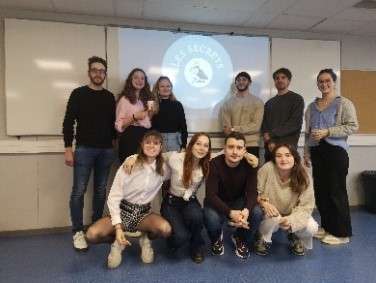
The Assignment: In a few sentences, can you explain how to approach the challenges of contemporary sports tourism?
Within the current tourism landscape, sports tourism is emerging as a constantly evolving field, breaking away from established conventions to adopt a new identity. Unlike other forms of tourism deeply rooted in the history of leisure and travel, sports tourism presents itself as a constantly redefining entity, characterized by fluid boundaries and a diversity of facets that are still being defined. In many Western countries, including France, the growing interest in this sector is driven by two major trends. On the one hand, it reflects a gradual integration of traditional recreational sports into the tourism offering. On the other hand, it reflects the growing integration of sports-based recreation into the social fabric, thereby transcending the conventional framework of sports activities. By rejecting any categorical classification, sports tourism is part of a process of metamorphosis in which reference points are shifting.
This phenomenon, resulting from the shift from traditional sports toward recreational sports and the widespread growth of tourism, has attracted attention due to its significant economic impact and its appeal stemming from the values it promotes (such as respect for the environment, ecology, the pursuit of freedom, well-being, etc.). These promising aspects have led to the increasing integration of sports activities into institutional tourism communications. Professionals from the sports tourism sector, as well as university professors, will share their expertise and perspectives on the contemporary issues inherent in this constantly evolving field. Their insights and analyses will deepen our understanding of the current challenges facing sports tourism and offer avenues for reflection on its future direction.
Yann Ramirez, Sociologist
“Contemporary sports tourism is not lacking in challenges. If we had to identify a few key principles, they would be foresight and adaptability. Just like a skier or a driver, you must always keep a watchful eye on the next turn. By anticipating, we prepare for future demand, which must align with the current context: laws and policy decisions on net zero land development and low-emission zones are examples that place constraints on sports tourism stakeholders in specific regions. Knowledge of the local environment thus enables adaptation so that the sector can continue to thrive.”
Clément Lopez, sociologist specializing in sports policy
“The issue of ‘contemporary sports tourism challenges’ refers to the evolution of sports and tourism practices and their modalities, which are becoming increasingly diverse in the ways they intersect. It is interesting to note that, on the supply side, commercial actors are no longer the only ones interested in this phenomenon, which is now the focus of strategies by national governments, local authorities, and sports federations. Indeed, these organizations view “sports tourism” as a phenomenon that, when guided by development strategies, can contribute to the appeal of regions or sports disciplines. This, however, raises the question of whether this supply can be adapted to meet the challenges of public policy and social demand, to which it must be aligned. In short, one of the main challenges, in my view, lies in the ability of the various stakeholders to democratize “sports tourism”—that is, to reduce inequalities in access to the tourism experience and/or the practice of sports.”
David Queffelec, Head of Marketing & Corporate Governance at Hérault Tourisme
“Outdoor recreation is a key issue in terms of both regional development, meeting the needs of our customers, and addressing environmental challenges that affect our lifestyles and daily consumption patterns.”
The Hérault department offers a true outdoor playground thanks to its geographic diversity, varied landscapes, and favorable climate, making it possible to enjoy a wide range of activities throughout the year. This natural richness is“perfectly aligned with the region’s main tourist attractions, combining outdoor recreation, wine tourism, and exploration of iconic sites.” Furthermore,“the region is committed to developing and improving its natural offerings by organizing and enhancing its infrastructure : maintaining and upgrading existing trails, creating themed experiences such as wine-tasting hikes or bike tours through the vineyards, improving trail markings, enhancing the services offered by local professionals, and establishing new routes for nature enthusiasts, such as the Grande Randonnée trails between the lakes, the Grande Traversée du Massif Central, the Via Rhôna, car-free routes, as well as earning the “Accueil Vélo” certification.
Current trends in tourism consumption“favor outdoor recreational activities, marked by a reduction in travel, a shift toward short trips , and a remarkable evolution in equipment, including notably the rise of electric bikes, a growing variety of hiking options, and increased accessibility to natural sites.” In Hérault,“a key factor is the steady influx of new residents—1,500 people per month over the past 15 years—all eager to explore their new surroundings through outdoor recreation.” Finally,“the major shift in this area is the trend toward break down the traditional boundaries of the seasons, making it possible to enjoy these activities not only in the spring and summer, but throughout the year. With its rich array of outdoor recreational opportunities, the Hérault—dubbed the ‘new land of diverse sports’—is well-positioned to meet these trends.”
Environmental challenges are a major concern for the future of tourism. Nature-based recreation and the promotion of our local customers are among the key responses to these challenges.
Nathalie Le Roux, Associate Professor
“The primary challenge would be to restore meaning to tourism, which has been widely called into question by the COVID-19 pandemic. Philippe Bourdeau (2012) proposes to ‘uninvent tourism’ in order to return territories to their inhabitants and to living organisms. This would involve rethinking tourism—not as an end in itself, but as a means. Envisioning regions where the welcoming of athletes, visitors, tourists, travelers, newcomers, or migrants is in the hands of local stakeholders and benefits the region without depleting its resources. Tourism must be one possibility, chosen among others, and not the sole economic option that would overwhelm all other forms of social activity. Restoring its meaning also means building connections with local stakeholders outside the tourism sector—farmers, artisans, and artists—to weave a coherent and solid fabric together. In the field of sports tourism and outdoor sports, this is the task set by “recreational laboratories” (Corneloup, 2016), where the focus is on the construction of “commons” rather than on the “creation of products.”
The second issue, which is closely related to the first, is social justice. Because, like many economic activities, tourism is rife with inequalities—social, gender-based, and health-related—from which people with disabilities are often excluded. Invented by the English aristocracy in the 18th century—and although they have since spread and become more accessible—tourist activities (and outdoor sports in particular) remain the preserve of the “dominant” classes. Certain activities are now increasingly challenged by environmental movements, residents’ associations, and sometimes by people who lack access to them—who either demand their right to participate or propose alternative ways to vacation that are more modest and community-oriented.
The third challenge, it seems to me, is innovation. Innovation is very often highlighted, technological innovation is said to resolve certain challenges. But when it comes to social innovation that the resolution of these initial challenges depends: what forms of alternative businesses, what forms of work, what sources of income can we rely on, and how much time do we have to carry out our collective projects?
Finally, the fourth issue is educational. How can we encourage cooperation and creativity in individualistic societies? The task facing educators is immense as well! What role(s) should schools, high schools, and colleges play, if not that of restore imagination to students (which the institution sometimes robs them of). To allow them to imagine, tinker, cooperate, and invent. It is often outside of school—during sports activities with peers and on vacation (for those who have access to them)—that we learn these things. Many providers of outdoor sports activities are already passionately embracing this educational role and restoring the experience of nature that is said to be on the verge of extinction in our urbanized societies (Pyle, 2013).”
Ms. Le Roux concludes with this reflection on us, the students in the MTS master’s program:“So, what challenges lie ahead for students in Sports Tourism Management? To become capable (by researching, developing their critical thinking skills, and learning to collaborate with professionals from other fields) to participate in—or even initiate—discussions in destinations and/or companies to jointly develop more equitable tourism offerings, more welcoming and undoubtedly simpler or, at the very least, in line with what the relevant stakeholders wish to share and what the natural world is still capable of sustaining.”
Conclusion
As we have seen, sports tourism stands out as a constantly evolving field within the travel and leisure industry. Its ever-changing nature, which defies established conventions, reflects a landscape in constant flux, adapting to new trends and the shifting demands of contemporary society. This evolution—which transcends the traditional boundaries of sports to become woven into the social fabric and is grounded in values such as respect for the environment, freedom, and well-being—has captured attention due to its significant economic impact and its ability to attract a broad audience. The insights and analyses from various experts in the sports tourism sector, shared in this interview, reveal key avenues for understanding the current and future challenges in this field. Their diverse perspectives—ranging fromanticipating future trends toadapting tourism offerings and promoting natural resources —encourage us to rethink tourism through the lens of sustainability, equity, and openness to social, economic, and environmental changes. It is thus clear that contemporary sports tourism requires an innovative approach—based on cooperation, creativity, and a keen awareness of socio-environmental issues —to secure a future in which it will help shape more inclusive tourism experiences that respect our environment.
It's our turn!!
Bibliography
Bourdeau, P. (2012). “Tourism Reinvented by Its Peripheries?” In: Bourlon, F., Osorio, M., Mao, P., Gale, T.
Exploring the New Frontiers of Tourism. Perspectives on Tourism Research, Nire Negro, pp. 31–48.
Corneloup, J. (2016). Recreational Labs: Drivers of Rural Territorial Development. In:
Juan-Luis Klein; Bernard Pecqueur; Kirsten Koop; Sid Ahmed Soussi. Socio-Territorial Innovation in the Face of Globalization: A Challenge for Stakeholders, Presses de l’Université du Québec.
Myttenaere, B. D. (2009). At the Crossroads of Tourism Development and Environmental Protection. 28(2).
Pigeassou, C. (2022). Chapter 1. Sports Tourism: A Social Reality with Unclear Boundaries. In C. Sobry (Ed.), Sports Tourism (pp. 33–71). Presses universitaires du Septentrion. https://doi.org/10.4000/books.septentrion.117373
Pyle, R. (2016). “The Extinction of Experience.”Ecology & Politics, 53, 185–196.