Backpacking: Between Individual Journeys and Societal Pressure to Prioritize Health and Well-Being
In this study, we seek to identify and understand the motivations that drive hikers to engage in backpacking. The Stevenson Trail was established and designated as GR70 more than 100 years after Robert Louis Stevenson’s backpacking journey in 1878 through the Massif Central. We conducted a qualitative study based on semi-structured interviews with eight hikers on the Stevenson Trail. Considered more than just a long-distance hiking trail, it may be undertaken for therapeutic purposes—following physical or mental injuries—or, more generally, in pursuit of well-being. However, this study shows that a passion for this activity is shaped both by individuals’ past experiences and by their socialization. The social pressure to prioritize health and well-being, which is very prevalent in our contemporary societies, greatly influences interest in backpacking.
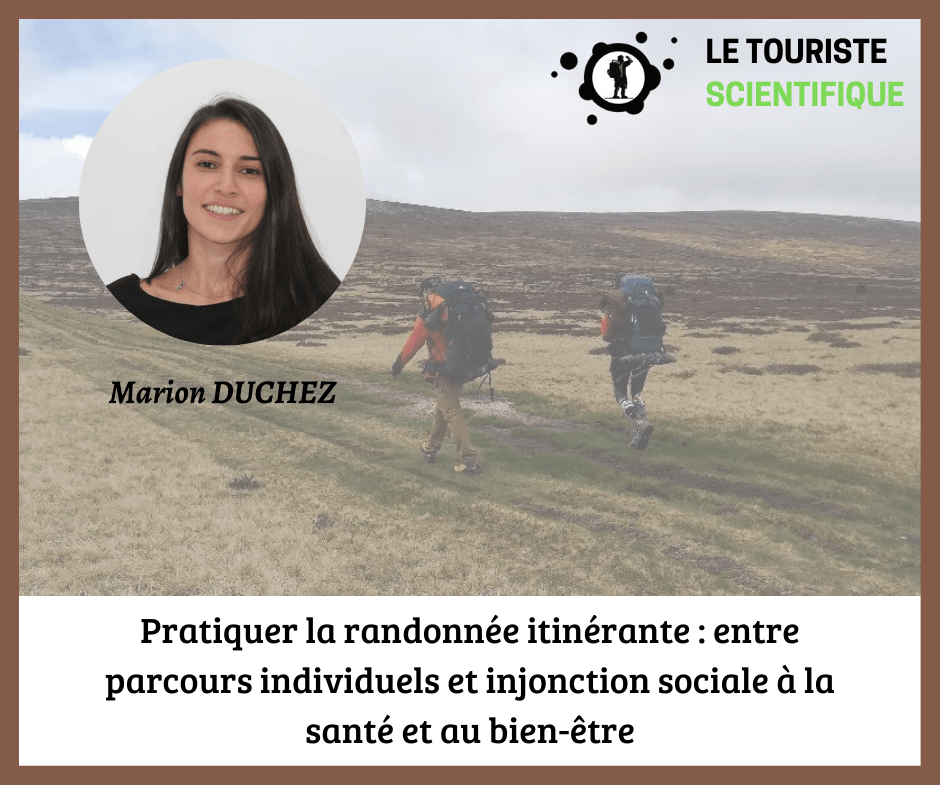
Hiking is one of the most popular sports activities among the French during their vacations and free time. Participation in this activity has increased by 25% over the past ten years, and this growth is driven by a desire to reconnect with nature (Atout France, 2019). Indeed, “the need to return to nature, the pursuit of well-being and health […] contribute significantly to the development of these tourism activities” (Siau, 2007: 16). These concerns, which are “at the heart of a dominant discourse” (Rail, 2016: 20), are taking hold in people’s minds and permeating our society (Klein, 2008).
“Walking is a wonderful escape from the routines of thought and daily life, and even from those of anxiety and sadness” (Le Breton et al., 2012: 55). In 1878, it was for this “therapeutic” purpose that Robert Louis Stevenson decided to embark on a journey on foot. Following a breakup, this young Scotsman needed to “rediscover himself” and put his personal problems behind him. For 12 days, he set out, accompanied only by his donkey. This story invites us to refer to the work of Bessin et al., who study how the social sciences address breaks and turning points in individual life trajectories. “The term ‘bifurcation’ has emerged to describe situations in which contingent events or minor disruptions can lead to significant reorientations in individual trajectories or collective processes” (Bessin et al., 2009: 9). This means that each person’s past life experiences can explain what these authors call biographical ruptures, which contribute to shifts in identity and changes in attitudes. This is why, according to these authors, it is essential to study individuals’ biographies to understand certain current behaviors. We can view Stevenson’s breakup and the associated suffering as a key moment—“turning point”—in his journey that may have led him to set out on the trails. Furthermore, setting out on a hike for several days might sometimes be necessary to “prune away thoughts that are too heavy,” all the more so “if suffering was the driving force behind the departure; it might sometimes have the chance to fade with each step and no longer choke one with such intensity” (Le Breton, 2012: 55).
Beyond the reasons that lead to life on the road, Trontin (2019) shows how periods spent on the road can bring about profound changes in behavior and lifestyle. As an educator working with troubled and academically struggling adolescents, Trontin draws on his field experience and observations regarding “recovery retreats.” According to him, temporary removal from one’s usual environment, walking, and nature are essential for introspection and enable these young people to take the steps needed to reconcile with themselves and those around them. For several philosophers, such as Nietzsche (1888), Gros (2009), and Pavie (2014), walking can be practiced as a spiritual exercise and is believed to be beneficial for physical and mental health. Although demonstrating these health benefits is not our purpose here, we note that the discourse and data on this subject are part of our daily lives and help shape our choices.
Strauss (1992) analyzed “identity transformations in the context of socially organized changes in status” (Bessin et al., 2009: 28). According to him, although this is a personal assessment, the change stems “obviously from a socialized and socializing process” because biographical events “that trigger a reevaluation of identity are highly likely to occur and to have the same meaning for other people belonging to the same profession or social class ” (Strauss, 1992: 106). We cannot study this social phenomenon during Robert Louis Stevenson’s time, but we observe that today the pursuit of well-being is far from being addressed solely by the medical community; rather, it is a topic heavily promoted by the media and advertising. Moreover, health is defined by the World Health Organization as “a state of complete physical, mental, and social well-being” that “is not merely the absence of disease or infirmity.” Our society pushes individuals toward a wellness imperative by dictating how they should feel, how they should be, and how they should behave (Rail, 2016). Taking care of one’s health is now the social norm, though it leaves individuals free to choose how they wish to care for themselves. Klein calls this phenomenon “self-health” (Klein, 2008: 224). It is as if individuals were responsible for their own health, even though we know how significant social inequalities are in this area (Feillet and Roncin, 2006).
It is within this framework that we will attempt to explain engagement in backpacking. In this article, we aim to link Bessin et al.’s (2009) concept of “bifurcation” with health and well-being concerns shaped by social norms, drawing on the work of Rail (2016) and Klein (2008). Stevenson’s love story thus leads us to believe that we must look to individuals’ life trajectories for the reasons behind their decision to set out on these journeys. However, as the literature suggests, we will consider this activity as being more broadly embedded in a social context that encourages individuals to take care of themselves. We believe that holding “both ends” of this line of reasoning is better suited to capturing the reality of the phenomenon.
Methodology and Study Area
The purpose of our qualitative study is to understand how people get started with backpacking. We chose to conduct this analysis along the Stevenson Trail (GR70)1, because I myself hiked part of this GR trail over the course of five days. Along the way, I became interested in the history of the trail—and thus in that of R.L. Stevenson. Encountering hikers, some of whom were traveling alone, led me to want to study the reasons behind their journeys. I also discovered the existence of the Stevenson Association2 , which allowed me to post an announcement recruiting hikers on their Facebook page. Following this announcement, twenty-one members expressed interest in participating in our survey. Among these individuals—some of whom had provided details about their experiences or profiles—we selected eight people for our sample based on standard diversity criteria: gender and age3.
We were thus able to conduct eight in-depth interviews (ranging from 21 minutes to 1 hour and 30 minutes) with hikers who had walked the Stevenson Trail. Our interview guide, inspired by Blanchet (1992) and Kaufman (1996), included an introduction and a series of questions grouped into six themes: the experience on the Stevenson Trail, physical activity, professional life, family life, and each participant’s personal tastes and interests. This method allowed us to maintain a guiding framework for our interviews while leaving room for spontaneity by adapting our questions as the data collection progressed.
Due to the COVID-19 health crisis, our interviews were conducted via various platforms—including phone, Skype, and WhatsApp—during the first lockdown (March–April 2020). These conditions (with most interviews conducted without a camera) prevented us from observing our interviewees’ body language and facial expressions. This might have helped us delve deeper into our analysis of the hikers’ emotions as they shared their life stories, but we did pay close attention to the interjections that expressed spontaneous emotions.
Table 1: Profile of Respondents.
| Interviewees | Occupation | Sports and hiking experiences. |
| Alain, a 56-year-old man (21 minutes) | Self-service manager at a building materials supplier for 38 years. | – Goes hiking regularly in his free time, either with his partner or with his family. –First backpacking trip on the Stevenson Trail, with his partner, in 2018. – Started indoor sports in 2018. |
| Jean, a 57-year-old man (33 minutes) | Civil service position: principal at a middle school. | – Goes hiking regularly in his free time, either with his partner or alone. –First backpacking trip on the Stevenson Trail, with his partner, in 2018 and 2019. – Running and hiking since 2012 |
| Sandra, a 29-year-old woman (54 minutes) | A 15-month project focused on fire prevention and the preservation of natural heritage with the nongovernmental organization (NGO) Pompiers Sans Frontières. She went on maternity leave at the end of April 2020. | – Goes hiking regularly in her free time, either alone or with her partner. – 1er Hiking in Andalusia—Stevenson, alone and as a couple, 2017. - Yoga and rock climbing on a regular basis |
| Julie, a 33-year-old woman (38 minutes) | Just returned from a trip to Australia. Looking for a job. Career change: teacher of French as a Foreign Language (FLE). Certified yoga instructor. | – She goes hiking regularly in her free time, either alone or with friends. – 1era A solo traveling adventure on the Stevenson Trail in 2019. – Yoga and Krav Maga |
| Raphael, a 34-year-old man (1 hour and 30 minutes) | Temporary worker in the plastics manufacturing industry. | – Goes hiking regularly in his free time, alone. –First trek on the Cathar Trail, alone. – Hiked the Stevenson Trail alone in 2019. – Tennis, running, cycling |
| Catherine, a 55-year-old woman (28 minutes) | Program Assistant at a training center. | – Goes hiking regularly in his free time, either with his partner or his family. –First trek in Lanzarote with his daughter – Hiking with his daughter in 2018. – Tahitian dance, skiing, snowshoeing. |
| Cécile, a 31-year-old woman (38 minutes) | Researcher at a public agency dedicated to coastal protection in Montpellier for the past 9 years. | – Goes hiking regularly in her free time, either alone or with her family. –First backpacking trip on the Stevenson Trail, alone in 2018 and 2019. – Swimming, kayaking, badminton, trail running |
| Charles, a 36-year-old man (21 minutes) | Shuttle driver for the mail coach during the season for the past year. | -Didn't go hiking before the Stevenson Trail-First backpacking trip on the Stevenson Trail, as a couple in 2018. -Skateboarding, snowboarding, skiing, biking |
Life experiences and social influences: the reasons behind the different paths taken by our hikers on the Stevenson Trail.
The aim here is to understand what motivates people to hike the Stevenson Trail. Discourse analysis reveals not only individual reasons but also numerous elements suggesting that hikers’ routes are collectively constructed.
Physical or emotional injuries and the need to “find oneself.”
An analysis of the life trajectories of the hikers surveyed reveals several turning points, as defined by Bessin et al. (2009). According to our data, these may correspond to health issues and/or emotional trauma resulting in a need to find oneself again. Sometimes, this trauma can lead to a need to prove one’s abilities to oneself. This was the case for Alain, who wanted to challenge himself physically and mentally following a heart attack.
“It was a little challenge I faced, too—uh, after the heart attack I had in November 2017, […] it was about being able to, uh…, manage to do something, you know […] and in a way, that’s an achievement in itself, […] not feeling like I’m good for nothing.”
(Alain, a 56-year-old man)
It was a health issue that prompted two interviewees not only to take up backpacking on the Stevenson Trail but also to start exercising in general. Just like Alain, Jean had his first backpacking experience on the Stevenson Trail, but as for how he got to that point:
“The thing is, there’s actually a long-standing issue here, and also a challenge behind it, because in 2012 I had heart surgery, and after that surgery I started exercising […] to move on and to show that just because you’ve had heart surgery doesn’t mean your athletic career is over—far from it.”
(Jean, a 57-year-old man)
Indeed, Strauss (1992) studied this phenomenon by incorporating the identity formation process into the analysis of chronic illness trajectories. According to Strauss’s theory, “the onset of illness introduces a discontinuity between the self of the past and that of the present, subject to a biographical process that introduces irreversibilities while reestablishing a sense of continuity ” (Bessin et al., 2009: 29). It can be said that this emotional shock caused them to seriously reevaluate their lives, which prompted them to take control of their lives and start exercising to take care of their health. These biographical ruptures were the triggering event in the change of their lifestyle habits.
“Well, since my heart attack, I’ve been going to the gym twice a week […] so yes, exercising—yes, absolutely, it was the heart attack that got me started with exercise.”
(Alain, a 56-year-old man)
This problem forces the individual to acknowledge that he or she is no longer the same person and, as a result, compels him or her to adopt new lifestyle habits (Bessin et al., 2009).
However, this is not just a matter of physical health. Life-altering events can just as easily take the form of emotional wounds that lead to a need to be alone with oneself and to clear one’s mind through backpacking. That is precisely what Cécile came to seek on this trail.
"Well, actually, I was going through some personal issues back in 2018—nothing too serious, but I just wanted to be alone for a bit, to think things over."
(Cécile, a 31-year-old woman)
In fact, the need to reconnect was frequently mentioned during the interviews, often in the wake of unhappiness at work, personal problems, or a breakup.
“I was leaving to find myself, to spend some time alone with myself […] and, yeah, my sources of motivation, too—to go into a little more detail—were that I’d just broken up with my partner at the time […] I needed more freedom, more flexibility, let’s say, in my life.”
(Raphael, a 34-year-old man)
According to Bessin et al. (2009), just like health problems, mental injuries can precede the bifurcation phenomenon4. Each of these biographical events may then explain why certain people—sometimes abruptly—change their habits, exercise routines, diets, and social circles, as if they were taking a completely different direction in life. Here, these wounds justify the decision to set out on the Stevenson Trail (just as for others it might have been the Camino de Santiago) and, for some of our hikers, to take up other physical activities. Hareven and Masaoka (1988) refer to “turning points in life,” which they equate with “perceptible markers.”
Hiking the trails allowed our hikers to confront themselves and change their perceptions of themselves and others through the encounters they had along the way and the reflections they had while walking alone or with others. Raphael set out alone on the Stevenson Trail but met some wonderful people.
“I was in my element during those evening get-togethers—chatting, getting to know… myself […] and during our conversations on the trails—which were all about the trails—they helped me get to know myself a little faster, so to speak.”
(Raphael, male, 43 years old)
According to Mormont (2019) and Le Breton (2012), hiking in nature “is a form of renewal” (Le Breton, 2012: 55) and allows us to reexamine how we view ourselves, the world, and others. The goal is to reach a contemplative state of self-reflection. Other authors disagree with this idea of reconnecting with oneself. For Pavie (2014: 74), “walking is not about finding oneself, but rather about escaping the notion of identity, being nobody, being nothing more than a walking body.” One might think that our hikers also detach themselves from this notion of identity during their trip because
“A day-long walk—well, you just go back to your daily routine […] whereas when you set out on a backpacking trip, you have to let go and operate differently.”
(Catherine, a 55-year-old woman)
Indeed, walking allows one to break away from one’s environment (Trontin, 2019). The “breaks” created during the walk are thus defined as a turning point or a transformation that takes place “in the form of micro-changes” and attests to “a break with previous ways of functioning ” (Trontin, 2019: 124). For Le Breton, “walking is a way of restoring order to inner chaos; it does not eliminate the source of tension, but it creates distance from it” (Le Breton et al., 2012: 55). As Raphael puts it, it is about going:
"Looking for little things we can't get back home"
(Raphael, male, 34 years old)
This practice reveals “the experience of a true ordeal […] in which departure can sometimes be seen as a remedy,” because “what cannot be satisfied within and by one’s social circle—in fact, the need for the infinite—finds a form of fulfillment in departure” (Maffesoli, 1997: 148).
Still with the aim of distancing themselves from their daily lives, we were able to identify, in the statements of some of our interviewees, a relationship to time that seems specific to itinerant practices.
“Hiking is really… yes, it’s a break; it’s about… well, not forgetting, but at least setting aside work-related worries—maybe we’re trying to step away from a certain routine in our everyday lives.”
(Jean, a 57-year-old man)
For Jean—and Julie, too—it’s really about taking a break, putting their current lives on hold, and getting away to recharge by distancing themselves from problems, big and small.
“For me, backpacking is a break—a chance to be 100% immersed in the experience and not get distracted by outside influences […]. And the fact that I’m in a completely different setting just a few kilometers from home—well, […] you’re somewhere else, you know? You’re in France, but you’re completely somewhere else.”
(Julie, a 33-year-old woman)
It's as if it were a parallel life:
"I took my body somewhere completely different."
(Raphael, male, 34 years old).
This sense of being elsewhere has been studied by Bourdeau (2003; 2018), who, at the end of his dissertation, focused his research on “the relationship to elsewhere in contemporary urban societies” (Bourdeau, 2003: 15). He examines the relationships between “here” and “elsewhere,” and in particular access to “an elsewhere that breaks with the here” (Bourdeau, 2018: 2). Based on our interviews, we observe that the environment facilitates the “transition” between “here” and “elsewhere,”
“Walking through a forest where, um… there was a deep silence—it was extraordinary. I really felt like I was passing through… when I say ‘passing through,’ it might make you smile, but it was like an airlock leading into another world…”
(Jean, male, 57)
It is precisely that feeling of being somewhere else that our hikers came to experience on this multi-day hike along the Stevenson Trail—to the point where, at times, they even became someone else. As Jean says:
"It's a break from our everyday lives. It's a different way of doing things."
(Jean, male, 57 years old)
Some sociologists describe the phenomenon of bifurcation as a radical change. For them, it is a form of identity transition leading to a biographical shift—that is, becoming someone else, with both an old and a new self (Bessin et al., 2009).
That is why, as in Trontin’s (2019) work, we find that backpacking brings about changes that continue after the trip. The act of walking, being connected to nature, and the insights and reflections that arise on the trail lead our hikers to change some of their behaviors and lifestyle habits after their trip. In fact, they all returned “shaken up,” “transformed,” “deeply moved,” “more confident,” “less stressed,” and so on. Catherine, for example, changed her lifestyle after her experience on the Stevenson Trail:
“When it comes to my consumption habits—whether regarding food, clothing, or my carbon footprint in general—it’s actually my relationship with the world that has changed.”
(Catherine, a 55-year-old woman)
Charles, who had never been on a backpacking trip before and set out to meet up with his girlfriend, found the experience to be therapeutic. He explains:
“It was actually after that hike that I found a mindset that allowed me to put things into perspective, to give things time, to not get carried away, to stay calm, and to keep my voice down.”
(Charles, a 36-year-old man).
But also that he felt the benefits for a long time:
"I think that for a year after that, I didn't have any outbursts or stress, or anything like that—it was really therapeutic."
(Charles, a 36-year-old man)
This backpacking trip also left me wanting more: “I came home, and everything had changed—I didn’t want to go on day hikes anymore; I think I’m now a die-hard fan of backpacking.”
(Raphael, a 34-year-old man).
Sometimes even moments of self-doubt:
"I didn't question my life, but I certainly questioned myself."
(Raphael, a 34-year-old man).
Indeed, “nature puts humans in their proper place simply because it is there—simply there—and not because it intends to be an obstacle to them” (Mormont, 2019: 156–157).
Bessin et al. (2009) and Trontin (2019) offered two interpretations of the phenomenon of bifurcation—one preceding the transition and the other following it—which are closely related and based on the pursuit of well-being and good physical and mental health.
Social Influences on Physical Activity and the Importance of Well-Being and Health
Our theoretical study helped us identify, in our interviews, elements of social pressure toward a focus on health and well-being through sports. Our analysis highlights a sense of belonging to a social group; let’s look, for example, at how our hikers presented themselves:
"Like many people, I've come to enjoy walking and taking strolls."
(Jean, a 57-year-old man)
"Um, I go hiking—well, you know, just like a lot of people do on the weekends."
(Julie, a 34-year-old woman)
It’s as if they felt compelled to justify themselves, and the phrase“like everyone else”—mentioned here twice—clearly illustrates this desire to be part of the hiking community, as well as the community of people who stay in shape through regular physical activity. Indeed, this allows individuals to identify with a social image. Charles also says that the Stevenson Trail “is a wonderful community of hikers” ( Charles, a 36-year-old man). Raphael, on the other hand, does not feel he fits into the social norm when it comes to his career path:
"I've taken on quite a few odd jobs; I haven't really settled into a steady job in my life."
(Raphael, a 34-year-old man)
So even though we’re not talking about sports here, it’s as if there were rules for belonging to this social group. This sense of belonging fosters shared values related to sports. In fact, when analyzing the various sports activities of our hikers (e.g., running, skateboarding, dancing, yoga, rock climbing, snowshoeing…), we notice a lack of competition. There is a clear assertion of personal preferences in sports, contrasting competitive sports with hiking. This is the case for two of the people interviewed. Sandra, who rejects this competitive spirit, felt excluded from her gym group after expressing her preferences, which led her to quit:
“I was in a group. I’m not very competitive, so I asked not to participate in competitions. But then I felt like the teachers weren’t paying much attention to me, and as a result, I had a hard time making progress.”
(Sandra, a 29-year-old woman).
Julie, for her part, says she is not part of this social group because:
“You have to fit into certain categories; you have to be better than your peers. It’s not about helping each other; it’s not about pushing yourself to the limit—it’s about outdoing others, it’s about beating them.”
(Julie, a 34-year-old woman)
However, it is clear that past experiences (socialization) play a role in shaping tastes, as we saw earlier. In fact, Julie recalls unpleasant memories related to her experience with physical education in school.
"For 31 years, I had a relationship with sports that was based on hatred—you could put it that way. I hated it because I had terrible teachers."
(Julie, a 34-year-old woman)
Based on the work of Bessin et al. (2009), Julie and Sandra’s past experiences with sports led them to turn to hiking and to reject competition.
According to Jean, backpacking is a practice
"The style that's popular these days—which you could call minimalist, right?—means a pair of shoes, a bag, and just the bare essentials inside. With that, you can travel 280 km—or even further."
(Jean, a 57-year-old man)
Indeed, walking manages “to free us from the illusions of what is indispensable” (Gros, 2009: 12). But if we were to define fashion, we would say that it is a phenomenon that encompasses both the collective and the individual, involving the codes that society imposes and the image it reflects. Fashion also allows people to assert their social status. The backpacking market is just as thriving as the health and wellness market. The statistics speak for themselves: 56% of backpackers are between the ages of 25 and 49, according to the French Hiking Federation5. We can also observe how hiking gear is becoming increasingly technical and stylish, accompanied by attractive visual marketing focused on promoting well-being. Indeed, health has permeated our society, and “many consumer products claim, directly or indirectly, to be related to health, positioning themselves as wellness tools. The marketing of major companies, whether consciously or not, plays on the concept of health, aiming to integrate their wellness products into a trend that is currently on the rise” (Klein, 2008: 214). This messaging, which blends hiking and well-being, influences people to take up the activity, but the growth of alternative medicine also shapes this choice. Today, the growth of unconventional medicine is leading more toward a non-pharmaceutical approach. Engaging in physical activity—particularly low-impact exercise such as walking—is highly recommended by healthcare professionals to maintain good mental and physical health (Duchez, 2020). For Jean,
"We walk for ourselves, but we also walk for an ideal."
(Jean, a 57-year-old man)
Indeed, our society values beauty and performance, which is why people of all ages—but especially older adults—feel a sense of duty to take care of their bodies by engaging in physical activities that allow them to maintain their social integration (Feillet and Roncin, 2006). We also note in the responses of those interviewed that they are concerned about their health and well-being. In our conversation with Raphael, we observe external social pressure:
“I’m a smoker, too, so that’s not great,” but running makes him feel “cleaner”—“it cleanses me; I think it’s psychological, too.”
(Raphael, a 34-year-old man)
We all know that smoking is bad for our health because that’s the message society conveys to us: “Smoking kills.” It’s as if everyone were being encouraged to take charge of their own health and stay physically and mentally fit (Feillet and Roncin, 2006). Jean, who has had heart surgery, feels responsible for maintaining his health and, in a way, accountable:
"Well, this heart needs to be taken care of—it was given to me, so I have to take care of it."
(Jean, a 57-year-old man)
Health is not solely in the hands of healthcare professionals, since it is also a “matter of duty and individual responsibility, reconnecting with the concept of ‘being one’s own doctor’” (Crignon-De-Oliveira, 2010: 179–180). This is also true for Raphael, who chose to take control of his own life and tells us that playing sports helped him get back on track.
“That’s what sports are all about. For me, it was a time in my life when I could have gone off the rails—just like everyone else, for that matter; we’ve all had that choice—and for me, it was sports that told me, ‘No, no, don’t go off the rails.’”
(Raphael, a 34-year-old man)
But having a choice “would perpetuate the illusion of normative freedom for the social subject within a normative system in which he or she is, in fact, trapped” (Klein, 2008: 223). Our feelings, emotions, or pain allow us to assess our state of well-being. Logically speaking, everyone is free to eat, work, engage in physical activity, or seek entertainment as they wish. Yet our society still manages to persuade us to adopt—or not adopt—certain lifestyle habits to promote our well-being and thus remain in good health, as defined by the WHO6. Raphael’s final remarks—“like everyone else,” “we’ve all had that choice”— clearly show that we feel free even though we are tied to the collective, without necessarily realizing it.
In conclusion, the benefits of walking, the growing interest in well-being and good health, and the story of Robert Louis Stevenson led us to ask why hikers on the GR70 embark on this journey. To address this question, we conducted in-depth interviews with eight hikers on the Stevenson Trail and examined their life stories. We found that each individual’s life experiences shaped their passion for long-distance hiking. Indeed, through the biographies of our Stevenson Trail hikers, we observed mental or physical trauma, or a need to rediscover themselves, which drove them to take up hiking. Drawing on the work of Bessin et al. (2009), we were thus able to define this as a “bifurcation” phenomenon. Furthermore, various studies by Trontin (2019), Le Breton (2012), Mormont (2019), Gros (2009), Pavie (2014), and Bourdeau (1994) have demonstrated this activity’s ability to promote physical and mental well-being, as well as reflection. “It provides an opportunity to reflect on oneself, to engage in introspection, and to analyze our actions and deeds” (Pavie, 2014: 75). However, individuals are not free agents; they also live within a structured society, and we needed to understand their experiences and living conditions to comprehend their choices. We live in an era where we are expected to remain healthy for as long as possible, and if we do not, our responsibility is called into question, as our health is supposedly within our control. Even though we know full well that there are significant social inequalities, society still manages to place the responsibility for one’s health squarely on the individual. It is as if everyone were expected to take charge of their own lives, to maintain physical and mental fitness, and to cultivate social connections (Feillet and Roncin, 2006). Indeed, following the approach of Feillet and Roncin (2006), we analyzed our data by linking the individual to the collective. We have shown that the practice of physical activities in general—and, in our case, backpacking—is influenced both by our life experiences and by the prevailing discourses on the imperative of well-being and health and the importance of engaging in physical activity. These social imperatives generate a collective interest in backpacking and thus help shape individuals’ preferences. The fact is that individuals take up backpacking following life-changing events, but also to integrate into a social group and to respond to this imperative of well-being as defined by Rail (2016). Furthermore, we have observed that health and well-being are becoming a truly prolific market, with well-crafted marketing centered on self-care. Moreover, “physical and sports activities are exploited by commercial enterprises, which incorporate them to facilitate the conquest of new markets in the name of well-being” (Rail, 2016: 20). Thus, we understand that the individual and the collective are two interdependent variables, and we are unable to determine which is dominant.
Thus, each individual’s responsibility for maintaining their own health can contribute to reinforcing social inequalities. This emphasis on health and well-being influences the practice of physical activities. The wellness market drives consumption (particularly of high-tech equipment) and, in doing so, distorts the original purpose of backpacking, which should require nothing more than a good pair of shoes, a backpack, and a small budget for lodging. This leads one to wonder whether the choice to go backpacking following a life-changing event, in search of well-being, is not limited exclusively to higher social classes. This question could be an interesting topic for future research.
Bibliography
Blanchet, A., & Gotman, A. (1992). The Survey and Its Methods: The Interview. Paris: Nathan.
Bourdeau, P. (1994). Adventure Tourism: Beyond Appearances. Téoros, 13.3, 6–10.
Bourdeau, P. (2003) “Territories Beyond the Everyday: A Cultural Geography of the Relationship to ‘Elsewhere’ in Contemporary Urban Societies; The Case of Mountain and Nature Sports Tourism.” *Géographie*. Joseph-Fourier University – Grenoble I.
Bourdeau, P. (2018) “Post-Tourism Revisited,” *Tourism Review*, 13, 1–19. https://doi.org/10.4000/viatourism.1936
Crignon-De Oliveira, C. (2010). What Does “Aging Well” Mean?: Self-Care and the Prevention of Aging.Les Cahiers du Centre Georges Canguilhem, 4, 177–191.doi.org/10.3917/ccgc.004.0177
Duchez, M. (2020) The Concept of Disruption in Stevenson’s Work. Unpublished DESS thesis, Faculty of Sports Sciences and Physical Education, University of Montpellier.
Feillet, R. and Roncin, C. (2006) Body Care, Sports, and Aging: Between Well-Being and Risk-Taking: Understanding and Shaping Practices. Toulouse, France: Érès. doi.org/10.3917/eres.ronci.2006.01
Gros, F. (2009)*Walking as a Philosophy*, Paris: Carnets nord.
Bessin, M., Bidart, C., and Grossetti, M. (2009).*Bifurcations: The Social Sciences Confronting Discontinuities and Events*. Paris: La Découverte.
Kaufmann, J.C. (1996) The Comprehensiv Interview. Paris: Nathan.
Klein, A. (2008) “Health as a Standard of Care,” Philosophia Scientiæ. 12.2.213-227.doi.org/10.4000/philosophiascientiae.127
Maffesoli, M. (1997) On Nomadism: Initiatory Wanderings. Paris: Le Livre de poche.
Mormont, L. (2019) “Nature as a Therapeutic Tool,” in Trontin, T., and Archambault, O., *Rethinking Residential Treatment Programs: Daring to Innovate!*, pp. 153–160, Toulouse: Érès.
Nietzsche, F. (1988) *Twilight of the Idols*; Germany, Gallimard.
Pavie, X. (2014) “The Body as the Subject of Spiritual Exercises.”*Sociétés*, 125, 69–79. doi.org/10.3917/soc.125.0069
Rail, G. (2016). The Violence of the Imperative of Well-Being: Bio-Others, Rescue Missions, and Social Justice.Staps, 112, 17–31. doi.org/10.3917/sta.112.0017
Siau V. (2007). Outdoor Sports and Regional Attractiveness.*Pour*, 194, 13–20. https://doi.org/10.3917/pour.194.0013
Stevenson, R.L. (1878) Travels with a Donkey in the Cévennes, Paris: Flammarion.
Strauss, A. (1992) *The Fabric of Negotiation: Qualitative Sociology and Interactionism*, essays compiled and introduced by I. Baszanger, L’Harmattan, Paris.
Hareven Kanji, Masaoka Tamara K. (1988) “Turning Points and Transitions: Perceptions of the Life Course .” *Journal of Family History*, 1, 271–289. doi.org/10.1177/036319908801300117
Trontin, T. (2019) “On Some Concepts and Practices of Breakaway Stays,” in Trontin, T. and Archambault, O., *Breakaway Stays Under Scrutiny: Daring to Innovate! *, 97–151, Toulouse: Érès. doi.org/10.3917/eres.tront.2019.01.0097″
List of Websites
https://www.pourlascience.fr/sd/neurosciences/les-pensees-viennent-en-marchant-10504.php
http://www.leparisien.fr/week-end/tendance-la-rando-un-sport-qui-marche-09-06-2017-7027680.php
https://www.pourlascience.fr/sd/neurosciences/les-pensees-viennent-en-marchant-10504.php
WHO 1946 https://www.who.int/fr/about
- The Stevenson Trail is a flagship route in the Massif Central, marked in 1993 by the French Hiking Federation and designated GR70—more than 100 years after the publication of his travelogue *Travels with a Donkey in the Cévennes* (Stevenson, R.L., 1878). This 272-km route crosses four departments and can be traveled on foot, with a donkey, by bicycle, or on horseback. According to a 2014 study by the Stevenson Association, the trail attracted more than 6,000 hikers that same year. ↩︎
- The Stevenson Association, founded in 1994, is dedicated to bringing together economic, tourism, and cultural service providers (producers, lodging providers, restaurant owners, donkey rental companies, transportation providers, etc.). The network includes more than 200 professionals who work to promote the region’s economic development and keep the history of the GR70 alive and thriving. ↩︎
- Recruiting via Facebook can affect the age of respondents, which is why we took great care to vary this criterion when the “candidates” scheduled for an interview specified it. ↩︎
- As explained in the introduction, according to Bessin et al. (2009), the phenomenon of bifurcation stems from an unpredictable event that may occur during an individual’s earlier life. ↩︎
- PowerPoint presentation (ffrandonnee.fr) ↩︎
- See the definition in the introduction on page 4 ↩︎