Understanding the Rationale Behind Eco-Responsible Actions by Operators of Canyoning and Rock Climbing Facilities in the Hérault: An Analysis of Practices and Forms of Commitment.
This article examines the challenges of promoting eco-responsible practices in outdoor activities, focusing on canyoning and rock climbing in the Hérault region. Based on five semi-structured interviews with managers of canyoning and rock climbing facilities, it highlights the growing importance of eco-responsibility in sports tourism. Their search for solutions reflects a desire for innovation in the design of sports tourism, ranging from the creation of educational programs to the development of internal ethical charters. These initiatives demonstrate a proactive approach aimed at rethinking and shaping the future of the sports sector in harmony with current environmental challenges.
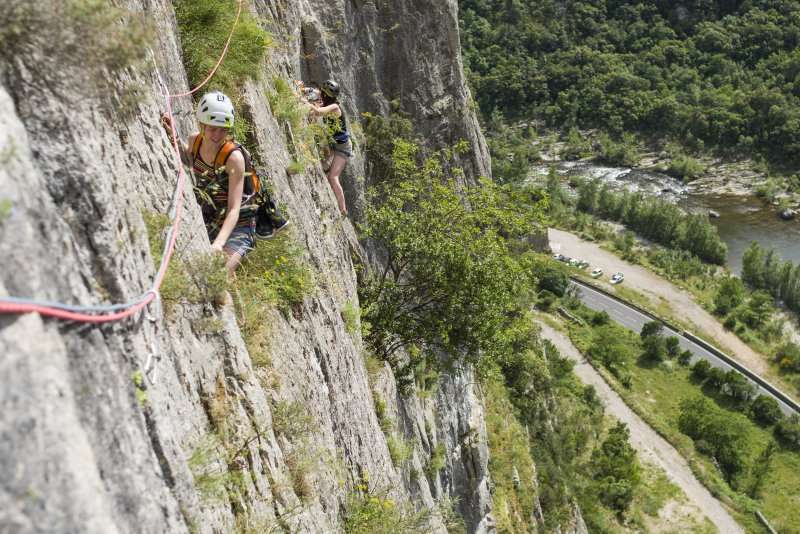
By Camille MASSETTI

Passionate about environmental issues and outdoor activities, I chose to explore both of these areas in my thesis. The convergence of these interests led me to focus specifically on eco-responsible practices in canyoning and rock climbing, with a particular emphasis on the Hérault region. Convinced of the growing importance of eco-responsibility in sports tourism—particularly outdoor sports tourism—I chose this topic to understand how managers of nature-based sports facilities incorporate these concerns into their practices.
Introduction
Outdoor sports, which initially centered on traditional games, saw growing popularity in the late 20th century, according to a 2001 BVA survey. This expansion generated significant economic benefits, with public investment totaling 168 million euros in 2005—24% of a total of 700 million euros. However, this expansion has also led to harmful environmental impacts, such as land development and damage to ecosystems (Horyniecki, 2006). It is therefore essential to examine how these activities can be integrated into an approach that promotes both sustainable development and environmental responsibility.
Since the 1980s, rock climbing and canyoning have been two outdoor sports experiencing steady growth, with an annual increase of 5 to 7 percent (Ministry of Youth and Sports, 2017). This has led to growing interest in their environmental impact and the need to adopt more responsible practices. The French Mountain and Climbing Federation (FFME) has emphasized the importance of exploring natural environments while stressing the need to respect ecosystems (FFME, 2021). Consequently, it is imperative to conduct an in-depth examination of the eco-responsible practices of sports tourism professionals (Mounet, 2007), as Jérôme Blanc-Gras points out in his book *Roc* (2010): the challenge lies in preserving these environments while ensuring the safety and enjoyment of participants.
This raises the question: How do the growing popularity of rock climbing and canyoning in the Hérault—along with their significant impacts—influence the decision-making processes of facility managers in the Hérault?
The “logics of action” (Amblard et al., 2005) of sports tourism stakeholders could help us understand their commitment to environmental responsibility. These logics offer an opportunity to understand what motivates sports tourism professionals in their environmentally responsible initiatives, as well as their awareness of the environmental, social, and economic issues associated with their industry. It is also a matter of understanding their role in promoting sustainable development, whether through raising customer awareness, managing natural resources, or other innovative initiatives.
It is therefore important to ask industry stakeholders how they integrate sustainable development into their outdoor activities. This raises questions not only about the adoption of eco-responsible practices but also about structural changes within their businesses. This evolution highlights the opportunities and challenges emerging in the transition toward more sustainable tourism, which are reflected in the design of their service offerings. Thus, what are their practices, how do they structure their offerings, and what are their prospects for change regarding issues of eco-responsibility?
To analyze the behaviors of stakeholders in nature-based sports tourism, four structural dimensions can be identified (Perrin-Malterre, 2014). First, the social dimension, which represents the balance between managers’ personal and professional lives. Next, the practical dimension, which encompasses customer satisfaction and awareness of environmental responsibility. Furthermore, there is the sporting logic, which pertains to site selection and the environmental quality of the activities. Finally, there is the organizational logic, which describes resource management and communication. To these logics, we can add the logic of eco-responsible action, which helps us understand the integration of eco-responsibility into the practice of canyoning and rock climbing.
The work of Perrin-Malterre (2014), which followed the methodology of Vachée, Corneloup, and Soulé (2004), appears relevant for examining the commitment of managers of canyoning and rock climbing facilities. Indeed, these researchers identified four logics or “structural poles” for understanding the actors in outdoor sports tourism. These structural poles provide an analytical framework for presenting and understanding the various rationales that guide the behaviors of managers of canyoning and rock climbing facilities. The four rationales identified by Vachée et al. (2004) would allow us to explore the rationales behind the actions of managers in the Hérault department. The unique character of this region, marked by its strong appeal for these activities, makes it an ideal setting for exploring the challenges and opportunities associated with promoting eco-responsible practices in the field of sports tourism. This approach is rooted in a sustainable development perspective, where a balance between environmental, social, and economic dimensions is essential to ensuring the long-term viability of outdoor activities.
Thus, the question is: How do the operators of canyoning and rock-climbing facilities in the Hérault region incorporate eco-responsible practices into their service offerings?
In this regard, an initial hypothesis would suggest that managers are more inclined to adopt eco-friendly practices because their business operates in the heart of nature. This would lead us to assume that the adoption of eco-friendly practices is seen not only as a way to attract customers who are concerned about environmental issues, but also as an expression of their commitment to education.
Furthermore, our second hypothesis would focus on managers’ environmental awareness as a means of integrating eco-responsible practices into their services. This would imply that managers’ environmental awareness is a determining factor in the adoption and promotion of eco-responsible practices in their service offerings.
Methodology
The objective of this study is to analyze how environmental responsibility is integrated into the sports tourism sector, particularly in outdoor sports, by examining whether it represents a fundamental shift or merely a marketing tool. To this end, the study focuses on canyoning and rock climbing organizations in the Hérault department, a region well-suited for an in-depth exploration of the dynamics of sports tourism. Furthermore, conducting this study was facilitated by an internship at Naturéo Sport & Aventure, which provided privileged access to the study area.
To collect the data, five semi-structured interviews were conducted (Blanchet and Gotman, 2005). This approach allows for a more flexible exploration while avoiding overly limited responses, thereby providing flexibility in gathering information. Given that the interviewees sometimes work alone and therefore have a heavy workload, this method encourages more detailed and straightforward responses.
The sample includes five managers of canyoning and rock climbing facilities in the Hérault department, selected based on criteria such as the type of activity and the services offered in the Hérault region. These interviews lasted between 1 hour and 1 hour and 30 minutes each, depending on the questions that were added as the interview progressed. To protect the respondents’ anonymity, their first names have been changed. This diverse sample, ranging from small to large facilities, aims to capture the variety of eco-responsible approaches present in the sector.
| Respondent | Age | Management | Activities |
| Félix | 36 years old | Alone | Via Ferrata, Canyoning, Hiking and Rappelling |
| Étienne | 31 years old | 2 managers | Canyoning |
| Pascal | 51 years old | Alone | Rock Climbing, Via Ferrata, Hiking and Rappelling |
| Fabrice | 41 years old | 4 managers | Canyoning, Via Ferrata, Rock Climbing |
| Benoit | 38 years old | 3 managers | Canyoning, Via Ferrata, Rock Climbing |
| A sample of the canyoning and rock climbing facility managers surveyed. | |||
The design of the interview guide was based on the principles defined in 2016 by Merriam and Tisdell, who stated that “an interview guide is a list of questions, discussion points, and topics to be addressed that allows the researcher to structure the interview and ensure that it covers all relevant aspects of the research. ” This approach made it possible to explore in depth each respondent’s commitments, values, and eco-responsible practices. The interviews thus provided a detailed understanding of the managers’ beliefs and actions, enabling an in-depth analysis.
Environmentally Responsible Actions by Managers of Outdoor Sports Facilities
"We can try to make sure that changes."
Managers of outdoor sports facilities, as key players in outdoor activities, have a significant influence on environmental responsibility through their personal choices. A growing awareness of the environmental impact of their activities was observed during interviews with the managers, although differing viewpoints were noted regarding the implementation of environmentally responsible practices.
The results of the interviews reveal a variety of eco-friendly initiatives implemented by some managers that go beyond mere intentions. Indeed, Pascal emphasizes , “We try to raise people’s awareness about plants—about the living things that are there wherever we go—and to avoid damaging the area and make it cleaner.”
This commitment to raising awareness is also reflected in concrete actions on the ground. Waste management policies have been implemented, demonstrating a commitment to adopting eco-friendly practices in our daily lives. As Étienne puts it: “We pick up cigarette butts and even clean up around where we are. If there’s trash, we take it with us. We really try.”
This approach thus demonstrates a clear commitment to protecting the natural sites where these activities take place. Efforts to manage waste are complemented by initiatives aimed at promoting more environmentally friendly transportation. Indeed, the need to rethink modes of transportation is also emphasized, with managers such as Pascal and Félix (both owners of canyoning and rock climbing operations) encouraging the use of public transportation to access their canyoning and rock climbing activities.
These concrete actions demonstrate a genuine commitment to reducing the environmental impact of their outdoor activities and are thus in line with UNESCO’s recommendations on education for sustainable development (ESD).
In addition, Fabrice (41, manager of a canyoning and rock climbing operation) takes a visionary approach, envisioning a profound transformation of his industry: “I’ve seen this coming for ten years, so I tell myself we need to transform the business.” He demonstrates this impact particularly through his business model: “This is my business model. Yes, we’ve developed a business model that I’m part of—it’s the cooperative, theentrepreneurial activity. It’s a model I’m trying to instill through training and through SNAPEC[1] because it’s a model that fosters foresight and clarity. ” This approach echoes Michel’s (2002) research on the role of environmental awareness in behavioral change.
For example, Fabrice’s actions—through his involvement in environmental education projects—demonstrate a particular sensitivity to the issue. His remarks also reflect a keen awareness of the ecological implications of his activities, thereby highlighting the impact of environmental awareness.
However, amid this optimistic picture, a dissenting voice can be heard, such as Benoit’s: “To me, what we call ‘eco-friendly’ these days are things we’re already doing but that we’re going to highlight to say, ‘We’re amazing,’ and it’s just advertising, really.” In a study by Cordelier and Breduillieard on green advertising and greenwashing,“A 2008 survey reported that 64% of large companies frequently use environmental and social arguments in their communications.”(2013, p. 117).
Benoit’s perspective adds a nuanced perspective to our understanding of environmental responsibility in the context of outdoor activities. His skepticism toward environmentally responsible practices raises questions about the actual effectiveness of these initiatives.
Thus, the dichotomy between Fabrice’s ambitious vision and Benoit’s reservations highlights the nuances of environmental responsibility in this sector. These differences also underscore the obstacles encountered. Despite growing awareness, constraints remain.
Furthermore, Fabrice’s vision perfectly illustrates the transition from a simple awareness of environmental issues to a broader sense of ecological responsibility. He thus embodies a new generation of “recreational eco-developers , ” demonstrating the need for innovation in practices related to outdoor activities. He embodies a shift toward transmodernity in the sports tourism and outdoor activities sector (Perrin-Malterre, 2014). According to Corneloup (2011), this phenomenon reflects a desire to transcend the limits of modernity in favor of a more sustainable model of society.
A summary table of the actions taken by operators of canyoning and rock-climbing facilities helps illustrate our point more clearly:
| Eco-Friendly Initiatives | Félix | Fabrice | Pascal | Étienne | Benoit |
| Use of Eco-Friendly Transportation | X | X | X | X | X |
| Use of Renewable Energy | X | ||||
| Reducing the carbon footprint | X | X | |||
| Water Management | X | X | |||
| Partnerships with Environmental Organizations | X | ||||
| Employee Continuing Education | X | X | |||
| Ecological Restoration Projects | X | ||||
| Promoting Sustainable Tourism | X | X | |||
| Eco-Friendly Certification | X | ||||
| Eco-designed equipment | X | X | |||
| Reducing Single-Use Plastics | X | X | X | ||
| Waste Collection | X | X | X | X | X |
| Environmental Awareness | X | X | X | ||
| Adopting Eco-Friendly Practices in Everyday Life | X | X | X | X | X |
| Adoption of a Sustainable Business Model | X | ||||
| A Critique of Eco-Friendly Practices | X |
This overview of the actions taken by operators of canyoning and rock climbing facilities highlights the diversity of approaches to environmental responsibility, providing a more comprehensive view of the concrete initiatives that have been implemented. Practices such as using eco-friendly transportation or picking up trash are actions adopted by the majority of operators, indicating that they are widely viewed as essential and easy to implement. However, more ambitious measures, such as using renewable energy or obtaining eco-responsible certification, are less common. Furthermore, it is interesting to note that Benoit, unlike the others, takes a different stance toward eco-responsible practices, revealing a certain diversity in ecological commitments. So, how does this awareness of environmental impact among canyoning and rock climbing operators translate into their daily practices as well as into the collective?
From Environmental Awareness to Collective Commitment
From exploring the concrete actions taken by managers to ways of incorporating eco-responsible approaches, the focus has now shifted to individual awareness—the foundation of the concrete actions implemented—which is influenced by a collective consciousness that is pervasive in today’s society.
This process therefore involves a shift in individual mindsets toward a more comprehensive understanding of environmental issues—and this must happen collectively. This is a dynamic in which individuals move from personal awareness to collaboration with other stakeholders in the sector to implement sustainable solutions that go beyond mere “window dressing.” This evolution reflects not only a change in individual practices but also the building of a community committed to environmental conservation and the promotion of sustainable development in the field of outdoor activities.
Concrete actions rooted in personal convictions: a tension between the individual and the collective.
The individual awareness of managers of canyoning and rock-climbing facilities is deeply influenced by a collective dimension and the current climate of environmental awareness. This interaction between personal awareness and collective dynamics emerges as a central theme, in which daily contact with nature leads managers to develop an ecological consciousness.
Managers’ key concerns, such as participant safety, illustrate this collective environmental awareness. For Étienne, for example, participant safety is paramount, and this concern is shared by his colleagues and the participants themselves, who regularly ask about the number of people per group: “People are always asking why we don’t have fewer people.” Pascal, for his part, places importance on his decision-making authority within his company: “And above all, it’s about being able to retain control over all decisions, rather than having a board of directors that could have decided certain things for me.” This personal awareness, influenced by the group, aims to prevent changes in environmental responsibility that could affect their daily practices.
This collective approach among managers is a key driver for implementing eco-responsible initiatives. Fabrice, by emphasizing the need to rethink tourism as a whole, embodies this new generation of “recreational eco-developers,” whose individual awareness is enriched and supported by discussions with other industry stakeholders. However, challenges in raising awareness persist, as evidenced by Benoit’s skepticism. Some participants in canyoning and rock climbing activities are receptive to messages about conservation and environmental awareness, but it is often the activities themselves that influence customers’ decisions. Benoit explains: “So as for what they’re looking for—well, I don’t know—they’re looking for what I highlight. Obviously, otherwise those who are interested in something else—well, they won’t call me because they won’t have seen that I offer this, they haven’t seen the mindset with which I offer the activity.” Benoit thus highlights a crucial aspect of eco-responsible management: the importance of communication and the visibility of eco-responsible actions. His remarks underscore that, despite personal awareness and a desire to promote eco-responsible practices, the actual impact also depends on how these initiatives are perceived and sought out by customers. This reveals an additional challenge for managers: not only adopting eco-responsible practices but also promoting them in a clear and appealing way.
Furthermore, managers’ awareness of the challenges involved in raising public awareness and implementing eco-responsible measures does not develop in a vacuum. It is strongly influenced by a legislative and collective framework that guides and governs their decisions. In fact, the development of outdoor sports in France is based in particular on the 1985 Mountain Law, which establishes a legal framework for regulating recreational activities. Furthermore, the pursuit of sports practices that are more respectful of nature aligns with the growing need to preserve the environment (Zaoual, 2007). This legislative framework thus requires managers to comply with standards and guidelines that promote eco-responsible practices. Thus, the initiatives taken by managers are not only a reflection of their personal and collective convictions but also a response to legal requirements and societal expectations. Fabrice, for example, uses playful teaching methods during his canyoning activities, transforming these moments into “moments of knowledge transfer” (Perrin-Malterre, 2014, p. 7). Indeed, he explains: “If I have a client who flies in or arrives in an SUV and all that, I gauge the situation and adjust my approach accordingly, but that’s my initial approach […] I’ll spend between five and ten minutes discussing the environment each time.”
This approach is therefore consistent with the Environmental Code and the guidelines of the French Mountain and Climbing Federation, which emphasize the importance of a safe and supervised approach. In this regard, these eco-responsible practices serve as cornerstones for operators, who thereby become true eco-responsible stakeholders in the fields of canyoning and rock climbing.
Thus, the awareness and individual commitment of canyoning and rock climbing operators influence their practices within their organizations. In this regard, how does the commitment of each operator contribute to shared responsibility within the outdoor sports community?
Environmental Responsibilities: Individual Practices and Collective Actions.
Canyoning and rock climbing present environmental challenges that prompt reflection on each individual’s responsibilities. This individual responsibility influences the community and other users. By incorporating eco-responsible practices into their offerings, operators act as agents of change. The implementation of educational programs, waste management policies, and the use of more eco-friendly transportation demonstrate a commitment to addressing environmental concerns. This is the case with Félix, who highlights his commitment to buying locally and thereby promoting eco-responsible practices in his daily life. He emphasizes: “We try to make people aware of what they’re actually seeing and tell them, ‘Yes, that’s it.’ If it’s beautiful, there’s a reason for it, and we want to preserve it.” In this way, some translate their convictions into concrete initiatives, thereby strengthening the link between personal and collective awareness and environmental actions. This helps create a dynamic in which managers’ personal awareness is nurtured and reinforced by the collective.
In 2015, according to the Ministry of Sports’ National Resource Center for Outdoor Sports, outdoor sports go beyond the athletic aspect and play a crucial educational role. Furthermore, as recently as last year, in June 2023, the Ministry of Sports launched the “Sports in Nature” initiative to encourage outdoor sports activities while preserving natural areas. This guide offers advice on how to participate in sports while respecting natural environments. It also provides important information about natural areas as well as educational programs to raise awareness about environmental protection. It includes activities suitable for all skill levels that emphasize safety and respect for natural environments. Thus, raising awareness about eco-responsible practices is essential. This awareness extends beyond customer relations. It also applies to professional relationships. To formalize and structure these eco-responsible practices, Fabrice has established an internal code of ethics within his company. This code aims to ensure good working conditions and a fair compensation model: “If we have colleagues we’re going to hire, we ask them to adhere to our code of ethics. We establish a framework to ensure our conditions are met. We don’t work with just anyone. We have a few instructors we enjoy working with because they have a good approach and so on. It’s a code of conduct, basically.” Fabrice’s remarks are not an isolated case. They are part of a broader approach, as illustrated by the National Outdoor Sports Resource Center, which emphasized that “Those involved in and participating in outdoor sports are aware of environmental issues and the importance of their potential educational role in this area.” ( 2002)[2]. Thus, individual initiatives are transforming into collective actions.
In this regard, the interviews highlight variations in levels of commitment. Some managers translate their eco-responsible convictions into concrete initiatives, while others express skepticism regarding the actual implementation of eco-responsible practices. These observed differences in levels of commitment can be discussed through the concepts of “cosmetic CSR” and “integrated CSR”[3]. Indeed, some managers appear to adopt a “cosmetic” CSR approach, complying primarily with legal requirements without necessarily integrating environmentally responsible practices into their operations:“The company attempts to respond (…) on a case-by-case basis (at least through the tools it has put in place) to specific relationships between itself and its stakeholders. It adapts its level of action and information to the nature and sensitivities of its stakeholders.”(Gabriel, 2005, p. 202).
However, the interviews reveal that the majority of managers are actively incorporating eco-responsible practices into their organizations, thereby adopting an integrated CSR approach. Although Benoit criticizes this trend, viewing it as superficial and driven by marketing interests, it is important to understand that this transition toward integrated CSR is already underway. In this regard, although differences persist in how managers implement eco-responsible practices, collective commitment and changing attitudes play a crucial role.
Thus, our findings highlight the recognition and integration of environmental responsibilities by managers of canyoning and rock climbing facilities. These findings also suggest a discussion of the concept of collective norms. Rogers’ (2002) work on the diffusion of innovations could be relevant to discussing the dynamics of change in outdoor sports. This process would then help us understand how eco-responsible practices can evolve from simple individual initiatives into collective norms.
Conclusion
This study on eco-responsible practices in canyoning and rock climbing revealed opportunities for the future of outdoor adventure tourism. Interviews with managers of canyoning and rock climbing facilities provided insight into the adoption of eco-responsible practices, as well as their individual and collective commitment.
The hypothesis that managers, because their work is directly related to nature, are more likely to adopt environmentally responsible practices is partially confirmed. Managers express a strong commitment to protecting the environment. However, to fully validate this hypothesis, it would be useful to observe these practices over a longer period of time or across other industries.
Furthermore, the interviews reveal that managers’ personal environmental awareness plays a crucial role in the integration of eco-responsible practices. In fact, managers regularly translate their personal convictions into concrete actions within their organizations. This is evident in the adoption of eco-responsible practices and efforts to raise customers’ environmental awareness. This hypothesis is therefore largely confirmed by the results of this study.
In order to strengthen eco-friendly practices and based on the interviews, several recommendations can be made. First, the implementation of technological tools, such as eco-friendly mobile apps, could raise user awareness and facilitate the transition to greener tourism. These apps could promote carpooling, share eco-friendly practices, and create a community committed to environmental conservation.
Furthermore, a collaborative approach involving managers, policymakers, environmental organizations, and customers is necessary to strengthen eco-responsible practices. Managers play a key role in implementing sustainable initiatives within their organizations. Policymakers and environmental organizations, for their part, can influence and support these practices. Unity must therefore emerge from the collective effort so that actions undertaken individually can be successfully carried out. Thus, promoting eco-responsible practices in canyoning and rock climbing activities in the Hérault region represents a complex but essential challenge.
Furthermore, and to take this a step further, it is crucial to assess whether the actions of managers of canyoning and rock-climbing facilities represent a fundamental change or merely a superficial display, akin to “greenwashing,” but on a larger scale. Drawing in particular on the work of Desreumaux (2005), we can see that two perspectives on organizational behavior coexist: CSR as a means of increasing a company’s legitimacy and CSR based on strategic decisions. Thus, this distinction is essential for determining whether eco-responsible actions in outdoor adventure tourism are intended to meet institutional expectations or stem from a more strategic vision that creates value for the company.
Bibliography
Amblard, H., Bernoux, P., Herreros, G., Livian, Y-F. (2005). New Sociological Approaches to Organizations. Paris: Seuil.
Blanchet, A., Gotman, A. (2005), The Survey and Its Methods: The Interview. Armand
Cordelier, B. & Breduillieard, P. (2013). Green Advertising and Greenwashing. Management & Prospective, 30, 115–131. https://doi-org.ezpum.scdi-montpellier.fr/10.3917/g2000.306.0115
Corneloup, J. (2011). The Transmodern Form of Nature-Based Recreational Activities. Sustainable Development and Territories. [Online], Vol. 2, No. 3
Martinet, A. & Payaud, M. (2007). Forms of CSR and Social Enterprises: A Hybridization of Strategies. Revue française de gestion, 180, 199–214. https://doi.org/10.3166/rfg.180.199-214
Mounet, JP (2007). Outdoor Sports, Sustainable Development, and Environmental Controversy. Natures Sciences Sociétés, 15, 162–166. https://www.cairn.info/revue–2007-2-page-162.htm.
Perrin-Malterre, C. (2014). The Integration of Sustainable Development into the Professional Practices of Sports and Tourism Service Providers. Sustainable Development and Territories [ Online], Vol. 5, No. 3.
Perrin-Malterre, C. (2014) “Recreational Eco-Developers: A Third Generation of Sports Service Providers? ” in Jean-Paul Callède, Fabien Sabatier, and Christine Bouneau (eds.), Sport, Nature, and Sustainable Development. Maison des Sciences de l’Homme d’Aquitaine, 2014
Rogers, E. M. (2002). Diffusion of Preventive Innovations. Department of Communication and Journalism, University of New Mexico, Albuquerque, NM 87131-1171, USA.
Zaoual.H (2007), “From Mass Tourism to Context-Specific Tourism: What Transitions?”, *Marché et organisations*, Vol. 1, No. 3, pp. 155–182.
[1] SNAPEC is the National Union of Climbing and Canyoning Professionals.
[2]https://www.sportsdenature.gouv.fr/data/userfiles/seminaires/sneete/Quels-enjeux-environnementaux-pour-les-sports-de-nature-CREPS-PRNSN.pdf
[3]“Integrated CSR involves actions related to the company’s activities—that is, those closely tied to its core business.”(Martinet & Payaud, 2007, p. 203).