Promote a tourist destination using Rafael Nadal's image.
Today, there are various ways to promote a tourist destination, whether through social media communication strategies, local governments, tourism bureaus, or other organizations. In the wake of the COVID-19 health crisis, the tourism sector has undergone a major turning point. To revive tourism, Mallorca has chosen to rely on its local sports icon, who is internationally recognized not only for his athletic excellence but also for his values: tennis player Rafael Nadal. He is a highly publicized figure, recognized as a legend both globally and locally. Nadal doesn’t need to appear with a racket in hand for people to know who he is—everyone knows him. So who better than the hero Rafael Nadal to promote “his island” and develop the region? We’ll explore how the player represents a definite tourism asset for the destination; to do so, we’ll analyze several Spanish media outlets as well as video as a visual promotional tool.
By Lola BOURDIN

I’ve been passionate about tennis since I was very young and have always been drawn to Spanish culture, so I decided to write my research thesis on “The Nadal Myth in the Spanish Press from 2008 to the Present.”
Introduction
Mallorca is a very attractive island and the largest of the Balearic Islands. It is a popular tourist destination known for its magnificent beaches, Mediterranean climate, varied landscapes, and cultural heritage. Visitors can explore the capital, Palma de Mallorca, with its famous La Seu Cathedral, as well as small villages and historic sites. There are numerous outdoor activities, including hiking in the Serra de Tramuntana—a UNESCO World Heritage Site—and beaches such as Playa de Palma and Cala Millor for water sports enthusiasts. This island remains a versatile and attractive vacation destination, also known for its active, family-friendly, and festive atmosphere, so the target audience appears to be very broad. Furthermore, Mallorca has a well-developed tourism infrastructure. However, it is important not to overlook the impact of tourism on a destination. Indeed, the island’s rapid transformation into a tourist destination has given rise to environmental, urban, and social problems. “Balearization”[1]has led to rapid and largely uncontrolled urbanization, damaging the ecosystem and local culture. However, the goal is now to promote sustainable development and ecotourism, particularly through responsible practices in the hospitality sector and efforts to preserve natural sites.
According to Laurence Griffon’s article, in 2022, the Balearic Islands welcomed a total of 16.4 million visitors, of whom 11.4 million chose Mallorca as their destination. Of that number, 42% spent at least one night in Palma, representing between 7 and 8 million tourists in the capital. Average spending per visitor in the region reached 1,051 euros, marking a 4% increase compared to 2019. Average daily spending amounted to 159.8 euros, representing a 5.1% increase. According to the same article, Palma became the favorite city among German travelers in 2017. That same year, it also made it into “the Top 10 most popular Spanish cities on Instagram, with more than 4 million images shared.”[2].
Rafael Nadal was born in Manacor, a small town on the island of Mallorca, in 1986. He grew up on this Mediterranean island. His Mallorcan roots are a central part of his identity. The player is proud of his culture and his regional language, Catalan. He often speaks Catalan in interviews and maintains a close connection to the local traditions of Mallorca, participating whenever he can in charitable projects or events on the island. Furthermore, as we know, the tennis player opened his tennis academy, the “Rafa Academy by Movistar,” in Manacor in 2016, which in a way symbolizes his commitment to his hometown and local tennis. The residents of Manacor and Mallorca are proud of Rafael Nadal; they follow his career closely, as do the Spanish and Mallorcan media, making him a true local icon. He is also a deeply committed athlete: before founding his academy, he established a foundation to help underprivileged children and those with disabilities, and he later opened a second tennis academy in Kuwait. He is a player who has left his mark on the history of tennis. The Spanish media describe him as not only a sports legend but also a national icon, capable of inspiring future generations and promoting his sport and its values.
The promotion of Mallorca is based on its diversity. Local authorities, the Mallorca Tourist Board, and other partners are working together to promote the island through marketing campaigns, partnerships with the travel industry, and an active presence on social media. Featuring Rafael Nadal—who is both an internationally renowned athlete and a local figure on the island—in advertisements is a definite asset in promoting the island. It is, in fact, quite common to promote a tourist destination through well-known figures in various fields in order to increase visitor numbers. Roger Federer, like Nadal, has been named the new ambassador for Switzerland Tourism (ST), and the legendary Oscar-winning actor Robert De Niro stars in the tourism organization’s latest promotional video[3].
"So let's take a look at how the image of a renowned athlete like Rafael Nadal can be effectively used to promote a tourist destination like Mallorca."
We will examine Mallorca’s tourism stakeholders and the tools used to promote a tourist destination, and we will look at how they use Nadal in their tourism communications and what the expected effects might be. Then, we will see how tourism stakeholders and the media work together on this promotional effort.
Methodology
Through this qualitative study, we seek to understand how a well-known athlete can serve as an asset in promoting a region. To this end, we selected a promotional video for the island of Mallorca featuring Rafael Nadal. In addition, we reviewed various articles from the Spanish and Mallorcan press to supplement our research. After selecting the video on which our study is based, we decided to begin by analyzing the video itself as well as its reception.
Sample Selection
Mallorca Tourism, Rafa Nadal Promotional Spot, 2020
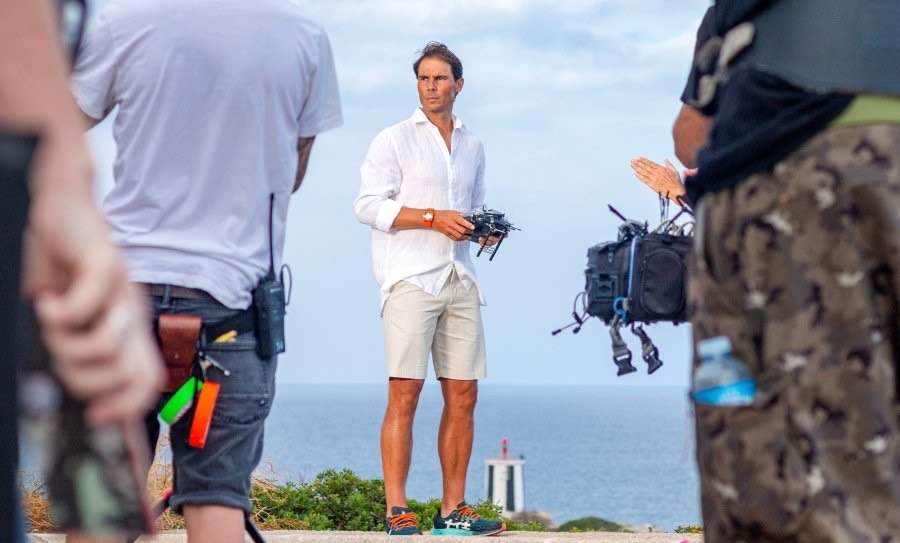
We chose the video titled “Mallorca Tourism, Rafa Nadal Promotional Spot, 2020” [4], produced by local stakeholders on the island of Mallorca, the Mallorca Turisme Foundation, and Rafael Nadal. In the wake of the COVID-19 health crisis, tourism has been one of the hardest-hit sectors. In an effort to revive its tourism and economic activity, the island of Mallorca is benefiting from a prominent local figure with international influence and visibility. In this video, Nadal provides the voice-over as he pilots a drone, offering an engaging tour of the island’s tourist attractions. We also chose this video because it generated a lot of buzz in the media.
As for our second sample, we compiled a corpus of news articles featuring the player in connection with the promotion of his island. In addition, this will allow us to see how he is portrayed in the Spanish press and why he was chosen for this video.
To do this, we drew on two main newspapers: *El País* (a general-interest Spanish newspaper) and *El Diario de Mallorca* (a local newspaper on the island of Mallorca). We then supplemented this with articles from the Spanish press, particularly sports publications such as Ultima Hora. The purpose of this media corpus is to understand the role of this video within the island’s tourism promotion strategy (see appendix table).
One limitation we encountered was that we did not receive a response from the Mallorca Tourist Office, which plays a key role in the island’s tourism sector and is responsible for promoting it.
A promotional campaign based on Nadal's image
"Mallorca in the Spotlight": Analysis of the Promotional Campaign Featuring Rafael Nadal
The video produced by the Mallorca Tourist Board to promote the island as a tourist destination began airing in July 2020 on Spanish television channels during prime-time slots, notably on “Telecinco and Antena 3” [6].” According to the president of the Consell de Mallorca, Catalina Cladera—accompanied by the Minister of Tourism and Sports, Andreu Sierra, and the tourism councilor for the City of Palma, Elena Navarro—the goal is to “reach the main source markets, primarily Spanish ones [7].” In addition, an online campaign will be launched through tourism promotion networks, featuring versions translated into Catalan, English, German, and French. The advertising agency ILLA, the production company Singular, and the Mallorcan creative director Juan Carlos Frontera are behind the concept, design, and production of this campaign. “With 17 years of experience in advertising, [8]” Frontera received the National Marketing Award in the brands category for his work with Decathlon, where he served as creative director for five years. In addition, “the Interislas campaign”[9] focuses on promoting Mallorca to the other Balearic Islands, while a collaboration with online agencies is expected to generate advertising exposure worth 2 million euros. On social media, the #SeeYouSoonMallorca initiative has already accumulated more than 7.5 million views, reinforcing the significant impact of these platforms. The message conveyed by the ad is that of a welcoming and safe Mallorca, ready to offer a unique experience. With a runtime of one minute for the full version and twenty seconds for the TV version, this campaign has a total budget of 580,000 euros. Compared to other advertising campaigns, this represents a very large budget; for example, “depending on your expectations and the expertise of drone companies, the price can range from 630 to 3,400 euros.” [10]”
"Rafa Nadal, Mallorca's Ambassador for the New Normal"[11]
The project features a Mallorcan tennis player piloting a drone to offer a unique bird’s-eye view of Mallorca. The advertisement highlights a welcoming and safe Mallorca, ready to offer a positive, special, and unique experience. According to the president of the Island Council, the goal is to “showcase Mallorca as a destination in the heart of the Mediterranean, with spectacular images of beaches, mountains, and vibrant landscapes.”[12]. More than forty people participated in the shoot, which took place at various locations such as the Falcons Tower in Porto Cristo, the Malgrats Islands, Banyalbufar, Son Marroig, Sa Foradada, Llucalcari, Sa Calobra, the Pareis Stream, Montuïri, Sencelles, Algaida, Coma-sema-Orient (Bunyola), Alcanada (Alcúdia), and Palma. The athlete, who volunteered for the project, provided the voice-over with a welcome message highlighting the island’s positive aspects, presenting it as a safe destination ready to welcome tourists.
Impact of Rafael Nadal’s Promotional Video on Tourism in Mallorca; “Rafa Nadal, Host of Mallorca”[13]
In 2022 (two years after the COVID-19 pandemic and following the release of the video), Mallorca welcomed 11.4 million visitors, contributing significantly to the 16.4 million tourists who visited the entire Balearic Islands. Furthermore, “the most recent statistics available date back to 2016.” They indicate that the main EU nationalities present in Palma are Italian (18.2%), German (18.1%), Bulgarian (15.5%), Romanian (12.7%), British (8.5%), and French (6.5%). As for the non-EU population (7.8%), it comes mainly from South American countries (40%)—primarily Argentina—Africa (26.3%), particularly Morocco, and Asia (17.3%), mainly China. [14]“Mallorca stands out as the second-most-visited city in Spain after Barcelona and the 17th-most-visited city in the world. In 2022, 42% of tourists spent at least one night in Palma or its bay area, representing an estimated 7 to 8 million visitors to the capital alone. The promotional video featuring Rafael Nadal, posted by the tourism board on YouTube, has garnered 785,000 views and over 470 likes, making it the third most-viewed video on their channel, which has 20,000 followers. This popularity is further evidenced by the tourism board’s 46,000 followers on Instagram (@visitmallorcaoficial). The success of this promotional campaign is part of a broader communication strategy aimed at revitalizing tourism in Mallorca, highlighting the destination as an ideal spot for sports or family vacations. The increased visibility of this video demonstrates its significant impact on Mallorca’s appeal as a destination of choice.
Destination Promotion Strategy and Brand Image of Renowned Ambassadors
Promotional Strategies for Mallorca: Diversity and Renowned Ambassadors
We chose this video because of its undeniable impact. Rafael Nadal is a world-renowned sports figure, and his popularity is a considerable asset for promoting a region. Furthermore, as we know, the tennis player is deeply attached to Mallorca and never hesitates to promote the destination whenever he has the chance. He is deeply committed to the island’s development, and his academy serves as a model for growth. Described as “a sports village” by the Spanish media, it attracts athletes from all over the world. The tennis player is an active local figure in Mallorca, as he also owns a hotel and willingly invests his time in the region’s promotional projects. Indeed, choosing Nadal’s image to promote the region seems to be an excellent choice to represent the destination’s brand. The video received extensive media coverage, further amplifying its impact and reach. It also meets the promotional objectives: to reach as many people as possible (number of views + media coverage), to raise awareness about tourism in Mallorca, to reassure tourists with a world-renowned icon, and, of course, to revitalize tourism on the island. As we know, Rafael Nadal participated in this video on a volunteer basis to promote the island of Mallorca. Although this gesture may seem selfless, it’s important to note that he also stands to benefit from it. Indeed, this promotion also highlights his tennis academy and hotel located on the island, which could attract more visitors and customers.
Athletes and Destinations: Tourism Marketing Through Sports Imagery
Marketing strategies that use the image of an athlete to promote a tourist destination are diverse and effective thanks to the influence of athletes. Key techniques include engaging famous athletes as ambassadors for advertising campaigns and creating sporting events that attract fans and tourists. Social media plays a crucial role, with athletes sharing their experiences and exclusive content. Finally, collaborations with local authorities and the improvement or creation of sports infrastructure complement these strategies, attracting both teams and tourists. Other athletes have also produced promotional videos for tourist destinations. For example, soccer player Lionel Messi helped promote his hometown region, Rosario in Argentina. Golfer Tiger Woods has also appeared in commercials to promote Florida, his home region. Furthermore, athletes such as Cristiano Ronaldo, Neymar, and others have been involved in tourism promotion campaigns for various regions or countries, though not to the extent that these promotional videos are widely recognized—unlike Nadal, who is deeply rooted in and identified as a resident of the island. It’s similar to how newspapers don’t highlight the fact that Ronaldo is from Madeira, for example. This close connection between Nadal and Mallorca reinforces the campaign’s authenticity and impact, positioning Nadal as a natural and iconic ambassador for the island. It’s clear that he’s a legend—he doesn’t even need to pick up his racket; everyone knows him.
Communication Strategies and Brand Image: An Analysis of Mallorca’s Tourism Promotion
In this context, it is worth examining how the principles of communication can be applied to these promotional campaigns. Odile Camus and Patrice Georget (2003) define the main functions of communication in five spheres: “information (providing information about the world), evaluation (expressing opinions), action-oriented (encouraging action), interactional (acknowledging the speaker’s qualities), and contractual (regulating exchanges and maintaining contracts)” [15]. These functions are analyzed through specific speech acts. For example, in a promotional video for Mallorca, Rafael Nadal provides information about the island’s attractions, evaluates its characteristics positively, encourages viewers to visit, uses his image to reinforce his identity as a native, and structures the message to guide communication. Thus, Nadal illustrates Chabrol and Bromberg’s communication methodology by making Mallorca appealing while targeting an audience that may be limited by the island’s socioeconomic aspects.
This approach fits perfectly into a broader promotional strategy, in which destination image management plays a crucial role. Indeed, the promotion of a tourist destination such as Mallorca relies not only on the dissemination of information, but also on the creation and management of its overall image. The promotional strategy is directly linked to “destination image management” (Gartner, 1989; Pike, 2009), the effect of the destination’s image on tourist behavior (Bignéet al.,2001), and the formation of the destination’s image (Gartner, 1989; 1994; Echtner and Ritchie, 1991; Goverset al.,2007)”[16]. Some research views a destination as “a product or a brand”[17], combining natural characteristics (climate, landscapes) and man-made elements (hotels, sports facilities). A destination’s image is composed of several elements: “cognitive (knowledge and beliefs), affective (feelings), and conative (behavioral intentions)”[18]. These components interact hierarchically and influence the likelihood that a tourist will choose a destination. First impressions of a destination are often formed through various communication channels prior to the visit. A destination’s image is complex and subjective. The formation of this image can be “influenced by organic sources (books, media) and induced sources (advertising),” as in our case with the promotional video for Mallorca featuring Rafael Nadal.
Conclusion
Rafael Nadal has repeatedly expressed his attachment to this island, which is why he has never left it. His efforts to promote his home region and his deep affection for Mallorca have led the player to appear in several advertisements for the island, including the video under discussion. It is already clear that his tennis academy has attracted many tourists, particularly players from around the world, as well as young people who come to train at one of the best professional tennis academies—and, above all, one led by one of the world’s top players. We can assume that in such cases, they also take the opportunity to visit the island, especially parents accompanying their children. Finally, Rafael Nadal is a valuable “asset” not only for promoting but also for developing a region. Mallorca uses various marketing strategies to attract tourists, placing particular emphasis on the image of the famous tennis player Rafael Nadal. Nadal serves as a brand ambassador, appearing in advertising campaigns and participating in high-level sporting events. As we have seen, Rafa Nadal is not the only one who proudly represents and promotes his native island. Many destinations capitalize on the image of athletes, such as mountain resorts. For example, La Clusaz in the Alps organizes events with professional skier Candide Thovex and even offers an online store on its official website[19] of the resort’s website. Similarly, French biathlete Martin Fourcade, a five-time Olympic champion, is associated with the resort of Font-Romeu, where he grew up[20]. Finally, the island also relies on its natural, cultural, and gastronomic heritage to attract a diverse audience. In conclusion, by using the iconic image of the famous tennis player, Mallorca capitalizes on its global reputation to shape a positive and distinctive perception of the island among potential visitors. This phenomenon is not limited to islands or renowned athletes but is part of a broader trend in which tourist destinations leverage iconic figures to attract an international audience. The combination of sports, image, and regional marketing is a powerful tool for shaping a region’s identity while boosting its local economy. Thus, Mallorca is just one example among many of how sports can be woven into the fabric of tourism to create a synergy that benefits both sectors.
Bibliography
Odile Camus, Patrice Georget. Media Discourse Analysis. Christine Bonardi, Patrice Georget, Christine Roland-Lévy, Nicolas Roussiau. Applied Social Psychology: Economics, Media, New Technologies. In Press Editions, 2003, 2-84835-026-1. hal-02527111
Richez, G., & Richez-Battesti, J. (2002). Mass Tourism, Local Dynamics, and Global Logics in Mallorca (Balearic Islands, Spain). Rives Nord Méditerranéennes
Knafou, R., & Llinas, M. S. (1991). The Balearic Islands as a Tourist Destination: The Case of Mallorca. Deleted Journal, 21(1), 9–12
Tan, V. T., Kirova, V., & Daréous, R. (June 1, 2014). Organizing a Mega-Sports Event and the Host City’s Tourism Image: A Perspective Based on the Concept of Image Transfer
Griffon, L. (July 14, 2023). Statistics for Mallorca and Palma
La Clusaz. (May 28, 2024). Candide Store | La Clusaz.
David, F. (April 20, 2014). Martin Fourcade Welcomed as a Hero in Font-Romeu. Here, by France Bleu and France 3.
https://www.francebleu.fr/infos/societe/martin-fourcade-accueilli-en-heros-font-romeu-1398029403
APPENDIX: Media Corpus
| Journal | Article Title | Author(s) | Publication Date | Date of access |
| El País | Rafa Nadal: “This crisis has overwhelmed us all, but we are a great country” | Alejandro Ciriza | May 5, 2020 | May 6, 2024 |
| El País | A Nadal-themed ad to attract tourists | / | August 12, 2009 | May 6, 2024 |
| El País | Nadal will receive six million euros for promoting tourism in the Balearic Islands | / | December 22, 2008 | June 6, 2024 |
| Diario de Mallorca | Rafa Nadal, Host of Mallorca in the New Normal | / | June 26, 2020 | March 15, 2024 |
| Diario de Mallorca | The Regional Government Hires Nadal for Six Million to Promote the Balearic Islands | Mario Morales | December 23, 2008 | March 15, 2024 |
| Diario de Mallorca | Turismo will now only be able to use Rafael Nadal's image to a limited extent | Mr. Ferrer | December 10, 2010 | March 15, 2024 |
| Diario de Mallorca | Rafa Nadal stars in the Consell de Mallorca'sflagship ad campaignto attract Spanish tourists | / | June 26, 2020 | March 6, 2024 |
| Breaking News | Rafa Nadal will promote Mallorca in a commercial | / | June 25, 2020 | March 6, 2024 |
| Breaking News | Rafa Nadal, host of Mallorca | / | June 26, 2020 | March 6, 2024 |
| Cronica Balear | Rafa Nadal stars in a commercial promoting Mallorca as a tourist destination | / | June 26, 2020 | March 6, 2024 |
| COPE | The video in which Rafa Nadal invites people to visit Mallorca | Marta Martinez | June 26, 2020 | June 6, 2024 |
| ABC | Rafa Nadal stars in Mallorca's tourism promotion ad | Josep María Aguiló | June 26, 2020 | June 6, 2024 |
[1]Mass Tourism, Local Dynamics, and Global Trends in Mallorca.
[2] Griffon, L. (July 14, 2023). Statistics for Mallorca and Palma
[3] Roger Federer, Switzerland’s tourism ambassador
[4]https://www.youtube.com/watch?v=HK8ELPpRojo (footnote)
[6] Diario de Mallorca, (June 26, 2020) Rafa Nadal, Host of Mallorca in the New Normal
[7] Diario de Mallorca, (June 26, 2020) Rafa Nadal, Host of Mallorca in the New Normal
[8] Diario de Mallorca, (June 26, 2020) Rafa Nadal, Host of Mallorca in the New Normal
[9] Mallorca, Council of Mallorca
[10] MinuteDrone. (n.d.). On-demand drone video and aerial photography. MinuteDrone
[11] Diario de Mallorca, (June 26, 2020) Rafa Nadal, Host of Mallorca in the New Normal
[12] Mallorca, Council of Mallorca
[13] Breaking News, 2020, Rafa Nadal, host in Mallorca
[14] Griffon, L. (July 14, 2023). Statistics for Mallorca and Palma
[15] Odile Camus, Patrice Georget. (2003). Media Discourse Analysis.
[16] Tan, V. T., Kirova, V., & Daréous, R. (June 1, 2014). Organizing a Mega-Sports Event and the Host City’s Tourism Image: A Perspective Based on the Concept of Image Transfer
[17] Tan, V. T., Kirova, V., & Daréous, R. (June 1, 2014). Organizing a Mega-Sports Event and the Host City’s Tourism Image: A Perspective Based on the Concept of Image Transfer
[18] Tan, V. T., Kirova, V., & Daréous, R. (June 1, 2014). Organizing a Major Sporting Event and the Host City’s Tourism Image: A Perspective Based on the Concept of Image Transfer
[19] La Clusaz. (May 28, 2024). Candide Store | La Clusaz.
[20] David, F. (April 20, 2014). Martin Fourcade welcomed as a hero in Font-Romeu. Ici Par France Bleu and France 3.