Diego Maradona: Collective Memory, Sports Tourism, and the Revitalization of Naples’ Quartieri Spagnoli
Abstract: This article analyzes the impact Diego Maradona has had on the Quartieri Spagnoli, a working-class and long-marginalized neighborhood in Naples. Drawing on participant observation and a study of local tourism and cultural practices, it examines the role of collective memory in the dynamics of urban transformation. The appropriation of Maradona’s image—through murals, shrines, merchandise, and guided tours—reveals processes of heritage promotion, but also tensions linked to the commodification of space. The study highlights how sports tourism can foster a shared memory while challenging the balance between attractiveness, authenticity, and sustainability. International comparisons enrich the discussion by offering a context-specific analysis of the links between sports, tourism, and territorial identity.
Keywords: Diego Maradona, Quartieri Spagnoli, collective memory, sports tourism, urban revitalization, territorial identity, cultural heritage, local ownership
By Valentin TONIN
Master’s student in Sports Tourism Management at the UFR STAPS in Montpellier. From a very young age, I have been passionate about sports and their power to inspire crowds and transform regions. This passion naturally led me to take an interest in figures like Diego Maradona, whose impact extends beyond the realm of sports to influence culture and tourism. As an intern at the Gard Department, I am working on projects that combine sports, heritage, and regional development.
Introduction: When a Legend Redefines a City
When Diego Maradona set foot in Naples in 1984, he wasn’t just joining a club: he was about to change the fate of an entire city. This article aims to analyze Diego Maradona’s role as an iconic figure in the sociocultural and economic transformation of the Quartieri Spagnoli, a historically disadvantaged neighborhood in Naples. The goal is to understand how Maradona’s image, beyond his athletic achievements, helped redefine the neighborhood’s identity and turn it into a notable tourist destination.
From a broader perspective, this article contributes to the discussion on the potential of urban tourism based on cultural and sports icons, and on how this type of tourism can address the challenges of revitalizing working-class neighborhoods. As Guibert, Khomsi, and Bellini (2019) point out, urban tourism has emerged as a strategic lever for transforming cities’ images, enhancing their appeal, and revitalizing long-marginalized areas. In this regard, iconic figures such as Maradona can play a central role in the symbolic and economic reconfiguration of these areas.
Naples is a city steeped in history and contradictions, where social and economic contrasts coexist with a vibrant culture. Located in the heart of the historic center, west of Via Toledo, the Quartieri Spagnoli particularly embodies these tensions.
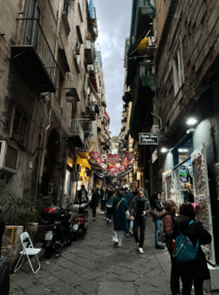
Built in the 16th century to house Spanish soldiers tasked with maintaining order in a city under Spanish rule, this neighborhood is characterized by often difficult living conditions and high population density, which today exceeds 10,000 inhabitants per km²1 . This neighborhood reflects a social reality marked by precarious living conditions, in a city where approximately 30% of residents live below the relative poverty line2 . These conditions stand in contrast to the neighborhood’s recent transformation driven by its appeal to tourists, particularly centered on the legacy of Diego Maradona.
Diego Armando Maradona, born in 1960 in the impoverished neighborhood of Villa Fiorito in Buenos Aires, became one of the most iconic figures in soccer history. Coming from a modest background, he quickly distinguished himself through his exceptional talent, rising through the ranks of Argentine soccer before bursting onto the international scene. After a stint with FC Barcelona, it was in Naples, in 1984, that Maradona truly made history, both athletically and culturally.
Diego Maradona’s arrival in Naples in 1984 marked a turning point for SSC Napoli and the entire city. By leading the club to historic triumphs—such as the Italian league titles in 1987 and 1990 and the UEFA Cup in 1989—he broke the dominance of northern Italian teams and gave the Neapolitans symbolic revenge for the social and economic inequalities that pitted the south against the north (Schneider, 1998). These victories were not merely sporting achievements: they represented a renewed sense of pride and a way to transcend the negative stereotypes often associated with the city of Naples (Foot, 2007).
Although Maradona did not live in the Quartieri Spagnoli, he maintained a strong symbolic connection to the neighborhood by spending time there and interacting with its residents. His presence, perceived as that of a “man of the people,” reinforced his status as a hero among the Neapolitans. Through local initiatives, acts of support, and media coverage of these interactions, Maradona became a driving force for solidarity and a symbol of hope for this community, further embedding his figure in the neighborhood’s identity (Dini, 1994).
Maradona’s legacy now appears to play a central role in the evolution of the Quartieri Spagnoli. His image, frequently featured in the urban landscape, is part of a complex interplay of memory, culture, and tourism that warrants closer examination. This study therefore aims to analyze how the figure of the soccer player has helped redefine the identity and perception of this Neapolitan neighborhood, long associated with marginalization.
A key question: How is Maradona shaping the Quartieri Spagnoli?
How has Diego Maradona’s legacy transformed the Quartieri Spagnoli—a once-marginalized neighborhood—into a major tourist destination, attracting both soccer fans and visitors curious to explore its cultural heritage?
Diego Maradona’s sporting and symbolic legacy appears to play a significant role in the Quartieri Spagnoli’s appeal to tourists. While this neighborhood is now frequently associated with the image of the soccer player, it is worth examining how this legendary figure is helping to reshape the ways the space is used and perceived. The number of visitors to Naples rose from approximately 1.7 million in 2010 to more than 3.8 million in 20193 —nearly doubling in less than a decade. This trend accelerated sharply in the following years: the city is estimated to have reached 12 million visitors in 2022 (Kaval, 2023). Naples, with a population of approximately 940,000, is thus experiencing growing pressure from tourism. This increase can be attributed to several converging factors: the revitalization of its historic center—a UNESCO World Heritage Site—the proliferation of private initiatives focused on experiential tourism, and the city government’s strong commitment to promoting the city internationally. In this context, the mural depicting Maradona on Via Emanuele de Deo in the Quartieri Spagnoli has attracted approximately 6.2 million visitors4 , becoming one of Italy’s most visited sites—just behind the Colosseum and ahead of Pompeii. This raises questions about the role played by this sporting legacy in the neighborhood’s revitalization efforts. Furthermore, certain recent cultural productions, such as the series *Gomorra*, have paradoxically boosted the tourist appeal of certain neighborhoods, despite an ambivalent reception from residents, who denounce the persistent stigmatization of the city through depictions of crime. Can Maradona be considered a catalyst for sociocultural revitalization, beyond his status as a celebrity? That is what this article sets out to explore.
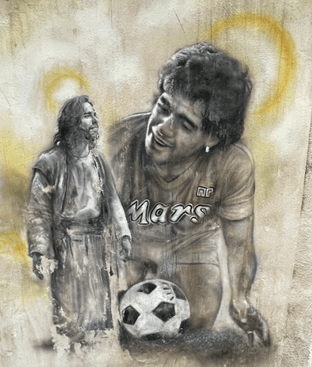
Exploring the connections between sports, culture, and tourism
Sports icons who transcend the stadium
While some sports figures have contributed to their city’s appeal to tourists through their achievements, Maradona stands out for his much more intimate and deep-rooted connection with Naples and its residents. Michael Jordan, for example, attracts visitors to Chicago because of his historic successes with the Bulls and his status as a global basketball icon (Snider, 1996). Similarly, Pelé has boosted the appeal of Santos, Brazil, by turning his club into a symbol of international soccer. In these cases, it is primarily the player’s athletic performance and fame that drive tourism, with visitors coming to celebrate an exceptional record of achievements.
Maradona, on the other hand, is not content to be merely a hero of Neapolitan soccer. What, according to various accounts and portrayals, seems to set him apart is a more intimate and deep-rooted connection to Naples—and particularly to the Quartieri Spagnoli. Unlike Jordan or Pelé, who are often perceived as distant and institutionalized figures, Maradona has been associated with a more direct connection to the local people.
In certain media accounts (Foot, 2007; Juillard, 2010) or popular tributes observed in the field or reported in the local press (Dini, 1994; Vilain, 2022), he is portrayed as a “man of the people,” having forged bonds with the Neapolitans that went beyond his athletic achievements. These perceptions, largely conveyed through imagery and urban folklore, suggest a strong identification with him. This phenomenon raises questions: To what extent is this closeness real, constructed, or simply perceived? And how does it contribute to current tourism dynamics? This is what our fieldwork will seek to clarify.
Rafael Nadal’s case in Mallorca might seem comparable to Maradona’s in Naples. Nadal, too, attracts visitors—not only because of his achievements but also because he lives there and has established his academy there, thereby becoming a visible player in local tourism development (Bourdin, 2024). However, this comparison primarily highlights the uniqueness of Maradona’s case. Unlike Nadal, Maradona never structured or institutionalized his presence in the Quartieri Spagnoli. His influence is based neither on a tourism project nor on dedicated infrastructure, but on a human, symbolic, and informal legacy, built up over the course of his media appearances, his interactions with residents, and the collective narrative forged around his persona. It is precisely this lack of a deliberate strategy and his untimely death that make his posthumous cult so unique in the neighborhood’s collective memory.
It is only more recently—particularly since the 2010s, with the rise of urban tourism in Naples—that this memory has been partially institutionalized through guided tours, merchandise, and tourist events. But this transformation into a tourist attraction is grounded in an emotional and social foundation rooted in local experience, making it a unique case within the landscape of sports-related memorial tourism.
This approach to tourism echoes the processes described by Quitana Garcia (2018) in her study on the role of FC Barcelona in the city’s tourism image. The author shows how a club can become a strategic lever in shaping a destination’s identity, leveraged by tourism stakeholders to attract visitors. Unlike in Barcelona, where the soccer club is promoted through structured communications, the Neapolitan example relies primarily on a popular and spontaneous appropriation of Maradona’s image in the Quartieri Spagnoli.
Our study specifically seeks to explore this phenomenon by showing how a shared memory—one that was not originally planned—can be reappropriated for tourism purposes without losing its emotional and communal value.
When Collective Memory Becomes a Tourist Attraction
Working-class and disadvantaged neighborhoods often find in tourism an opportunity for reinvention and revitalization. According to Schneider (1998), the “Southern Question” in Italy has historically stigmatized regions such as Naples, reinforcing an image of poverty and disorder. However, urban tourism centered on iconic figures offers an alternative to these negative narratives. Bromberger (1997) emphasizes that soccer acts as a shared passion that transcends social barriers and reshapes the image of traditionally undervalued areas.
The Quartieri Spagnoli is a prime example of this phenomenon. By linking the neighborhood’s identity to that of Diego Maradona, residents and business owners are capitalizing on his legend to attract tourists and rewrite the narrative of the place. This process of “living museification” (Fontaine, 2012) combines collective memory and economic development, transforming murals, altars, and even the streets into vehicles for cultural storytelling.
However, the use of an iconic figure like Maradona for tourism purposes raises certain challenges, particularly regarding the preservation of local authenticity. Indeed, the use of cultural heritage for tourism has been shown to contribute to the revitalization of the local economy, while also giving rise to social tensions linked to rapid changes in collective identity (Fontaine, 2012; Schneider, 1998).
Maradona: From the Soccer Field to Cultural “Eternity”
Diego Maradona is much more than just an athlete in Naples. Dini (1994) describes him as a “Neapolitan hero,” a title that reflects his role in rebuilding the local identity. Unlike other sports figures, Maradona embodies resistance against power structures: he is seen as the standard-bearer for the Neapolitans, defying—as we have said—northern Italy as well as social prejudices.
The ubiquity of his image in the Quartieri Spagnoli reflects this mythologization. The murals are not merely aesthetic representations, but cultural statements that connect residents to their own history. Juillard (2010) discusses how these visual icons function as “anchors of memory” that evoke not only Maradona’s athletic achievements but also the way Neapolitans have embraced his figure to assert a form of collective dignity in the face of social stigmatization.
As a cultural icon, Maradona transcends social divisions and becomes a symbol of unity. Correia (2018) describes this type of figure as a “social mediator,” capable of bringing together different generations and fostering a sense of collective pride. Through his role in the development of tourism in the Quartieri Spagnoli, Maradona demonstrates how a sports figure can not only transform a place but also have a lasting influence on the narratives of identity among its residents.
Methodology: An Immersion in the Quartieri Spagnoli
Understanding a Neighborhood Through Participant Observation
To explore Diego Maradona’s impact on the Quartieri Spagnoli, we adopted a qualitative approach based on participant observation. This method allowed us to immerse ourselves in the neighborhood’s daily life and gain an understanding of the social and cultural dynamics at work there.
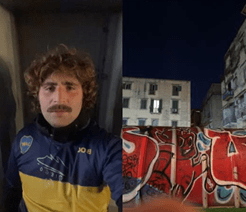
Our fieldwork took place over a four-day period from April 20 to 24, 2024, during which we walked the neighborhood’s streets at different times of the day—including late morning, early and late afternoon, and in the evening—to observe variations in activity and foot traffic. We adopted the perspective of a curious visitor, exploring the various iconic sites associated with Maradona, while also paying close attention to the interactions between residents and tourists. This approach allowed us to capture the neighborhood’s overall atmosphere and gain a better understanding of how Maradona’s legacy is woven into everyday life there.
Participant observation is particularly well-suited to contexts where cultural meanings are often implicit, as Arborio and Fournier (1999) explain. In a neighborhood such as the Quartieri Spagnoli, characterized by a strong local identity and an emotional connection to Maradona, this immersion helped us grasp elements that would have been difficult to perceive through a more detached approach.
The Study Site: A Living, Open-Air Museum
The Quartieri Spagnoli, located in the heart of Naples, is one of the city’s most iconic neighborhoods, known for its narrow alleys, dense architecture, and lively atmosphere. Long overlooked and perceived as a place of poverty and crime, it also embodies Neapolitan authenticity, blending folk traditions, commercial activities, and artistic expression.
It serves as a true living museum and a lasting tribute to Maradona. Visual displays reflect a collective embrace of the player’s legacy, far beyond his role as an athlete.
Capturing Life: Murals, Flows, and Testimonies
To analyze Maradona’s legacy in the Quartieri Spagnoli, we adopted a qualitative approach that combines several perspectives. Exploring the neighborhood allows us to document the visual manifestations of his iconic presence by photographing and analyzing them in public spaces.
At the same time, we focused on tourism dynamics, observing visitor flows and their interactions with these sites of remembrance. Tourists’ behavior, their interest in places marked by Maradona’s legacy, and their consumption of merchandise and local services are valuable indicators for measuring the economic and cultural impact of this phenomenon.
Immersing ourselves in the neighborhood gave us the opportunity to interact directly with its residents, shopkeepers, and tour guides. Rather than conducting formal interviews, we opted for informal conversations, which fostered a more authentic understanding of their perceptions of Maradona and the neighborhood’s transformations. These exchanges took place in a mix of languages: a bit of English or Spanish, depending on each person’s language skills, but also a few words of Italian when they were similar to French or Spanish. In more complex cases, we used smartphone translation apps to facilitate communication. Despite these limitations, these spontaneous interactions revealed a deep attachment to the player and a sense of local pride sustained by his memory.
We also took part in two separate guided tours, each offering a different perspective on our topic. The first took place at the Diego Armando Maradona Stadium, where we were led by a guide who specializes in the history of SSC Napoli. Although this tour was less directly related to the Quartieri Spagnoli, it allowed us to grasp the magnitude of the Maradona phenomenon, better understand the impact of his athletic achievements, and see how he became a legend in Naples. The stadium is filled with tributes, from the stands to the access corridors, where murals and memorabilia commemorate his athletic accomplishments.
The second tour, in the Quartieri Spagnoli, was much more informative for our study. Led by Maria, a local guide, it allowed us to explore the neighborhood’s iconic sites linked to Maradona: murals, graffiti, shrines, and shops that keep his memory alive. Thanks to Maria’s explanations, we were able to understand the neighborhood’s historical and social context, as well as how Maradona’s image is woven into daily life there. This initial exploration also made our subsequent work more effective, as we were better able to navigate the neighborhood and delve deeper into certain aspects by revisiting specific locations during our participant observation.
Finally, the fieldwork is supplemented by an analysis of secondary sources, including newspaper articles, academic studies, and tourism-related content, in addition to official statistical data. This broader perspective allows us to situate our observations within a wider context and to better understand the historical and media dynamics that have contributed to the transformation of the Quartieri Spagnoli into a place of pilgrimage for Maradona fans.
The Challenges of Immersion: Language, Time, and Complexity
Adopting an immersive approach presents several challenges that affect the scope of our study. The language barrier is a primary obstacle, sometimes limiting the fluidity of our interactions with local residents. Although the use of digital translators and occasional assistance from local guides helped us partially overcome this difficulty, certain cultural and emotional nuances may have eluded us.
The four days spent in the field were also a limiting factor. Certain aspects, such as the long-term economic dynamics of tourism in Maradona, could not be fully explored. The need to collect as much data as possible within a limited timeframe required an approach focused on the essentials, without the possibility of returning to the field to validate certain hypotheses.
Finally, while focusing solely on the Quartieri Spagnoli allows for a detailed analysis of how Maradona has been embraced by the local community, it fails to take into account the full extent of his influence on the city of Naples. The impact of his figure extends beyond this iconic neighborhood to other urban spaces, which could have enriched our understanding of the many facets of this phenomenon.
Despite these constraints, this immersive experience offers an authentic glimpse into Maradona’s place in the urban landscape of Naples and illustrates how his legacy continues to shape the Quartieri Spagnoli, both culturally and economically.
Diego Maradona's Living Legacy
Maradona's omnipresence in the tourist scene
Today, the Quartieri Spagnoli is marked by the ubiquitous presence of Diego Maradona, who has become a major tourist attraction. His murals, created by local and international artists, have become must-see stops for visitors, whether they are soccer fans or simply curious onlookers.
Among the most famous is the Via Emanuele de Deo mural, created in 1990 by artist Mario Filardi, which has become a true symbol of the neighborhood. Located on the facade of a building overlooking a small square, it depicts Maradona in his blue Napoli jersey, in a realistic style that highlights his intense gaze. During our visit, we noticed that this spot was a regular gathering place for tourists, who stop there to take photos, sometimes mimicking one of the player’s iconic gestures or wearing a jersey with his name on it. Nearby, street vendors sell souvenirs ranging from Napoli scarves to postcards featuring this iconic mural.
Other, less formal tributes to Maradona are scattered throughout the neighborhood. At the corner of a narrow alley, we discovered a makeshift altar where locals had placed candles, jerseys, and even a small statue of the player, topped with a message: “Dios vive aquí” (“God lives here”) in Spanish, in tribute to Maradona, the Argentine. Further on, on the facade of a café, colorful graffiti depicts Maradona kissing the 1986 World Cup trophy, surrounded by words such as “Orgoglio di Napoli” (“Pride of Naples”). These kinds of displays, often spontaneous and ever-evolving, attest to the player’s deep-rooted place in the collective imagination of the Neapolitans.
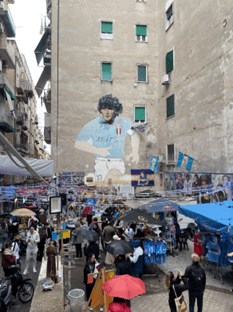
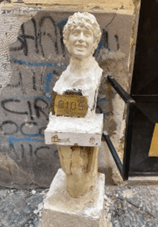
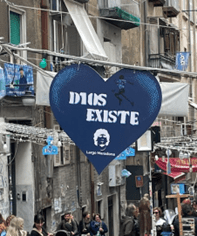
In a small side street off Via Toledo, we came across an iron gate completely covered in graffiti dedicated to Maradona. In the center, a message written in white paint stood out clearly: “Diego è eterno” (“Diego is eternal”). Just above it, a laminated photo of the player clutching the 1986 World Cup trophy had been hastily taped to the rusty surface, like a reminder of his immortal glory. A passerby, noticing our interest, called out to us with a smile: “Questa è la nostra chiesa” (“This is our church”).
A little further on, we noticed a row of T-shirts hanging between two buildings on a clothesline, like an impromptu mural. Among them, a blue jersey emblazoned with the name “Maradona” and the number 10 fluttered in the wind, giving the impression that the player was still watching over the neighborhood. This kind of display—both spontaneous and symbolic—is an integral part of the Quartieri Spagnoli landscape, where Maradona’s iconic presence isn’t limited to the walls but permeates even the smallest gestures of daily life.
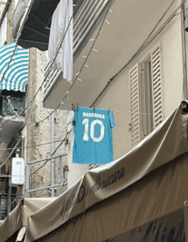
These visual elements are not mere decorations: they serve as anchors for memory, evoking not only Maradona’s athletic triumphs but also his social role in the city. They attract a kind of tourism that goes beyond the passive consumption of these sites and instead seeks an immersive and emotional experience. During our conversations with local tour guides, several of them emphasized that these murals and altars are key stops on their tours, as they allow visitors to better understand Maradona’s impact on Naples, far beyond the realm of soccer.
The Local Economy Driven by Memories and Visits
Residents and business owners in the Quartieri Spagnoli have capitalized on Diego Maradona’s image to develop tourism-related economic initiatives. As we walked through the neighborhood, we saw a multitude of shops and stalls selling Maradona souvenirs.
Among the most notable is the “A Tutta Napoli” shop, located not far from the main mural on Via Emanuele de Deo, which offers a wide range of merchandise: retro jerseys with “Maradona 10” printed on them, blue-and-white Napoli scarves, posters of his greatest moments, and even more unusual items, such as handcrafted figurines or mugs featuring his face printed alongside Mount Vesuvius. At the entrance to some stores, screens continuously play videos of his matches, creating a fully immersive experience for visitors.
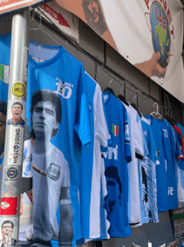
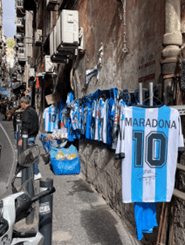
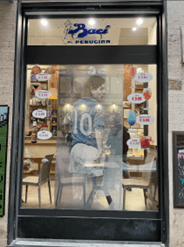
At the same time, many street vendors are taking advantage of the tourist crowds to sell Maradona-themed merchandise on the street. We saw a vendor selling handmade jerseys hung directly on clotheslines stretched between two buildings, thus blending the neighborhood’s typical aesthetic with Maradona. Another vendor, stationed in front of a café displaying a portrait of the player, was selling keychains, stickers, and postcards printed with the Quartieri Spagnoli’s famous graffiti and murals.
Maradona’s influence can also be seen in the local restaurant scene. Pizzerias and bars have incorporated his image into their marketing to attract customers. Every bar and restaurant proudly displays items related to Maradona. One shopkeeper promised us he had what was supposedly a strand of Maradona’s hair preserved under glass, presented as a sacred relic. These spots have become a must-see for tourists looking to enjoy a coffee in a place steeped in the player’s spirit. You’ll also find pizzas named “Maradona,” bags of chips, and canned drinks bearing his likeness.
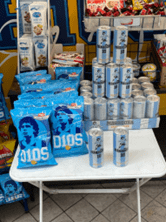
This consumer trend is not limited to foreign visitors or soccer fans: as a researcher-tourist involved in this study, I myself bought seven Maradona jerseys to give to my loved ones. This personal act illustrates just how widely these items circulate far beyond the neighborhood, serving as symbols of a strong emotional attachment to the player.
In addition to the shops, themed guided tours centered on Maradona have become increasingly popular in recent years. During our stay, we took part in one of them, led by Maria, a local guide. Her tour included the neighborhood’s most famous murals, as well as anecdotes about the relationship between Maradona and the Neapolitans, told with palpable enthusiasm. These tours aren’t limited to the painted walls: some include stops at iconic shops—such as those selling souvenirs bearing his likeness—and conversations with locals who knew Maradona when he used to wander the neighborhood’s narrow streets.
These elements, ubiquitous in the neighborhood, reflect how the people have made his image their own, transforming the alleyways into an urban sanctuary where Maradona is revered as a secular saint through murals, altars… and merchandise. As we immersed ourselves in the neighborhood, we also observed just how widely Maradona’s image was used in contexts completely unrelated to soccer. In the neighborhood’s alleyways, some vendors selling tripe—an iconic Neapolitan street food—proudly wore the player’s jersey, thereby incorporating his image into their daily work. Similarly, vendors selling fresh lemonade had affixed stickers bearing his likeness to their carts or displayed portraits of the player as a distinguishing feature. Although far removed from his athletic career, these uses reflect an intense popular appropriation, in which any local activity becomes a vehicle for his memory. All these elements underscore the dual status of Maradona’s representations in the neighborhood: both a site of popular memory and a space for tourist commodification. This omnipresence raises questions about the boundary between sincere tribute, commercial exploitation, and the folkloric staging of the neighborhood.
This dynamic, far from being unique, is part of a broader trend observed in many urban contexts designated as heritage sites. The use of cultural or historical figures to boost tourist appeal creates similar tensions between lived authenticity and manufactured authenticity. For example, Bonard and Felli (2008) show how heritage promotion policies in Lyon and Beijing produce an image of authenticity that better meets tourists’ expectations than reflects the actual experience of residents. For his part, Amirou (1995) analyzes how the tourist imagination transforms certain places into staged spaces, where folklore sometimes takes precedence over local life. These studies provide a better understanding of the dynamics at work in the Quartieri Spagnoli, where the image of Maradona oscillates between sincere collective memory and a staging strategy designed to attract visitors.
As Bourdieu (1984) has shown, the symbolic value of a place or a figure can be reappropriated and transformed according to logics of distinction or consumption. Through the example of the Quartieri Spagnoli, a form of tourist imagination is also taking shape—somewhere between sincere enthusiasm and commercial strategies—contributing to the reimagining of urban space through the lens of sports mythology.
This “Maradona economy,” though still in its infancy, generates significant revenue for local businesses and contributes to the appeal of the Quartieri Spagnoli. By incorporating merchandise and immersive experiences, the neighborhood has gradually become a veritable living museum dedicated to the Argentine icon, where the cult of the player is expressed through both art and commercial transactions. These elements, ubiquitous throughout the neighborhood, reflect the public’s embrace of his legacy, transforming the narrow streets into a true sanctuary dedicated to his memory.
Opportunities and Challenges to Address
When a Marginalized Neighborhood Becomes a Place of Memory
The Quartieri Spagnoli has gradually become a living memorial, where Diego Maradona’s presence is evident both in the urban landscape and in the neighborhood’s social and economic dynamics. This transformation, far from being merely anecdotal, has reshaped both local and tourist perceptions of the neighborhood.
Our field observations allowed us to identify how visual elements associated with Maradona—murals, street altars, graffiti, and commemorative objects—influence tourist itineraries and the neighborhood’s appeal. The guided tours we participated in systematically include these sites in their itineraries and present them as essential stops for understanding the Neapolitans’ attachment to Maradona. Local guides emphasize how these representations shape a collective identity and allow visitors to immerse themselves in the neighborhood’s history through the figure of the soccer player.
Accounts from shopkeepers and residents confirm that this celebration of Maradona’s legacy has helped boost the local economy. Several souvenir vendors told us that demand for Maradona-related merchandise—jerseys, figurines, posters, and various accessories—has continued to rise in recent years, generating a thriving business that attracts both passionate fans and curious tourists. A review of secondary sources, including articles and academic publications, also highlights the growing impact of this memory-based tourism on the Quartieri Spagnoli, repositioning it as an iconic neighborhood beyond its historical representations associated with marginalization.
This momentum has helped redefine the image of the Quartieri Spagnoli and transform it into a hybrid space, at the crossroads of soccer tourism and the promotion of Neapolitan culture. Through this phenomenon, the neighborhood is not merely a static backdrop: it adapts, evolves, and continues to tell the story of its hero, while also engaging with the contemporary economic and social challenges of urban tourism. For example, we observed that certain murals of Maradona are regularly renovated or reinterpreted by new artists, sometimes at the initiative of the shopkeepers themselves. One of the guides explained to us that the recent addition of lighting around the mural on Via Emanuele de Deo was a response to the growing influx of visitors wishing to photograph it in the evening. These actions are not merely part of a strategy to attract tourists; they also reflect a daily effort to preserve memory in a residential neighborhood, where murals stand alongside shutters, clotheslines, and local schools.
These places of memory are therefore also places of daily life, and their preservation often depends on the residents themselves, who must adapt to outside perspectives while maintaining their local customs and points of reference. In this context, the memory of Maradona is not static: it is negotiated, updated, and sometimes reinvented as the neighborhood changes. This raises the question of the boundary between lived memory and staged memory, between grassroots authenticity and adaptation to the expectations of tourism.
A thriving tourism industry, though sometimes uneven
While Diego Maradona’s image has helped transform the Quartieri Spagnoli into a place of remembrance and a tourist attraction, certain limitations and challenges have emerged from this trend. One of the main challenges concerns the sustainable management of tourist traffic. During our on-site observations, we noted that certain alleys—particularly around the mural on Via Emanuele de Deo—were often crowded with visitors, making it difficult for residents to get around. On several occasions, we observed residents trying to make their way on foot or by scooter through groups of tourists gathered to take photos or listen to guides’ explanations.
This situation illustrates a sometimes difficult coexistence between the local population and visitors, which is common in working-class neighborhoods that have recently become tourist destinations. As Amirou (1995) and Cazes and Poitier (1996) have shown with regard to urban tourism, increased visitor traffic in densely populated areas can lead to conflicts over land use, particularly when tourist activities disrupt residents’ daily lives.
The phenomenon observed in the Quartieri Spagnoli is reminiscent of similar dynamics in heritage districts under heavy tourist pressure. In Lisbon’s Bairro Alto, studies by Dias (2020) and Adorean (2022) show that the rise of nightlife tourism led to rapid “touristification”: a decline in local shops, traffic congestion, noise pollution, and a sense of lost authenticity—even before the era of short-term rentals. These examples confirm the research by Amirou (1995) and Cazes & Poitier (1996), which explains that the intensification of tourist activities in densely populated areas causes tensions between residents and visitors.
Specifically, in the Quartieri Spagnoli, we observed households forced to navigate their way through groups of tourists in narrow alleys, such as around the mural on Via Emanuele de Deo. These conditions resemble a competition between different uses of urban space—a reality that MacCannell (1976) describes as the “staging” of places to meet tourist expectations, at the risk of turning the space into a backdrop, and that Urry (1990) analyzes as a “tourist gaze” that generates clichés. Thus, the question of maintaining a balance between heritage promotion and respect for residents’ lived experiences becomes central to envisioning sustainable urban tourism.
Furthermore, the growing commercialization of Maradona’s image raises questions about preserving the neighborhood’s authenticity. While participating in guided tours, we noticed that some tourist itineraries emphasized Maradona’s spectacular side more than his genuine connection to the neighborhood’s residents. One guide explained to us that the addition of new murals or merchandise was sometimes driven more by marketing strategies than by a desire to pass on cultural heritage. Some residents we met seemed to share this impression, suggesting that the neighborhood might be turning into a “Maradona theme park,” at the expense of its working-class and spontaneous identity.
This trend thus raises a key challenge: striking a balance between promoting tourism and preserving local authenticity. This type of tension is well documented in studies of urban tourism: as early as 1976, Dean MacCannell theorized that tourist destinations tend to “stage” themselves to meet visitors’ expectations of authenticity, which can lead to standardization or a loss of meaning for the residents themselves. John Urry (1990), for his part, has shown that tourists adopt a “perspective” shaped by media representations, which transforms places into showcases of cultural clichés. This analytical framework helps us understand how, in the Quartieri Spagnoli, the figure of Maradona—originally rooted in local life—can be reconfigured to meet external tourist expectations.
Furthermore, as Rémy Amirou (2012) has pointed out, heritage promotion based on mythical or symbolic figures can veer into “folklorization”: cultural elements are then extracted from their context, frozen in time, and reproduced for the sake of consumption. This interpretation can shed light on the critical remarks made by some residents we met, who fear the neighborhood will be transformed into a “Maradona theme park.” The challenge, then, becomes preserving a living memory while avoiding its excessive “museumification” or commodification.
This situation highlights a central contradiction: the longer the cult surrounding Maradona persists and generates economic benefits, the more delicate the issue of preserving the authenticity of the Quartieri Spagnoli becomes. While residents benefit from renewed visibility and tangible economic benefits, this dynamic is also gradually transforming perceptions of and uses within the neighborhood. Iconography, merchandise, and tourist circuits may, over time, freeze the memory of the player into standardized forms that better meet visitors’ expectations than reflect the lived reality of the residents. Through our field observations, this tension was palpable: some Neapolitans welcome it, while others fear increasing folklorization and a loss of the intimate bond that united Maradona with the neighborhood. Consequently, the question remains open: how can we sustain a surge in tourism while respecting the living memory and local culture that gave rise to it?
Learning from Others: Santos, Chicago, and the Role of Legends
The Quartieri Spagnoli perfectly illustrates Naples’ growing appeal. Naples saw its number of visitors rise from 1.7 million in 2010 to more than 3.8 million in 2019, with an even sharper increase through 2022, when the city reportedly welcomed 12 million visitors, according to ISTAT. Although precise data for the Quartieri are not available, interviews and field observations show that this neighborhood is attracting growing interest, particularly due to the legacy of Maradona. This trend reflects travelers’ interest in places with strong symbolic and cultural significance, but it also raises questions of equity.
The case of the Quartieri Spagnoli can be further illuminated by comparisons with other cities or neighborhoods that have leveraged sports figures to boost their appeal.
In Santos, Brazil, Pelé remains a central figure in the local identity. The Pelé Museum, which opened in the city, attracts visitors from around the world and helps preserve the memory of his achievements while boosting the tourism economy. Generating more than $2 million a year, it demonstrates that iconic sports figures can transform marginalized neighborhoods into major tourist destinations (Grappi & Montanari, 2011).
However, the commercial exploitation of a sports figure for tourism purposes can also create tensions, particularly in working-class neighborhoods. On the Barcelona waterfront, the Barceloneta neighborhood (formerly a fishing district) clearly illustrates the negative effects of mass tourism: overcrowding of public spaces, rising rents, a loss of residents, and a growing sense of exasperation among residents. This phenomenon has led to the emergence of forms of “tourismophobia,” which Ballester (2019) defines as a social reaction to the appropriation of everyday spaces by tourists. More broadly, Ballester (2022) notes that this tension often arises from competition between visitors and residents over the use of the territory. Similarly, Duhamel (2023) shows that overtourism can be perceived as a breach of the implicit contract between local populations and the tourism industry, leading to conflicts over land use and a loss of legitimacy for tourism policies.
These cases highlight the need for balanced management of tourism development, particularly when it revolves around an iconic figure. Without regulation, the appeal generated by a local hero like Maradona can exacerbate inequalities, weaken the existing social fabric, and gradually transform a vibrant neighborhood into a themed attraction.
In South Africa, the Bo-Kaap neighborhood in Cape Town—famous for its colorful houses and Muslim heritage—faces similar challenges. The rise in tourism has led to traffic problems, noise pollution, and increasing gentrification, sparking protests from residents who fear a loss of their cultural identity and the displacement of local communities.
These examples illustrate that leveraging an iconic figure or cultural heritage for tourism can be a powerful driver of urban revitalization. However, without inclusive and sustainable management, this type of transformation can exacerbate social inequalities and undermine the local balance. It is therefore essential to implement tourism management policies that take into account the needs and aspirations of local communities, in order to preserve the authenticity of neighborhoods while reaping the economic benefits of tourism.
Conclusion: Maradona, a Force for Change and Inspiration
Diego Maradona, a Catalyst for Urban Transformation
Diego Maradona represents much more than just an athlete to the city of Naples and the Quartieri Spagnoli. His legendary career extends far beyond the realm of sports, transforming a once-neglected neighborhood into a vibrant area celebrated for both its popular culture and its economic vitality. Through the legacy left by Maradona, the Quartieri Spagnoli illustrates how a popular figure can transform the image of a marginalized neighborhood into a hub of cultural and tourist interest.
However, this transformation comes with challenges, particularly in terms of sustainability, preserving authenticity, and ensuring equitable distribution of economic benefits. This case highlights the importance of a balanced approach to leveraging iconic figures in order to avoid the pitfalls associated with gentrification and economic dependence.
Maradona’s legacy offers valuable insights into the role of cultural and sports icons as drivers of urban revitalization. It also opens up avenues for future research into the potential of other iconic figures to spur similar transformations in a variety of contexts, while respecting local identities and the aspirations of residents.
What's next? Ideas for future research and action
This research raises questions that warrant further exploration in future studies. For example:
It would also be worthwhile to examine whether this dynamic surrounding Maradona extends beyond the boundaries of the Quartieri Spagnoli, and whether other neighborhoods in Naples—or the city as a whole—play a comparable role in celebrating his legacy. Such a comparison would help to better assess the geographical scope of the phenomenon and refine our understanding of its overall urban impact.
What is the specific long-term impact of this type of tourism on the local economy?
To what extent can sports figures like Maradona serve as a model that can be replicated in other neighborhoods or cities seeking to revitalize their image?
An in-depth comparison with other sports figures (Pelé, Jordan, Nadal) could help identify similarities or cultural characteristics specific to Naples.
References
Adorean, C. (2022). Urban Nightlife Consumption. Case Study: Bairro Alto, Lisbon.
Amirou, R. (2012). The Tourist Imagination (1st ed. 1995). Paris: CNRS Éditions.
Arborio, A.-M., & Fournier, P. (1999). Direct Observation. Paris: Presses Universitaires de France.
Ballester, P. (2019). Barcelona and Mass Tourism: “Tourismophobia” and Living Together. Téoros, 37(2).
Ballester, P. (2022). When We Arrive in Cities… Mass Tourism, Tourismophobia. Le Vif.
Bonard, Y., & Felli, R. (2008). The Promotion of Authenticity in Lyon and Beijing. Articulo – Journal of Urban Research, (4).
Bourdieu, P. (1984). Questions of Sociology. Paris: Minuit.
Bourdin, L. (2024). Promoting a Region Through the Image of an Athlete. *Le Touriste Scientifique*.
Bromberger, C., Hayot, A., & Mariottini, J.-M. (1997). The Soccer Match: An Ethnographic Study of Fan Passion in Marseille, Naples, and Turin. Paris: Éditions de la Maison des sciences de l’homme.
Cazes, G., & Poitier, F. (1996). Urban Tourism. Paris: PUF (in the “Que sais-je?” series).
Dias, A. (2020). Impacts of Tourism on Cultural Identity in Lisbon’s Historic Neighborhoods: The Case of Alfama. Sustainability, 13(15), 8357.
Dini, V. (1994). Maradona: A Neapolitan Hero. Actes de la recherche en sciences sociales, 103, 75–78.
Duhamel, P. (2023). Overtourism or the Breakdown of the Residents-Tourists Contract: The Case of Tourist Destinations in Europe. Communication et Organisation, 64, 147–159.
Fontaine, A. (2012). Ethnographic Research in Social Work: A Case Study on Street Work. *Pensée plurielle*, 30–31(2–3), 83–96.
Foot, J. (2007). *Calcio: A History of Italian Football*. London: Harper Perennial.
Grappi, S., & Montanari, F. (2011). The role of social identification and hedonism in influencing tourists’ repeat patronage: The case of an Italian festival. Tourism Management, 32, 1128–1140.
Guibert, C., Khomsi, M. R., & Bellini, N. (2019). Issues and Challenges of “Urban Tourism.” Téoros, 38(1).
Juillard, A. (2010). Maradona. Paris: Hugo & Cie.
Kaval, A. (2023). Naples Fears Becoming a “Second Barcelona.” Le Monde.
MacCannell, D. (1976). *The Tourist: A New Theory of the Leisure Class*. New York: Schocken Books.
Quitana Garcia, A. (2018). The Role of F.C. Barcelona in Barcelona's Image as a Tourist Destination. Ramon Llull University.
Schneider, J. (1998). Italy’s “Southern Question”: Orientalism in One Country. Oxford: Oxford University Press.
Snider, M. (July 19, 1996). “Michael Jordan is bigger than basketball; he’s a pop icon.” USA Today, p. 3D.
Urry, J. (1990). The Tourist Gaze: Leisure and Travel in Contemporary Societies. London: Sage.
Media Corpus
ISTAT. (2021). Report “Poverty in Italy – Year 2021.” Rome: Istituto Nazionale di Statistica. Accessed April 4, 2025.
ISTAT. (2023). Living Conditions and Household Income – 2021–2022 Press Release . Rome: Istituto Nazionale di Statistica. Accessed April 4, 2025.
living-conditions-Stat-Report-2021-2022-EN.pdf
Naples and Tourism: Conflicts of a Dream Come True? (2023). AIMS Geosciences, 2010–2019 data on tourist flows. Accessed April 8, 2025
Reddit. (2024). Maradona’s Murals in Naples: With 6 million views, it is the second most-visited site in Italy. Accessed June 10, 2025.
The Guardian. (2025). Cape Town’s Bo-Kaap: the battle to stop a historic neighborhood from being turned into a tourist trap, February 10. Accessed June 4, 2025
- ISTAT. (2021). Report “Poverty in Italy – Year 2021.” Rome: National Institute of Statistics ↩︎
- ISTAT. (2023). Living Conditions and Household Income – 2021–2022 Press Release. Rome: Istituto Nazionale di Statistica. ↩︎
- Naples and Tourism: Conflicts of a Dream Come True? (2023). AIMS Geosciences, 2010–2019 data on tourist flows. ↩︎
- See the photo of the mural below. Reddit. (2024). Maradona’s murals in Naples: With 6 million views, it’s the second most-visited site in Italy. ↩︎