FIFTEEN-A-SIDE RUGBY, A REGIONAL IDENTITY IN THE HÉRAULT: Between Cultural Heritage and Metropolitan Strategy
ABSTRACT
Rugby union in the Hérault region could become a unique driver of regional development, centered on Béziers and Montpellier. Béziers highlights its rich sporting heritage and traditional values, inherited from its golden age in the 1970s and 1980s. Montpellier, on the other hand, relies on professionalism and innovation to attract a diverse international audience. This article analyzes these two contrasting models, highlighting their role in promoting tourism in the department. Using a methodology that combines literature review and field observations, the study demonstrates how rugby contributes to the region’s appeal and to the creation of a local dynamic centered on sports, tourism, and heritage. It also proposes ways to strengthen their complementarity and maximize their impact. This research highlights rugby’s potential as a strategic lever, combining tradition and modernity to revitalize the Hérault region.
Keywords: appeal, Béziers, Montpellier, rugby, tourism, tradition.
By Arnaud André

As someone passionate about sports, and rugby union in particular, I am interested in the history of the sport. As a work-study intern at the Hérault Departmental Archives, I was able to delve deeper into the history of AS Béziers and Montpellier Hérault Rugby. I wanted to understand how these clubs have evolved since their founding.
Introduction
In the Hérault department, rugby union goes beyond being just a sport: it represents a true regional identity and a major driver of economic and tourism development. As Smith (2015) explains, in certain European regions, rugby serves as a marker of local belonging, reinforcing feelings of collective identity and shared memories. The Hérault department exemplifies a marked tension between tradition and modernity, particularly evident in the contrast between Béziers, a historic rugby hub deeply rooted in a community-based culture, and Montpellier, a city undergoing rapid “sports metropolization”—that is, the trend among major cities to invest heavily in sports to boost their appeal and project their influence nationally and internationally (Keerle & Viala, 2018)—by focusing on innovation and international outreach. This duality is part of a broader dynamic of transformation in sports practices and territorial identities in the Hérault department (Guiraud, 1992; Keerle & Viala, 2018). How do the trajectories of rugby in Béziers and Montpellier reveal two different conceptions of rootedness in the Hérault region?
The contrast between Béziers and Montpellier in their use of rugby to attract tourists highlights two contrasting yet complementary models. Can this contrast between tradition and modernity become a driving force for local development?
Since the 1970s, AS Béziers Hérault (ASBH) has made its mark on the history of French rugby, winning ten French championship titles between 1971 and 1984. This “Grand Béziers” has become a symbol of a rural sport rooted in the values of camaraderie and community (Wozniak, 2019). In contrast, Montpellier Hérault Rugby (MHR), thanks to massive investments and modern infrastructure, has gradually carved out an important place on the national sports and economic scene. (Keerle & Viala, 2018). This contrast between rural and urban rugby reflects broader transformations in territorial and societal dynamics in France (Guiraud, 2010).
Rugby—whether it’s part of Béziers’ historical heritage or Montpellier’s modern identity—serves as a key driver of tourism. Major sporting events, such as Pro D2 and Top 14 matches or European finals, generate significant economic benefits for the regions involved, particularly in the hospitality and restaurant sectors (Charrier & Jourdan, 2014). In Béziers, rugby contributes to the revitalization of a local identity rooted in its heritage, while in Montpellier, it is part of a broader strategy aimed at enhancing the city’s appeal through sports and international outreach (Benammar, 2023).
But how do these two clubs—each with its own distinct history and philosophy—contribute to the development of a regional identity in the Hérault, at the intersection of heritage and modern events?
This article explores this question through a comparative analysis of the models of AS Béziers Hérault and Montpellier Hérault Rugby. The study draws primarily on original empirical data—departmental archives and field observations—collected and analyzed by the author, and interpreted in light of the literature in the history, economics, and sociology of sport. This socio-historical approach highlights the interactions between sports, tourism, and the economy, thereby underscoring how rugby, by combining heritage and modernity, can become a strategic driver for the regional development of the Hérault.
Methodology
This study is based on a qualitative approach that combines two main methods: an in-depth literature review and field observations. These approaches were designed to better understand the economic and tourism-related perceptions and expectations associated with rugby in the Hérault department, highlighting the specific characteristics of the models in Béziers and Montpellier.
The first phase of the study is based on an in-depth literature review, including academic articles as well as historical, sociological, and economic works covering the period from 1906 to 2023. This approach made it possible to contextualize the historical, social, and economic dynamics of rugby in Béziers and Montpellier, and to shed light on the evolution of the two clubs based on the main lines of inquiry developed in the existing scholarly literature.
Alongside this contextual analysis, primary sources constitute the main empirical basis of this research. These include official reports from the National Rugby League (LNR), which were analyzed to gain a better understanding of development policies, stadium attendance, and strategies for regional attractiveness. A collection of departmental archives from the Hérault, consisting of visual, audiovisual, and textual documents covering a period from the early 20th century to the present day, was also utilized. The analysis of these archives provides access to materials rarely used in the literature and sheds light on the long-term evolution of rugby in the department.
A cross-analysis of these materials, viewed within the context of the scientific literature, provides a better understanding of the historical trajectories of the two clubs and the links between rugby, local identity, and regional development. A detailed list of the archival reference numbers used is included in the appendix at the end of the article. The table below lists the main archival reference numbers used in this study.
List of archival documents used in the study
| Archival reference number | Description | Date |
| 3 AV 72 | Rugby: World Cup in Béziers | October 4, 1991 |
| 3 AV 292 | Rugby: Béziers vs. Brive | 1989 |
| 3 AV 300 | Inauguration of the Méditerranée Stadium | 1989 |
| 4 AV 6 | Testimonials from Richard Astre and Raoul Barrière | April 20, 2007 |
| 8 DOC 30 | La Vie biterroise, No. 130 | March 23, 1907 |
| 11 F 389 | A Retrospective: The History of Rugby in Montpellier (1890–2010), by Germain Barcelo | 2011 |
| 12 Fi 81 | Open Letter to All Residents of Béziers (AS Béziers) | 1985 |
| 54 Fi | Press photos of the ASB (Miroir Sprint newspaper) | 1950–1982 |
| 1 J 1433 | Languedoc-Sport, the USFSA newsletter, No. 65 | January 9, 1914 |
| 103 J 3 | Archives of the Sporting Club de Béziers and AS Béziers | 1906–1970 |
| 2034 W 7 | H for Rugby: 200 Middle School Students Kick Off the Rugby World Cup | 2007 |
The second phase of the study was based on field observations conducted in a variety of settings, totaling approximately 15 hours. This research focused on two Montpellier Hérault Rugby (MHR) games at GGL Stadium and one AS Béziers Hérault (ASBH) game at Raoul-Barrière Stadium. In addition, an AS Béziers Hérault match was watched in a Montpellier bar alongside Béziers fans. This latter situation provided an opportunity to observe the dynamics of fan culture—defined here as the set of practices, behaviors, and signs of belonging exhibited by a club’s fans (Nuytens, 2004)—in an environment removed from the immediate sporting context. Observations were conducted using a structured observation grid, which allowed for the documentation of several key elements: the interactions between sports facilities and their surroundings, the impact of spectator traffic on local businesses, and fan behavior in various contexts (stadiums and informal settings). Detailed notes were taken during each observation to analyze the specific dynamics in Béziers and Montpellier.
This data was supplemented by informal conversations with spectators and shopkeepers, offering insights into perceptions of the economic and tourism impacts of the matches. These informal conversations and observations in the stands revealed different ways of identifying with the local club, ranging from traditional emotional loyalty to new forms of collective identification, as suggested by Bernache-Assollant et al. (2014). Visits to sports facilities, notably the GGL Stadium and the Raoul-Barrière Stadium, provided a deeper understanding of their role in the region’s appeal.
Data from both phases were cross-referenced to ensure a consistent analysis. Methodological triangulation allowed us to compare the results of field observations with information drawn from documentary sources. This approach fostered a deeper understanding of the interactions between rugby, the economy, and tourism in the Hérault department, while highlighting the specific and complementary dynamics of the models in Béziers and Montpellier. This approach is in line with the work of Charrier, Jourdan et al. (2019), who emphasize the importance of a mixed and contextual approach to analyzing the social and territorial effects of sporting events at different scales.
By combining these methods, this study offers a nuanced view of the respective roles of Béziers and Montpellier in regional development. It also highlights strategic approaches for maximizing their impact through the synergy between tradition and innovation.
Rugby: A Driver of Regional and Tourism Development
Béziers and Montpellier: Intersecting Paths and Deep Regional Roots
Rugby emerged in the Hérault region through two distinct paths, reflecting contrasting socioeconomic contexts. The practice of rugby in Béziers dates back to the very beginning of the 20th century, as evidenced by the periodical *La Vie biterroise* in March 1907, which reports on the organization of matches in the city (8 DOC 30, 1907), although AS Béziers was not founded until November 1911 and officially registered on March 19, 1912 (Pastre, 1972; Guiraud, 2010; 103 J 3, 1906–1970). In this context, beginning in the early decades of the 20th century, the sport took root in a society marked by rural values and a strong sense of community. Christian Pociello (1995) describes rugby as a “local sport,” embodying the ideals of social unity and solidarity characteristic of wine-growing regions such as the Béziers area. This culturalist interpretation can be qualified by more objective data. Volle’s (1987) cartographic study shows that the distribution of rugby in the Languedoc-Roussillon region does not strictly follow traditional divisions, and that rugby has gradually become more urbanized in the eastern part of the Hérault department, while soccer is gaining ground in areas historically associated with rugby.
The rapid growth of AS Béziers Hérault has made it one of the iconic clubs of French rugby, deeply rooted in local traditions. Rugby in Béziers is deeply embedded in the city’s cultural identity. Indeed, the “Grand Béziers” of the 1970s and 1980s remains a legendary benchmark, attracting a loyal following often filled with nostalgia. This model is based on a celebration of the club’s sporting heritage and local traditions. On game days, the Raoul-Barrière Stadium becomes a community gathering place where the values of solidarity and attachment to the local area are highlighted (Wozniak, 2019). However, as Nuytens (2004) points out, these forms of popular attachment are often constructed retrospectively. So-called “traditional” fan culture is often based on a symbolic narrative produced by clubs, the media, or local communities, aimed at legitimizing a regional identity centered on sports.
Béziers, a city in southern France located in the Hérault department, has historically been a major wine-producing center and has long been shaped by a rural and working-class culture. This identity is expressed in particular through traditional festivals such as the Feria, a strong attachment to the local region, and a vibrant network of community organizations. In the 20th century, the city became one of the strongholds of French rugby, making the AS Béziers Hérault club a true symbol of unity and local pride, especially during its “golden age” in the 1970s and 1980s. The culture of rugby here is therefore intimately linked to the city’s working-class heritage, the warm hospitality of the South, and a deep sense of belonging to the region.
In contrast, Montpellier—a city marked by increasing urbanization—saw rugby take root later and more quietly, despite its arrival there predating that in Béziers, as several organizations succeeded one another (11 F 389, 2011). Montpellier Hérault Rugby, founded in 1986, long remained in the shadow of the major national clubs. The revival of rugby in Montpellier illustrates a dynamic more oriented toward urban structure than toward the local region, revealing a rugby identity still in the making (Guiraud, 2010). This initial divergence gradually became more pronounced over the decades, particularly beginning in the 1970s, a period during which the sporting and territorial trajectories of the two clubs took distinctly different paths.
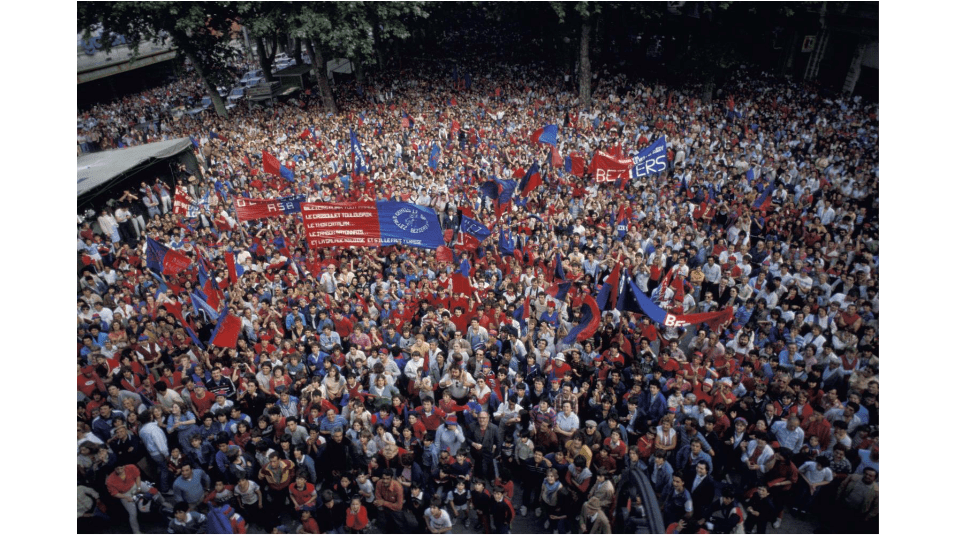
Between 1971 and 1984, Béziers experienced an unprecedented golden age. With ten French championship titles, ASBH not only dominated national rugby but also solidified a strong local identity. The Sauclières Stadium, a legendary venue, drew huge crowds from all walks of life (54 Fi, 1951–1982), strengthening community cohesion (Wozniak, 2019). Furthermore, during the various finals the club competed in during this period, the public also turned out in massive numbers at the different stadiums, whether in Paris, Lyon, or Bordeaux (54 Fi, 1951–1982). This collective support for the club is also reflected in documents from the era, such as an open letter distributed throughout the Béziers region in 1985, calling on the public to actively support AS Béziers at the start of the season. This document, prominently displaying the slogan “Béziers, we’re going to win!”, attests to the importance of rugby in fostering local social cohesion and building a sense of territorial unity (12 Fi 81, 1985). The club’s central role in the local collective imagination is reinforced by a strong, historic rivalry with RC Narbonne, often cited as a key element of Béziers’ identity, culminating in the 1973–1974 French Championship final contested by the two clubs (4 AV 6, 2007). These years of glory also established Béziers as the “capital of French rugby” (Pastre, 1972), a true sporting and cultural epicenter. Despite a decline in performance in the years that followed, this popular fervor remains evident in archival footage of the 1989 Béziers-Brive match, where the stands at Sauclières Stadium are shown packed with Béziers fans (3 AV 292, 1989).
During this period, Montpellier was tentatively making its mark on the rugby scene, laying the groundwork for future growth. The city was beginning to integrate rugby into its urban policy through modest yet foundational initiatives, such as the creation of Montpellier Hérault Rugby and the first municipal support for the club’s establishment and development (Barcelo, 2003). The contrast between the two clubs was striking: Béziers, buoyed by numerous successes, embodied a deeply rooted, regional style of rugby, while Montpellier aspired to modernize within a more urban framework (Barcelo, 2003). This historical imbalance, however, shifted with rugby’s transition to the professional era, which profoundly transformed the sporting, economic, and regional dynamics between the two clubs.
Professionalization and Divergent Trajectories: Toward Complementary Models
The professionalization of rugby in the 1990s marked a decisive turning point for Béziers and Montpellier. In Béziers, the ASBH was struggling to adapt to the new financial and organizational demands imposed by modern rugby. Despite the modernization of its facilities, notably with the construction of the Raoul-Barrière Stadium1 and its use during the France-Romania match at the 1991 Rugby World Cup (3 AV 72, 1991), the club saw its influence wane. However, the 29% increase in average attendance recorded during the 2023–2024 season reflects a renewed interest in its glorious history (LNR, 2024).
For its part, Montpellier has embraced professionalization with high ambitions. Backed by public and private investments, the MHR opened the GGL Stadium in 2007, a modern facility capable of hosting international competitions. By hosting Rugby World Cup matches in 2007—albeit at the Stade de la Mosson—the city demonstrated its ability to organize large-scale events, generating significant economic benefits for the hospitality and restaurant sectors (Charrier & Jourdan, 2014). This event strategy was also accompanied by a symbolic mobilization of the local community and its youth, as evidenced by the participation of 200 middle school students from the Hérault department in the opening ceremony for the United States–Tonga match during the tournament (2034 W 7, 2007). This type of initiative, supported by departmental institutions, strengthens local ownership of the event and positions rugby within a framework of civic and regional promotion. These contrasting developments, which began with the professionalization of rugby, are now reflected in two distinct models of regional promotion, each relying on specific levers to enhance its appeal.
Today, Béziers and Montpellier exemplify two contrasting models that are nonetheless highly complementary. Béziers is focusing on showcasing its heritage to maintain its appeal. Initiatives such as the creation of a museum dedicated to “Grand Béziers” or tourist itineraries combining rugby and local traditions are all ways to strengthen its roots in the regional identity (Benammar, 2023). Conversely, Montpellier has adopted a resolutely modern and international strategy. By combining rugby with other cultural and culinary initiatives, the MHR has positioned itself as a global player in sports and tourism. Tours of the GGL Stadium, collaborations with cultural festivals, and tourism packages all reflect this commitment to diversification (Keerle & Viala, 2018).
Despite their differences, these two paths offer the potential for unprecedented synergies by combining sporting heritage with event strategy. A collaboration between the two clubs could combine Béziers’ rugby heritage with the contemporary momentum driven by Montpellier, with the goal of jointly promoting the region. This partnership would enhance the appeal of the Hérault department, both as a tourist destination and symbolically, by positioning the department as a unique region where tradition and modernity coexist through rugby.
Sports Tourism as a Driver of Regional Development
Definition and Challenges of Sports Tourism
Sports tourism, defined by Standeven and De Knop (1999) as participation in sports activities as part of a temporary trip, lies at the intersection of sports, culture, and the economy. This concept is based on two main dynamics: the mobility of spectators or participants in connection with sporting events, and the promotion of host regions, which benefit from increased visibility and a boost to the local economy. Although this definition is universal, it has specific applications in the cases of Béziers and Montpellier, where rugby serves as a catalyst for regional development.
The economic benefits of sports tourism are considerable. For example, the 2007 Rugby World Cup generated approximately 540 million euros for the French economy, highlighting the impact of major sporting events (CCI France, 2008). While this example reflects a broader trend, similar effects—on a proportionate scale—can be observed during major events organized by clubs such as AS Béziers Hérault or Montpellier Hérault Rugby. Through stadium attendance, fan engagement, and the hosting of visitors from outside the region, these clubs contribute to local economic vitality and illustrate how sports tourism benefits host regions.
In addition to the economic benefits, sports tourism also contributes to a region’s appeal. By promoting positive values such as excellence, camaraderie, and pushing one’s limits, it shapes a favorable perception of destinations. Both clubs, each in their own way, highlight these dynamics: Béziers by capitalizing on a strong collective memory, and Montpellier by combining sports and modernity to attract a diverse audience.
Finally, sports tourism plays a key role in promoting cultural identity and heritage. Events held in Béziers and Montpellier are often accompanied by culinary and cultural experiences, creating an immersive and authentic experience for visitors. As a result, sports tourism has emerged as a strategic driver for the Hérault region, which combines tradition and innovation to attract a diverse audience.
A Comparative Analysis of Tourism Benefits Between Béziers and Montpellier
The economic impact of the Béziers and Montpellier rugby clubs on tourism reflects two distinct approaches, rooted in their specific historical trajectories. In Béziers, the attachment to rugby is intrinsically linked to a collective memory that glorifies the golden age of the 1970s and 1980s, a period when the Sauclières Stadium played a central role in the city’s appeal (Wozniak, 2019). This historical connection remains a valuable resource for the development of cultural and heritage tourism. However, Béziers’ appeal to tourists still depends heavily on current athletic performance, which poses a limitation. The city’s heritage potential, though significant, remains underutilized. The creation of cultural tours centered on rugby—combining stadium tours, commemorative events, and collaborations with local wine producers—could enhance the tourism offering and diversify revenue streams.
In contrast, Montpellier, where rugby has a more recent history, shifted toward an events-based strategy as early as the 2000s, supported by modern facilities such as the GGL Stadium, which opened in 2007 (Keerle & Viala, 2018).
Despite their contrasting trajectories, both cities demonstrate how rugby can attract visitors and generate significant economic benefits. In Béziers, matches draw a loyal following, as evidenced by the 29% increase in average attendance recorded during the 2023–2024 season (LNR, 2024). This renewed local interest was confirmed by the regional press, which described a “renewed popular enthusiasm” at Raoul-Barrière Stadium (France Bleu, 2024). The club also set a recent attendance record with 12,703 spectators at the match against Nevers in May 2024 (Rugbyrama, 2024).
Montpellier, for its part, draws on high-level national and European competitions such as the Top 14 and the European Cups. In addition, hosting certain matches of the 2007 Rugby World Cup in Montpellier helped attract a diverse and international audience (Ministry of the Economy, 2007).
A participant observation during a game at GGL Stadium in November 2023 illustrates these dynamics. During this participant observation, we noted that, despite a good turnout, the atmosphere in the stands remained relatively calm, with few chants and few visible signs of team loyalty (scarves, jerseys). Several students interviewed confirmed that they came for the atmosphere or the price, but without any real sense of identity tied to the club. This observation aligns with the idea of an audience that is more consumer-oriented than fan-oriented, a view confirmed by a regular spectator: “Here in Montpellier, there are only spectators.”
These findings highlight two distinct models of tourism development, each based on different territorial and cultural approaches.
Thus, these two clubs are implementing different but complementary strategies to maximize the tourism benefits of rugby. In Béziers, the city’s appeal rests primarily on its sports and cultural heritage, with potential initiatives such as the creation of a museum dedicated to “Grand Béziers” or the development of themed tours combining rugby and local traditions (Benammar, 2023). This heritage-based model targets an audience attached to the traditional values of rugby, capitalizing on nostalgia and authenticity.
A second observation conducted in a Montpellier pub during an ASBH Pro D2 game rounds out this analysis. During this observation, we were able to join a group of young people from Béziers who were deeply involved in the club’s activities. Although they lived in Montpellier for professional reasons, they described themselves as deeply attached to their local identity, passed down through their families. Their comments emphasized unconditional loyalty, in contrast to the image of the MHR, which they viewed as artificial. This type of active, embodied fan culture reflects a living memory of the club and a strong sense of belonging.
Montpellier, on the other hand, has adopted a modern, event-driven approach aimed at diversifying its audience. This strategy is reflected in the regular organization of high-profile events, in line with the city’s goal of positioning itself as a sports metropolis (Keerle & Viala, 2018). The club also implements targeted pricing schemes, such as €5 tickets for students affiliated with a student union (BDE) or a sports office (BDS), as well as discounts for those under 21, in order to attract a younger audience (MHR, 2024). These initiatives reflect a strategy of reaching out to new audiences beyond the traditional core of supporters.
Major events, such as the Top 14 playoffs or European competitions, generate significant economic benefits for the hospitality and restaurant sectors (Charrier & Jourdan, 2014). In addition, activities such as guided tours of the GGL Stadium and interactive rugby experiences help extend visitors’ stays while enhancing the city’s appeal (Keerle & Viala, 2018).
This commitment to making rugby a driver of regional appeal is also reflected in Montpellier’s urban planning. The neighborhood where the GGL Stadium is located has been named “Ovalie,” a reference to the nickname for the world of rugby, and several of its streets are named after iconic figures in the sport (Guiraud, 2010). This rugby-themed naming reinforces the area’s identity as a symbolic space dedicated to rugby, thereby strengthening the city’s sports branding strategy.
Despite their differences, these models share a common goal: to integrate rugby into a broader strategy for regional development. While Béziers takes a heritage-based approach, Montpellier focuses on innovation and internationalization, creating a dynamic contrast in the development of sports tourism.
With this in mind, it makes sense to explore ways for these two approaches to work together in order to strengthen rugby’s overall regional impact in the Hérault. These differences could be turned into opportunities for collaboration. For example, combined tourist itineraries linking the rugby traditions of Béziers with the modern, event-driven experience of Montpellier would help boost the region’s appeal to tourists and, by extension, the Hérault’s overall attractiveness.
To maximize the benefits of tourism in the Hérault department, synergies between these two models could be explored. A collaboration between Béziers and Montpellier would allow them to capitalize on their respective strengths: Béziers could enhance its offerings by leveraging the crowds drawn by Montpellier’s international events, while Montpellier would benefit from the authenticity and rich history associated with Béziers rugby.
Although such a partnership never materialized, it had been considered as early as 2009 by several stakeholders: MHR President Thierry Pérez had raised the idea of a merger with ASBH, cautiously supported by the senator and mayor of Béziers, Raymond Couderc, who viewed this partnership as a possible solution to the financial constraints faced by regional clubs (Objectif Languedoc-Roussillon, 2010). This line of thinking is also consistent with the analysis by Keerle & Viala (2018), who demonstrate how the development of Montpellier as a sports hub can be integrated into a broader regional network.
Joint initiatives, such as tourist itineraries that combine modern sports events in Montpellier with heritage tours in Béziers, would offer visitors a well-rounded experience. Such synergy could enhance the overall appeal of the Hérault region as a premier sports tourism destination by blending tradition and modernity (Barcelo, 2003).
Conclusion
Rugby union plays a central role in the regional and tourism development of the Hérault department, reflecting the richness and diversity of the region. Through the contrasting examples of Béziers and Montpellier, it illustrates two distinct yet complementary approaches: capitalizing on a historic sporting heritage and a strategy focused on modernity and internationalization.
On the one hand, Béziers draws on its glorious heritage to strengthen its local identity. The values of camaraderie and a sense of belonging, associated with “Grand Béziers,” are valuable assets for attracting a loyal audience and developing a tourism offering centered on the city’s rugby heritage. However, this model requires a diversification of initiatives to maximize its impact, such as the creation of themed tours or memorial sites, like a museum dedicated to rugby.
On the other hand, Montpellier is adopting a comprehensive strategy in which professionalism and the organization of large-scale events play a driving role. The economic and media benefits of European and international competitions, combined with a diverse range of tourist attractions, position Montpellier as a dynamic and attractive destination. This innovation-driven model helps expand the audience and integrate rugby into a comprehensive tourist experience.
Consequently, a comparative analysis of these two models reveals a promising synergy. Béziers emphasizes cultural identity and traditions, while Montpellier focuses on international outreach and diversifying its offerings. These two hubs could collaborate to create synergies, for example by developing tourist itineraries that combine heritage and modernity, or by jointly promoting the Hérault as a premier destination for rugby and sports tourism.
Thus, rugby union could prove to be a powerful driver for economic and tourism growth in the Hérault region. By capitalizing on their unique characteristics and seeking synergies, Béziers and Montpellier could become an inspiring model for other regions seeking to combine sports and tourism development. The future may therefore lie in a collaborative strategy that strengthens rugby’s overall impact and enhances the Hérault’s reputation both nationally and internationally. With this in mind, a key question arises: Could such synergy become a sustainable driver for placing Hérault rugby at the heart of a renewed tourism and regional development dynamic?
Bibliography
Barcelo, G. (2003). City Rugby, Regional Rugby, or A Chronicle of a Century of Rugby Between the Hérault and the Vidourle. Mistral.
Barcelo, G. (2010). Rugby League in the Hérault: From Resistance to Recognition. In One Hundred Years of Sports in the Hérault (pp. 200–210). Études Héraultaises.
Benammar, M. (2023). A Top Model? An Economic Analysis of French Professional Rugby (Top 14). Football(s). History, Culture, Economy, Society, 3, 129–139.
Bernache-Assollant, I., Bouchet, P., & Lacassagne, M. (2014). Identity management strategies and patterns of structuring among fan groups: An exploratory study of elite French rugby. Bulletin de psychologie, 529(1), 49–61.
Charrier, D., & Jourdan, J. (2014). The Local Impact of Major Sporting Events on Tourism. Téoros, 28(2), 45–54.
Charrier, D., Jourdan, J., Bourbillères, H., Djaballah, M., & Parmantier, C. (2019). The Social Impact of Major Sporting Events: Theoretical and Methodological Reflections Based on Euro 2016. Mouvements Sportifs Sciences/Motricité, 107, 3–15.
Guiraud, C. (1992). Sports Facilities and Social Uses: A Comparative Study of the Establishment of Rugby and Tambourin in the Hérault Department [Doctoral dissertation, University of Paris VII]. http://www.theses.fr/1992PA070002
Guiraud, C. (2010). A History of the Emergence and Establishment of Rugby in the Hérault. In One Hundred Years of Sports in the Hérault (pp. 187–199). Études Héraultaises.
Keerle, R., & Viala, L. (2018). Metropolization and Sports Policy: Toward a Framework for Understanding the Interdisciplinary Generalization of Analysis. Initial Reflections Based on the Case of Montpellier (France). Staps, 122(4), 95–114.
Nuytens, W. (2004). Regional “fan culture”: The myth of tradition. Revue du Nord, 355(2), 391–417. https://doi.org/10.3917/rdn.355.0391
Pastre, G. (1972). Rugby: Béziers, the Capital. Solar Editeur.
Pociello, C. (1995). Rugby: The War of Styles. Presses Universitaires de France.
Smith, A. (2015). A Passion for Sports: Soccer, Rugby, and a Sense of Belonging in Europe. Presses Universitaires de Rennes.
Standeven, J., & De Knop, P. (1999). Sport Tourism. Human Kinetics.
Volle, J. (1987). Sports on the Map: Sports Participation in Languedoc-Roussillon (1985–86 Season). Mappemonde, 5(1), 18–22.
Wozniak, D. (2019). “Grand Béziers” (1961–1984): A Sporting Epic. In Études Héraultaises, 53, 160–172.
Webography
CCI France. (2008). National Study on the Economic Impact of the 2007 Rugby World Cup. https://www.cci.fr/sites/default/files/2017-11/etude_nationale_cm_rugby_2007.pdf
France Bleu. (February 22, 2024). Pro D2: Attendance on the rise again at the Raoul-Barrière Stadium in Béziers. https://www.francebleu.fr/sports/rugby/pro-d2-la-frequentation-repart-a-la-hausse-au-stade-raoul-barriere-de-beziers-7061284
National Rugby League. (2024). Attendance data. https://top14.lnr.fr/actualite/des-affluences-toujours-en-hausse-pour-le-top-14-et-la-pro-d2
Ministry of the Economy. (October 11, 2007). Tourism Report on the 2007 Rugby World Cup [Press Kit]. https://www.economie.gouv.fr/files/finances/presse/dossiers_de_presse/rugby071011.pdf
Montpellier Hérault Rugby. (n.d.). Official website of Montpellier Hérault Rugby. https://www.montpellier-rugby.com/
Montpellier Métropole. (n.d.). Sports in Montpellier. https://www.montpellier3m.fr/sport
Objectif Languedoc-Roussillon. (2010). Rugby: ASBH Caught Up in a Swirl of Rumors. https://objectif-languedoc-roussillon.latribune.fr/languedoc-roussillon/Actualites/Rugby-l-ASBH-prise-dans-la-melee-des-rumeurs_771.html
Rugbyrama. (May 11, 2024). Pro D2: Béziers set a new attendance record against Nevers. https://www.rugbyrama.fr/2024/05/11/pro-d2-face-a-nevers-beziers-a-battu-un-record-daffluence-11944107.php
- The 1989 inauguration of the Stade de la Méditerranée—renamed the Stade Raoul-Barrière in 2019—is documented in audiovisual archive 3 AV 300 at the Hérault Departmental Archives. ↩︎